
Recruitment Cooperation for Vietnamese Welders for Shipyards in South Korea
Recruitment cooperation for Vietnamese welders offers South Korean shipyards and subcontractors a practical way to connect with skilled candidates through an organized international recruitment process.
Successful cooperation involves more than sourcing workers. Employers need clearly defined job requirements, reliable candidate assessments, appropriate qualification records and transparent employment arrangements. Recruitment must also follow the applicable Vietnamese procedures and Korean employment and immigration requirements.
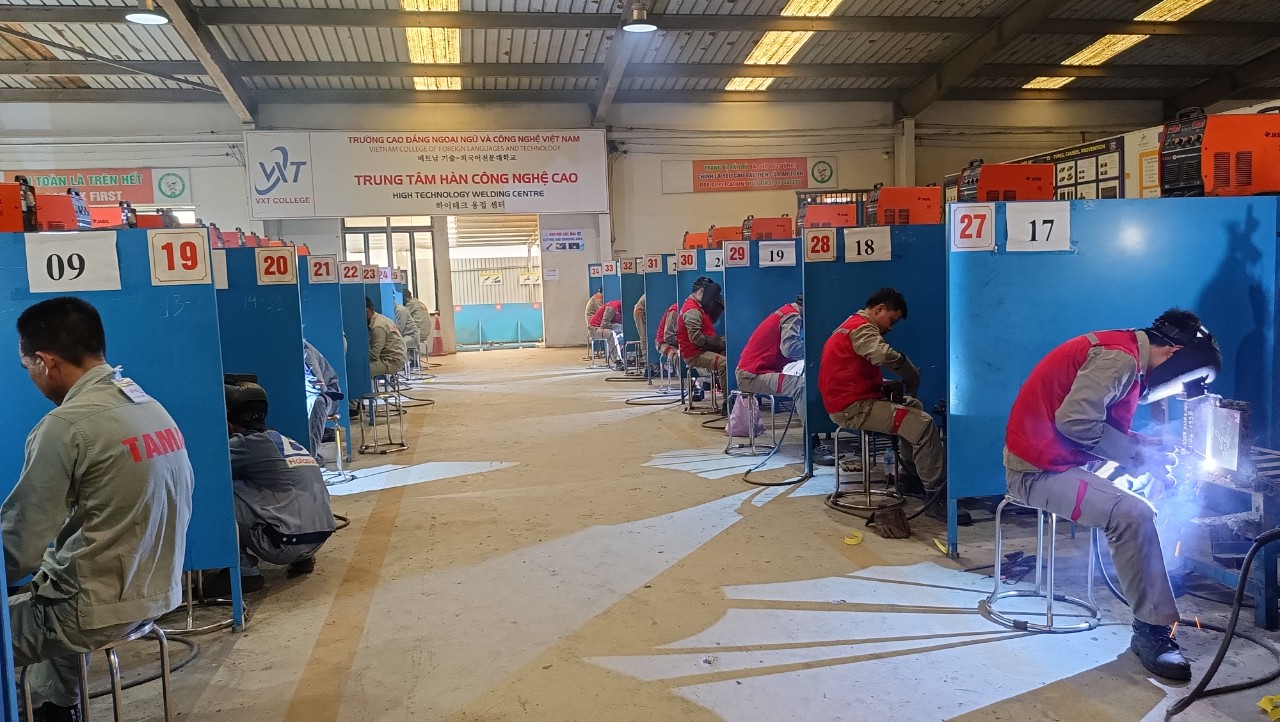
Korean shipbuilding industry human resources solutions are seeking skilled welders from Vietnam.
VXT GROUP brings 20 years of international labor supply experience to recruitment cooperation, with a particular focus on shipbuilding trades and welders. Working through licensed Vietnamese labor suppliers, the cooperation model supports recruitment for 3G welders, 6G pipe welders, ship painters and ship electricians.
The objective is to build an international bridge between Korean employers seeking qualified personnel and Vietnamese workers whose skills match the actual assignment.
Cooperation with South Korean Shipyards and Subcontractors
Shipyard operators and subcontractors can have different workforce requirements. A structural welding contractor may need FCAW welders, while a piping contractor may require candidates experienced in TIG roots and other specified welding processes.
Painting and electrical contractors need separate selection criteria, training arrangements and practical assessments.
Recruitment cooperation should therefore begin with the employer’s work package. The Vietnamese recruitment partner needs to understand the duties, skill levels, employment conditions and proposed deployment schedule.
The cooperation framework can cover:
- Workforce planning and job-order preparation.
- Candidate sourcing and experience screening.
- Employer interviews and practical assessments.
- Qualification and document reviews.
- Targeted pre-departure preparation.
- Coordination of required recruitment procedures.
- Deployment planning and post-arrival communication.
The employing company must be identified clearly. Workers assigned to a major shipyard may be employed by a subcontractor, and that relationship should be explained accurately throughout recruitment.
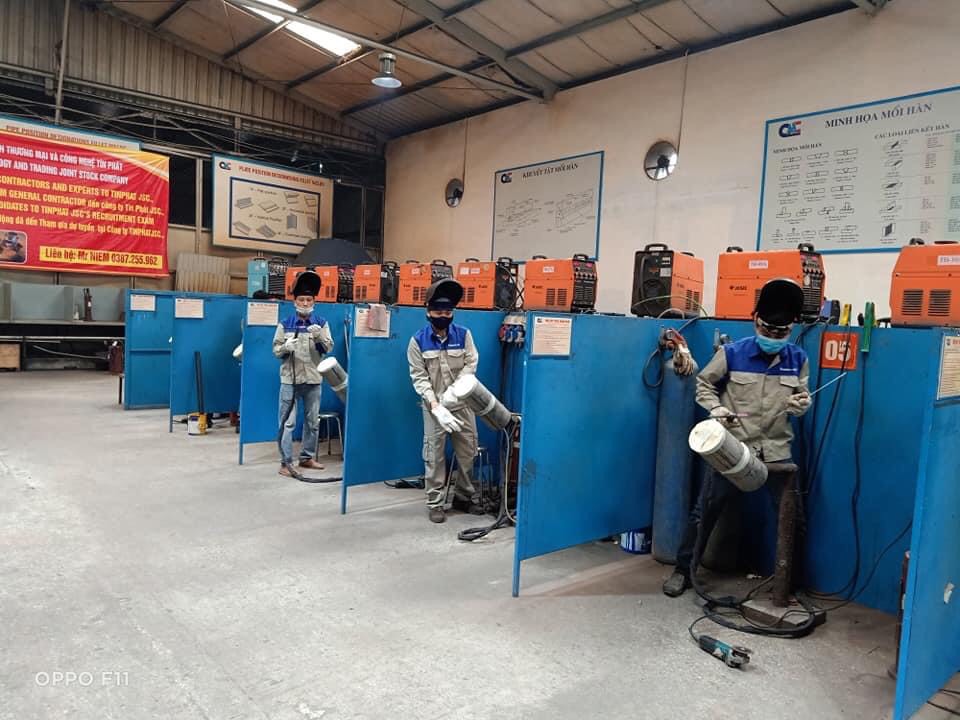
Vietnamese 6G welders are the solution for shipbuilding companies in South Korea.
Twenty Years of International Labor Supply Experience
VXT GROUP’s 20 years of international labor supply experience provide a foundation for understanding employer expectations, worker preparation and cross-border recruitment coordination.
In shipbuilding recruitment, experience is particularly useful when translating a general workforce request into specific candidate requirements. “Welders needed” is not enough to establish the process, position, material or qualification scope required.
An experienced recruitment team helps employers organize those details and identify where further technical clarification is necessary.
Experience also supports communication between employers, assessors, training personnel and workers. Each party needs consistent information about the role and the stages required before deployment.
For Korean employers, the practical value lies in a coordinated process with defined responsibilities, realistic schedules and individual candidate records.
Korean employers directly assess the skills of Vietnamese welders.
Supply Capacity for 3G Welders
Recruitment cooperation can include Vietnamese 3G welders for assignments requiring relevant vertical groove welding competence.
The 3G designation identifies a welding position. Employers must also define the required process, material, joint configuration and applicable qualification requirements.
Candidates may have experience with FCAW, SMAW or other processes. Their profiles should state the actual process used rather than rely on a general “3G welder” description.
Selection should combine relevant production experience with a representative practical assessment.
Employers should also establish whether the role includes fabrication, fitting or preparation duties. Those skills need separate verification where they form part of the assignment.
Approved candidates should be matched to work within their demonstrated competence and accepted qualification scope.
Supply Capacity for 6G Pipe Welders
Vietnamese 6G pipe welders can be considered for specified pipe welding assignments in shipbuilding and related industrial work.
Recruitment should identify the required process or combination, pipe material, diameter range, wall thickness and joint configuration.
For example, a role requiring GTAW root welding followed by another process needs evidence for the relevant duties of each process.
A candidate’s 6G designation does not establish suitability for every pipe material or production configuration. Employers should review qualification scope and assess the actual task.
Where pipe fitting is included, evaluate drawing interpretation, component identification and fit-up skills separately.
Individual assessment results help the receiving employer understand whether the worker is suitable for the complete assignment or a defined part of it.
Recruitment of Ship Painters
Cooperation can also cover Vietnamese ship painters and surface preparation workers.
The employer should describe the required preparation methods, coating application tasks and work environment. Candidates should be assessed against those requirements.
Relevant experience may include industrial coating or marine painting, but the recruiter should establish what the worker actually performed.
Practical assessments can evaluate preparation, equipment familiarity, application control and recognition of defects.
Workers should understand that the approved project specification governs the work. They should be prepared to follow inspection instructions and report conditions requiring clarification.
Selection should distinguish between surface preparation personnel, application workers and candidates with broader experience.
Recruitment of Ship Electricians
Electrical recruitment should begin by defining the duties accurately.
Employers may need cable installation workers, termination electricians, equipment installers or personnel with more specialized experience. These roles require different evidence.
Candidate screening should review drawing comprehension, previous installation tasks and the level of supervision involved.
Practical assessments should reflect the assigned responsibilities. General industrial electrical experience may provide transferable skills, but marine tasks still need direct evaluation.
Testing and commissioning duties require particular attention to verified competence and employer authorization.
Clear role definitions help the recruitment partner select suitable candidates and support supervisors when the workers arrive.
Welding Qualifications and International Standards
Employers may request candidates with qualification records under ISO 9606, AWS D1.1, EN 287-1 or ASME Section IX.
These references should be used accurately. They are not interchangeable credentials, and a worker should not be described as qualified under all four unless the individual records support that statement.
| Qualification reference | Recruitment review |
|---|---|
| ISO 9606 | Verify the applicable part, process, test details and qualification range |
| AWS D1.1 | Confirm relevance to the assignment and the accepted performance qualification |
| EN 287-1 | Review legacy documentation and current project acceptance |
| ASME Section IX | Check the applicable performance qualification and assignment requirements |
ASME describes Section IX as covering welding, brazing and fusing qualifications, including qualification of procedures and personnel. Its applicability should be reviewed against the project concerned.
The correct designation is EN 287-1, rather than “E287-1.” DIN’s standards catalog identifies EN 287-1 as replaced by EN ISO 9606-1. Legacy records therefore need careful review rather than automatic acceptance as a current qualification.
Qualification Review and Practical Testing
Certificate review should establish the candidate’s identity, welding process, test configuration, qualification scope and applicable validity requirements.
A position label alone cannot establish competence across every process, thickness or material.
TWI explains that welder qualification evaluates a worker’s capability to produce welds to an industry standard while following a welding procedure. Acceptance also depends on the relevant examining arrangements.
Practical testing adds evidence of current performance.
The Korean employer should agree on the test specification, examination methods and acceptance criteria before candidates are assessed. Recruitment tests should be distinguished from formal qualification tests.
Passing an internal assessment should not automatically be advertised as an AWS, ISO or classification society certification.
Cooperation Through Licensed Vietnamese Labor Suppliers
Recruitment for overseas employment should be organized through Vietnamese enterprises holding the appropriate, valid overseas employment service license.
Vietnam’s Ministry of Home Affairs—also referred to in some English translations as the Ministry of Interior—currently administers overseas labor procedures. Its public service portal lists procedures relating to overseas employment service licenses and registration of labor supply contracts.
Korean employers should verify the legal entity, license details and current status of the company participating in the cooperation.
Some valid licenses may have been issued under a previous administrative structure. Current authorization should therefore be checked against official records, rather than judged solely by the ministry name printed on an older document.
VXT GROUP’s cooperation model should identify the licensed supplier responsible for each recruitment arrangement and clearly document the responsibilities of participating organizations.
Recruitment Procedures That Comply with Vietnamese Law
Lawful recruitment requires attention to the complete arrangement, including the parties involved, contracts, worker selection and required administrative procedures.
The licensed supplier should determine and complete the registrations or approvals applicable to the proposed cooperation.
Recruitment communications and worker agreements should accurately describe the employing company, duties and employment conditions.
The parties should also clarify permitted fees, payment responsibilities, preparation arrangements and worker support obligations under the applicable rules.
Employers should request a project-specific compliance checklist and written allocation of responsibilities.
Vietnamese recruitment authorization does not replace Korean employer eligibility or immigration review. Both sides of the arrangement need to be addressed before deployment.
A Practical Recruitment Cooperation Process
1. Employer Requirement Review
The Korean employer provides its company details, workplace, required trades, headcount and technical requirements.
Employment conditions and the proposed schedule should be included from the beginning.
2. Cooperation Agreement
The parties define the recruitment scope, assessment responsibilities, commercial terms and communication arrangements.
The agreement should identify the licensed Vietnamese supplier and actual Korean employer.
3. Candidate Sourcing and Screening
Applicants are reviewed against the agreed criteria.
Profiles should describe actual experience, relevant records and readiness for the proposed employment conditions.
4. Employer Selection and Trade Tests
The employer reviews shortlisted candidates through interviews and practical assessments.
Individual results should identify approval, rejection or further preparation needs.
5. Documentation and Required Procedures
The responsible parties prepare records and complete the applicable Vietnamese and Korean processes.
Names, dates, employer details and job descriptions should remain consistent across documents.
6. Preparation and Deployment
Approved workers receive targeted preparation and clear travel information.
Deployment follows the necessary approvals and confirmed receiving arrangements.
Pre-Departure Preparation and Workplace Integration
Preparation should address the employer’s requirements and gaps identified during selection.
Technical refresher sessions can focus on drawing interpretation, procedure understanding or representative task exercises.
Language preparation should prioritize workplace instructions, safety communication and trade terminology.
Workers should understand their employment terms, accommodation arrangements and available support contacts.
After arrival, the Korean employer should provide site induction, explain reporting lines and assign duties within demonstrated competence.
Assessment records should be shared with supervisors so they understand each worker’s capabilities. Early feedback helps identify where further guidance is needed.
Building a Long-Term International Bridge
Effective cooperation continues after deployment.
Employers and recruitment partners should review workmanship, communication, attendance and adaptation to the assigned role.
Specific feedback can improve future sourcing, tests and preparation. Worker concerns should also have clear reporting channels.
This creates an international bridge based on accurate information and shared responsibilities.
For employers, the partnership supports access to assessed candidates. For workers, it provides a clearer route to employment with understandable conditions and defined expectations.
Long-term cooperation works best when the parties use evidence from actual workplace performance to improve subsequent recruitment.
Frequently Asked Questions
Can Korean shipyards recruit Vietnamese welders through cooperation agreements?
They can explore recruitment through licensed Vietnamese suppliers, subject to the applicable employer, recruitment and immigration requirements. The arrangement should identify the actual employing company and each party’s responsibilities.
Can subcontractors recruit welders, painters and electricians?
Subcontractors can discuss recruitment for defined positions. Their eligibility and the appropriate process should be confirmed for the proposed arrangement.
Can the supplier source both 3G and 6G welders?
Recruitment can cover both categories, with candidates assessed against the required processes, materials and duties. Availability and deployment capacity should be confirmed for each order.
Are all welders qualified under ISO, AWS and ASME?
No single assumption should be made. Review each candidate’s individual records and confirm which qualifications apply to the proposed work.
How can employers verify a Vietnamese labor supplier?
Request the legal company name and license details, then check current authorization through the relevant official records.
Can employers conduct selection tests in Vietnam?
Practical assessments can be organized at suitable facilities. Agree on the test specification, examination, witnessing and reporting arrangements beforehand.
Does a welding qualification guarantee Korean visa approval?
No. Technical competence and immigration eligibility are separate matters. Current requirements must be confirmed for the occupation, employer and candidate.
What information should employers provide first?
Provide company details, workplace, required trades, headcount, technical criteria, employment conditions and preferred deployment schedule.
Conclusion: A Strong Recruitment Solution for Korean Shipyards
Cooperation with licensed Vietnamese labor suppliers can be one of the strongest solutions for Korean shipyards and subcontractors seeking skilled welders, painters and electricians.
Its value comes from matching workers to actual requirements through verified experience, practical assessments and lawful recruitment procedures.
With 20 years of international labor supply experience and a focus on shipbuilding trades, VXT GROUP aims to serve as an international bridge connecting Korean employers with suitable Vietnamese candidates.
Employers can begin by sharing their workforce requirements, qualification expectations and deployment plans. A project-specific discussion can then establish a practical cooperation framework for recruiting skilled personnel and supporting long-term shipbuilding workforce needs.
Contact Vietnam Manpower Supply Agency today to discuss your specific workforce needs and discover the difference that skilled Vietnamese workers make.
Do you want to hire #workers, seasonal workers and long-term workers from Vietnam?
But you don’t know about:
❓ What kind of service we provide?
👉 Consulting on finding Vietnamese welders
👉 Looking for a supply of welder human resources
👉 Consult about Vietnam’s labor market
👉 Source suitable workers meeting your requirements
👉 Take documents procedures in Vietnam
👉 Train workers languages and vocational skills
👉 Handle problems while Vietnamese workers work in EU
Please contact #Vietnammanpowersupply for #internationalhiring,
We will support you to do all things.
DETALL: #GLOBALSTAFFRECRUITMENT
Tel/Whatsapp: (+84 ) 982 0303 66 – CEO
🌐 LinkedIn: https://www.linkedin.com/company/vietnam-human-resources-group/
Website: vnmanpower.net
Email: namnq.vtc@gmail.com
Youtobe: https://www.youtube.com/@vietnammanpowersupply
#InternationalRecruitmentAgency #ManpowersupplyAgency #vietnammanpowersupply #manpoweragency #manpowersupply #manpowergroup #manpowervietnam #manpowercompany #manpowersupplycompany #Weldersupply #Supplyofshipwelders #weldermanpowersupply