
Recruitment Cooperation for Vietnamese Welders for Shipyards in South Korea
Recruitment cooperation for Vietnamese welders for shipyards in South Korea connects employers with candidates whose skills can be assessed against specific shipbuilding requirements. Through cooperation with licensed Vietnamese labor suppliers, Korean shipyards and subcontractors can organize recruitment for welders, ship painters and electricians within a clearly defined process.
The strongest partnerships combine workforce planning, practical trade testing, qualification verification and transparent employment arrangements. They also establish responsibilities for documentation, required procedures, worker preparation and communication after arrival.
With 20 years of experience in international labor supply and a particular focus on shipbuilding trades, VXT GROUP supports cooperation designed around the needs of employers seeking skilled personnel. The objective is to serve as an international bridge between Korean companies and suitable Vietnamese workers.
This guide explains the cooperation model, available trade categories and recruitment procedures employers should consider.
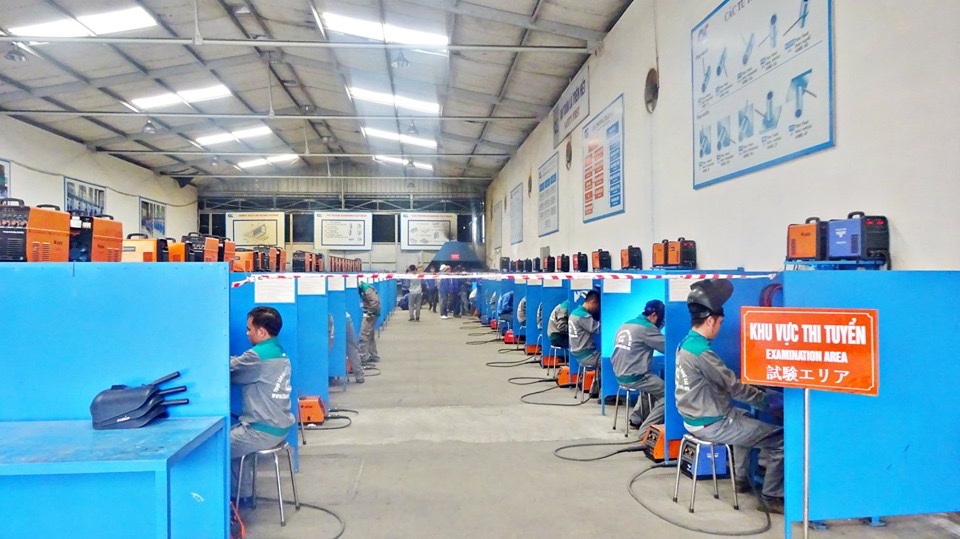
Vietnamese welders are a labor solution for shipbuilding companies in South Korea.
Cooperation with Korean Shipyards and Their Subcontractors
Shipyard operators and subcontractors have different recruitment priorities. One company may need structural welders for block assembly, while another requires pipe welders, coating workers or electrical installation teams.
A useful cooperation agreement starts with the actual work package. The Vietnamese supplier needs to understand what workers will do, where they will work and which company will employ them.
Employers should provide the required trades, headcount, technical criteria and employment conditions. The recruitment partner can then organize sourcing and assessment around those requirements.
Cooperation can cover:
- Candidate sourcing and preliminary screening.
- Employer interviews and practical trade tests.
- Qualification and experience verification.
- Targeted training and workplace preparation.
- Coordination of recruitment documentation.
- Deployment planning and worker handover.
- Post-arrival communication and follow-up.
Working at a major shipyard does not necessarily mean direct employment by the shipyard operator. The actual employer and reporting structure should remain clear throughout recruitment.
Twenty Years of International Labor Supply Experience
VXT GROUP brings 20 years of international labor supply experience to cooperation with overseas employers, particularly in shipbuilding recruitment and welding trades.
This experience helps translate broad workforce requests into practical selection criteria. A request for “qualified welders,” for example, needs clarification of processes, materials, positions and project acceptance requirements.
Experience also helps coordinate the people involved: employer representatives, assessors, training personnel, documentation teams and candidates.
For Korean employers, the benefit is an organized recruitment process with clear responsibilities and individual candidate records.
For workers, it means receiving understandable information about the position, assessment requirements and employment conditions.
Experience should be demonstrated through relevant project records and cooperation references where available. These give employers a concrete basis for assessing the proposed partnership.
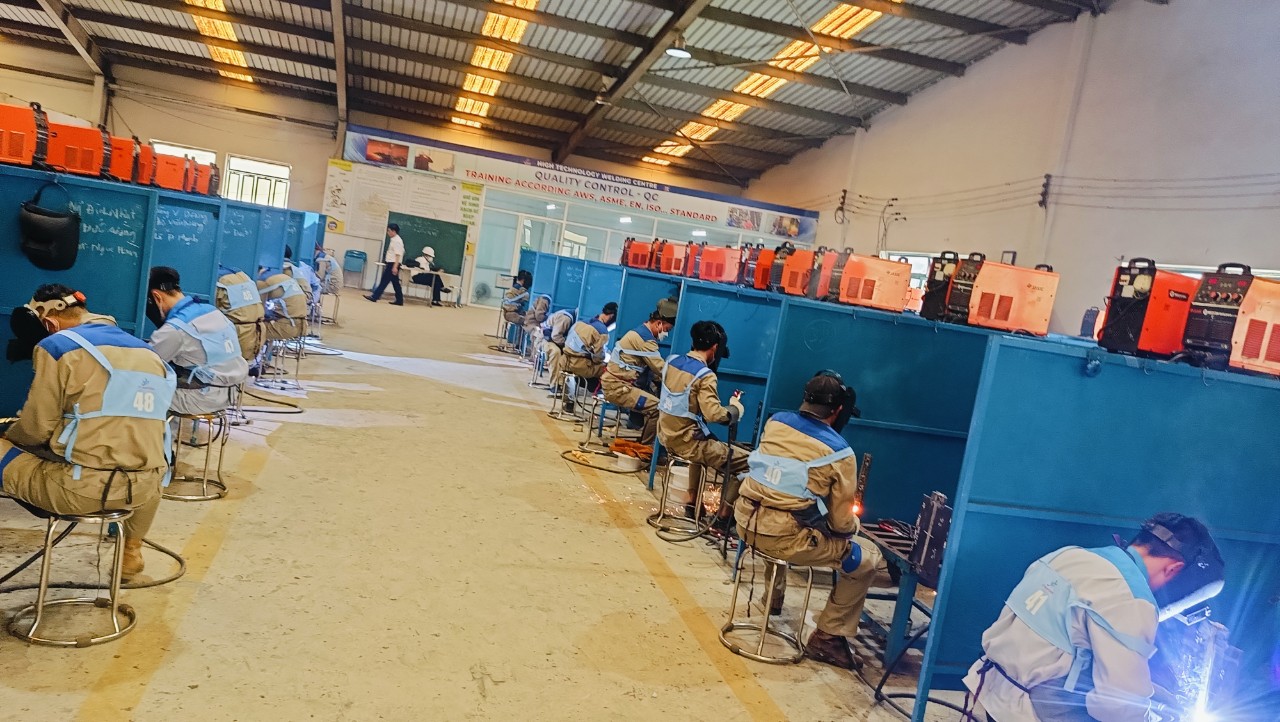
Screening and testing of Vietnamese welders’ skills at VXT Group.
Capacity to Recruit Vietnamese 3G Welders
Recruitment cooperation can include Vietnamese 3G welders for assignments requiring relevant vertical groove welding skills.
The position designation is only part of the selection criteria. Employers must also specify the welding process, material, joint configuration and applicable qualification requirements.
Candidates may have experience with FCAW, SMAW or other processes. Their profiles should identify the actual work performed rather than rely on the general title “3G welder.”
Selection should combine employment history, technical interviews and a representative practical test.
Where the job includes fitting, drawing interpretation or fabrication duties, those skills should be assessed separately.
Availability, approved candidate numbers and deployment capacity should be confirmed for each order. This allows recruitment commitments to reflect the employer’s actual requirements and the assessed candidate pool.
Vietnam Fcaw 3G Welder Certification Exam
Capacity to Recruit Vietnamese 6G Pipe Welders
Vietnamese 6G pipe welders can be considered for defined piping assignments in shipbuilding and related industrial projects.
Employers should identify the required processes, pipe materials, dimensions and joint configurations. Combined-process roles need evidence for each relevant welding responsibility.
For example, a candidate experienced in GTAW root welding may require separate assessment for the filling and capping process specified by the employer.
A 6G qualification should not be assumed to cover every material, thickness or pipe assignment. The documented range must be reviewed against the proposed work.
If the position includes pipe fitting, assess those duties separately from welding.
Individual reports should explain the candidate’s approved scope, practical results and any additional preparation needed before deployment.
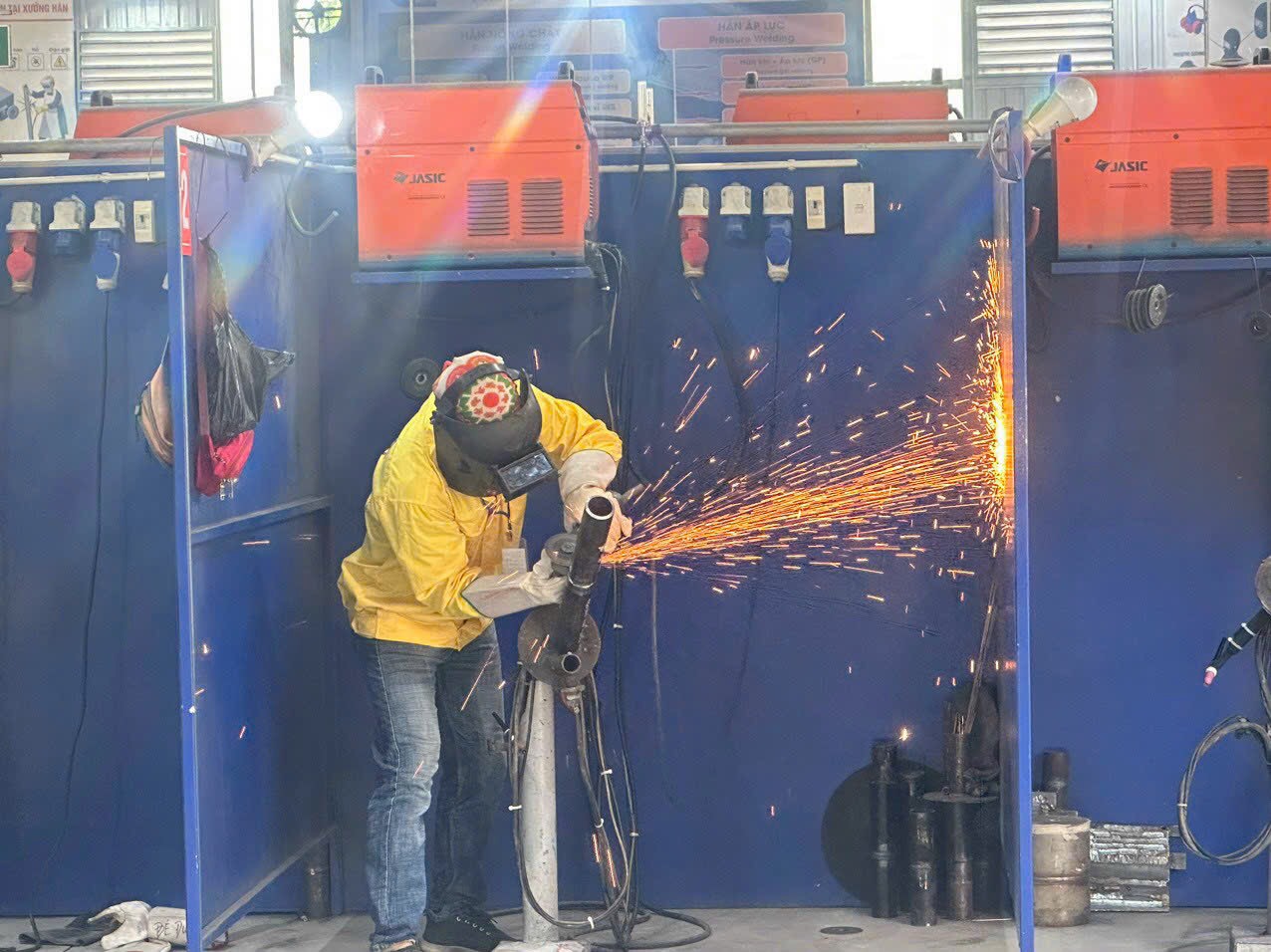
6G Welder Certification Exam – GTAW Vietnam
Recruitment of Ship Painters
Cooperation can also include Vietnamese ship painters and surface preparation personnel.
The employer should define the preparation methods, application duties, equipment and work environment relevant to the position.
Candidate screening should establish whether previous experience involved marine coatings, industrial painting or another type of work. Transferable experience can be useful, but it must be reviewed against the actual assignment.
Practical testing may evaluate preparation, application control, equipment familiarity and recognition of defects.
Workers should understand that the approved coating specification and supervisor instructions govern the task.
Selection should distinguish preparation workers, coating applicators and personnel with broader responsibilities. Accurate role descriptions help employers organize teams and avoid assigning duties beyond demonstrated competence.
Recruitment of Ship Electricians
Ship electrical recruitment should identify the required duties precisely.
Some employers need cable installation workers; others require termination electricians, equipment installers or candidates with more specialized experience.
Recruitment records should describe drawing comprehension, previous installation tasks and the supervision involved.
Practical assessments should reflect the assignment rather than use a general electrical exercise unrelated to the project.
Industrial experience may provide relevant skills, but marine installation responsibilities still need direct evaluation.
Testing and commissioning duties require particular care in verifying competence and authorization.
A clear division of responsibilities helps the Vietnamese supplier source suitable candidates and gives receiving supervisors useful information about the incoming team.
International Welding Qualifications
Employers may request candidates with qualification records under ISO 9606, AWS D1.1, EN 287-1 or ASME Section IX.
These references describe different qualification frameworks. They should not be presented as interchangeable certificates or as credentials held by every candidate.
| Reference | What employers should review |
|---|---|
| ISO 9606 | Applicable part, process, test configuration and qualification range |
| AWS D1.1 | Relevant performance qualification and suitability for the assignment |
| EN 287-1 | Legacy documentation and current project acceptance |
| ASME Section IX | Applicable performance qualification and supporting records |
The correct designation is EN 287-1, rather than “E287-1.” DIN’s standards catalog documents its replacement by EN ISO 9606-1. Employers should therefore review legacy records carefully and confirm acceptance for the current project.
Recruitment profiles should identify the qualifications actually supported by each candidate’s documents.
Practical Trade Tests and Qualification Verification
A certificate provides supporting evidence, but employers also need to understand current practical performance.
Tests should reflect the required process, material, joint configuration and position. Agree on examination methods, acceptance criteria and witnessing arrangements before testing begins.
Candidate identity and test pieces should remain traceable throughout the assessment.
Employers can participate through visits to Vietnam or suitable remote arrangements for recruitment screening. Formal witnessing requirements must be confirmed separately.
Reports should record individual results, relevant observations and any training needs.
An internal recruitment test should not automatically be described as a recognized qualification. Formal qualification claims require the applicable technical, examination and documentation arrangements.
Cooperation Through Legally Licensed Vietnamese Suppliers
Korean employers should cooperate with Vietnamese enterprises holding the appropriate, valid license for overseas employment services.
Vietnam’s Ministry of Home Affairs, referred to as the Ministry of Interior in the cooperation brief, is the current ministry referenced in official overseas employment licensing procedures. The national public service portal identifies the ministry’s role in license exchange procedures and cites the decree defining its responsibilities.
Employers should verify the legal company name, license details and current authorization of the supplier.
A license may have been issued under a previous administrative structure. Current status should be checked through official records rather than inferred solely from the ministry name on an older document.
The cooperation agreement should identify the licensed company responsible for the recruitment arrangement.
Recruitment Procedures Complying with Vietnamese Law
A recruitment partnership must address the complete overseas employment arrangement.
Vietnam’s official licensing procedure references the Law on Vietnamese Workers Working Abroad under Contract and related implementing requirements. These establish the legal context for licensed overseas employment service enterprises.
For each project, the responsible supplier should identify and complete the applicable contractual, registration and administrative procedures.
Recruitment communications must accurately explain the employer, duties and conditions. Worker agreements and related documents should remain consistent with the approved arrangement.
The parties should clarify fees, payment responsibilities, preparation and support obligations under the applicable rules.
A written project checklist helps employers understand what has been completed and what remains outstanding. Vietnamese authorization and Korean eligibility must both be addressed before deployment.
A Structured Recruitment Cooperation Process
Step 1: Review the Employer’s Requirements
The Korean employer provides company information, workplace details, trades, worker numbers and technical criteria.
Employment conditions and the proposed schedule should be included from the beginning.
Step 2: Define the Cooperation Agreement
Identify the actual employer, licensed Vietnamese supplier and responsibilities of participating organizations.
Agree on assessment arrangements, service scope, commercial terms and reporting.
Step 3: Source and Screen Candidates
Review applicants against the agreed criteria.
Profiles should describe actual experience, relevant qualifications and readiness for the employment conditions.
Step 4: Conduct Employer Selection
Organize technical interviews and practical tests.
Record individual approval, rejection or further preparation requirements.
Step 5: Complete Documentation and Required Procedures
Assign responsibilities for preparation and review.
Check consistency in identity details, employment histories and job descriptions.
Step 6: Prepare and Deploy Workers
Provide targeted preparation and clear arrival information.
Travel should follow the necessary approvals and confirmed receiving arrangements.
Korean Immigration and Employment Planning
For employers considering an E-7-3 route, confirm current requirements for the exact occupation, sponsoring company and candidate.
A general description such as “shipyard worker” does not establish the applicable category.
Technical approval and immigration eligibility are separate decisions. A successful trade test does not guarantee visa approval or replace any separately required verification.
Recruitment schedules should distinguish sourcing, assessment, documentation, official review and deployment.
This makes progress easier to monitor and avoids treating an initial shortlist as a deployment-ready workforce.
Material changes to the employer, workplace or duties should receive appropriate review rather than be handled as informal substitutions.
Pre-Departure Preparation and Workplace Integration
Preparation should address the receiving employer’s requirements and gaps identified during assessment.
Technical sessions can focus on procedure interpretation, drawings or representative task exercises. Language preparation should prioritize workplace instructions and trade terminology.
Workers should understand employment terms, arrival arrangements and support contacts.
After arrival, the employer should provide site induction and explain reporting lines, quality expectations and task authorization.
Supervisors should receive assessment records so they understand the workers’ demonstrated capabilities.
Early feedback helps identify whether additional instruction or a different assignment is needed. This supports the transition from recruitment testing to production work.
Building an International Bridge
A strong recruitment partnership continues after workers arrive.
Employers should share specific feedback on workmanship, communication and adaptation to the assignment. Recruitment partners can use that information to improve later selection and preparation.
Workers also need accessible channels for questions about instructions, accommodation and employment conditions.
This creates an international bridge based on shared responsibilities and accurate information.
For Korean employers, cooperation provides access to assessed candidates. For Vietnamese workers, it provides a clearer route to employment with defined duties and understandable expectations.
Long-term value comes from improving the process through actual workplace evidence.
Frequently Asked Questions
Can Korean shipyards recruit Vietnamese welders through a cooperation agreement?
Yes, employers can explore cooperation with licensed Vietnamese suppliers, subject to the applicable recruitment, employment and immigration requirements.
Can subcontractors recruit welders, painters and electricians?
Subcontractors can discuss recruitment for defined positions. Their eligibility and the appropriate process must be confirmed for the proposed arrangement.
Can recruitment cover both 3G and 6G welders?
Yes. Selection should assess the required processes, materials and duties. Candidate availability and deployment capacity should be confirmed for each order.
Are all candidates qualified under ISO, AWS and ASME?
No. Each worker’s records should identify the qualifications actually held and their relevance to the proposed assignment.
How can employers verify a Vietnamese supplier?
Request the legal company name and license details, then check current authorization through the relevant official records.
Can employers conduct tests in Vietnam?
Practical assessments can be organized at suitable facilities. Agree on the specification, examination and reporting arrangements beforehand.
Does a welding certificate guarantee visa approval?
No. Technical competence and immigration eligibility are separate matters, and official approval depends on the applicable requirements.
What should employers provide in their first inquiry?
Provide company details, workplace, trades, headcount, technical criteria, employment conditions and preferred deployment schedule.
Conclusion: A Strong Solution for Skilled Shipyard Recruitment
Cooperation with licensed Vietnamese labor suppliers can be the best-fit recruitment solution for Korean shipyards and subcontractors seeking skilled welders, painters and electricians.
Its strength lies in matching candidates to actual requirements through verified experience, practical testing and lawful recruitment procedures.
With 20 years of international labor supply experience and a focus on shipbuilding trades, VXT GROUP aims to serve as an international bridge connecting Korean employers with suitable Vietnamese personnel.
Employers can begin by sharing their workforce requirements, qualification expectations and deployment plans. A project-specific discussion can then establish a practical cooperation framework for recruiting qualified workers and supporting long-term shipbuilding workforce needs.
Contact Vietnam Manpower Supply Agency today to discuss your specific workforce needs and discover the difference that skilled Vietnamese workers make.
Do you want to hire #workers, seasonal workers and long-term workers from Vietnam?
But you don’t know about:
❓ What kind of service we provide?
👉 Consulting on finding Vietnamese welders
👉 Looking for a supply of welder human resources
👉 Consult about Vietnam’s labor market
👉 Source suitable workers meeting your requirements
👉 Take documents procedures in Vietnam
👉 Train workers languages and vocational skills
👉 Handle problems while Vietnamese workers work in EU
Please contact #Vietnammanpowersupply for #internationalhiring,
We will support you to do all things.
DETALL: #GLOBALSTAFFRECRUITMENT
Tel/Whatsapp: (+84 ) 982 0303 66 – CEO
🌐 LinkedIn: https://www.linkedin.com/company/vietnam-human-resources-group/
Website: vnmanpower.net
Email: namnq.vtc@gmail.com
Youtobe: https://www.youtube.com/@vietnammanpowersupply
#InternationalRecruitmentAgency #ManpowersupplyAgency #vietnammanpowersupply #manpoweragency #manpowersupply #manpowergroup #manpowervietnam #manpowercompany #manpowersupplycompany #Weldersupply #Supplyofshipwelders #weldermanpowersupply