
Vietnamese Welders for Korean Shipyards: E-7-3 Recruitment Support
Recruiting Vietnamese welders for Korean shipyards requires a clear understanding of welding skills, production requirements, employment conditions, and immigration procedures. For shipbuilding companies and subcontractors, a successful recruitment project begins with selecting workers who can perform the actual job and preparing them for the workplace they will enter.
Vietnam offers a recruitment market for employers seeking experienced welders, steel fabricators, and other shipbuilding personnel. However, candidates should be assessed individually. Previous experience, welding qualifications, practical performance, and readiness to work overseas all need careful review.
E-7-3 recruitment support connects these technical and administrative requirements. It helps employers organize candidate sourcing, practical assessments, document preparation, and deployment planning while keeping visa decisions with the relevant Korean authorities.
This guide explains how Korean shipbuilding employers can build a structured recruitment process for Vietnamese welders and establish a reliable partnership with a Vietnam manpower supplier.
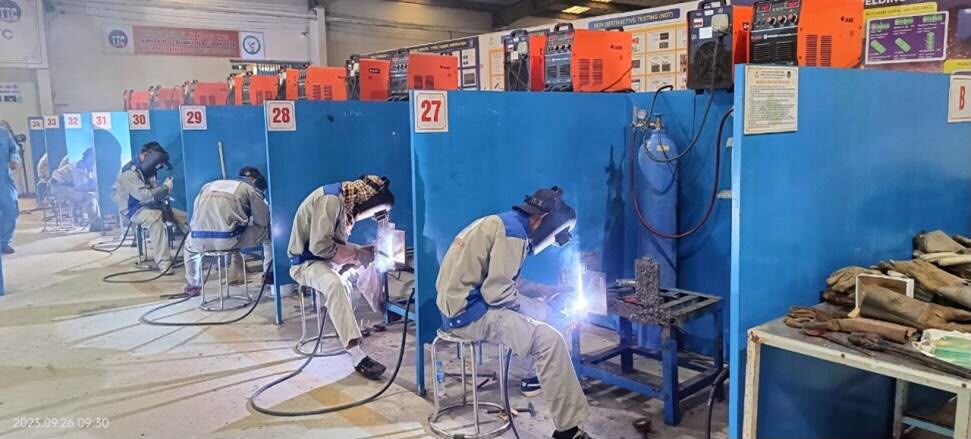
Capacity to supply welders from Vietnamese labor suppliers in 2026
Understanding E-7-3 Recruitment for Shipbuilding
Korea’s Ministry of Justice has identified E-7-3 within its measures concerning skilled shipbuilding personnel. An official November 2023 release described discussions with the shipbuilding industry about wage requirements and employer access to this recruitment route. These historical measures provide context, but they should not be treated as a complete statement of current eligibility.
The participation of Vietnamese workers is also documented. In June 2024, the Ministry announced approval for 24 Vietnamese shipbuilding trainees to change from D-4-6 status to E-7-3 under a pilot initiative. That announcement concerned a specific group and does not establish an automatic route for every Vietnamese applicant.
For a new recruitment project, the employer and its authorized Korean adviser should confirm the applicable occupation, employer conditions, candidate qualifications, and filing requirements before recruitment begins.
Passing an employer’s welding test is an important recruitment milestone. It should be considered separately from the immigration assessment. A technically suitable candidate still needs the appropriate employment and visa documentation.
Why Consider Vietnamese Welders for Korean Shipyards?
For employers assessing Vietnam as a recruitment market, the most useful question is whether available candidates match the production work.
A recruitment campaign can target workers with experience in shipbuilding, structural steel fabrication, industrial construction, mechanical manufacturing, or pipe welding. Each background offers different strengths, and relevant experience must be verified.
For example, a structural steel welder may have strong plate-welding experience but require preparation for a particular shipyard procedure. A pipe welder may be suitable for selected piping assignments while needing separate assessment for hull production.
Employers can improve selection by reviewing:
- Previous workplaces and actual welding duties.
- Welding processes used regularly.
- Materials, thicknesses, and joint types.
- Welding positions tested and used in production.
- Experience following drawings and welding instructions.
- Safety awareness and willingness to report problems.
The value of recruiting Vietnamese welders comes from this careful matching process. Nationality alone does not establish technical ability, productivity, or suitability for a specific shipyard.
Define the Welding Job Before Sourcing Candidates
A detailed job description helps the recruitment partner identify suitable workers and prevents avoidable misunderstandings.
Instead of requesting “experienced welders,” employers should explain the production assignment. Is the requirement for hull blocks, structural components, outfitting supports, or pipe systems? Will workers weld in a workshop, on board, or across different areas?
The recruitment brief should identify the required welding process, material, thickness range, positions, and acceptance criteria. It should also describe the expected working environment and reporting structure.
Information about base salary, working hours, overtime arrangements, accommodation, meals, transport, and deductions should be available before candidates accept employment.
These details influence both recruitment and retention. A worker who understands the technical assignment and employment conditions can make a better-informed decision, while the employer receives candidates who have agreed to a clearly explained role.
Assess Welding Processes and Qualifications Carefully
Different production assignments require different welding capabilities. Depending on the job, employers may seek experience in flux-cored arc welding, gas metal arc welding, gas tungsten arc welding, or shielded metal arc welding.
Recruitment teams should record the process each candidate has actually used, rather than relying on a general statement such as “MIG/TIG welder.”
Likewise, descriptions such as 3G, 4G, or 6G should be supported by qualification records and practical evidence. A position label alone does not explain the full scope of a worker’s qualification.
Employers may request credentials associated with ISO, AWS, ASME, or classification-society requirements. Their relevance depends on the work and the employer’s approved procedures.
A qualification review should examine the issuing organization, applicable standard, process, material, position, qualification range, and validity where relevant. Certificates should then be considered alongside recent work history and practical performance.
A worker’s ability to produce acceptable welds under the required procedure is more useful than a profile containing numerous unexplained certificate names.
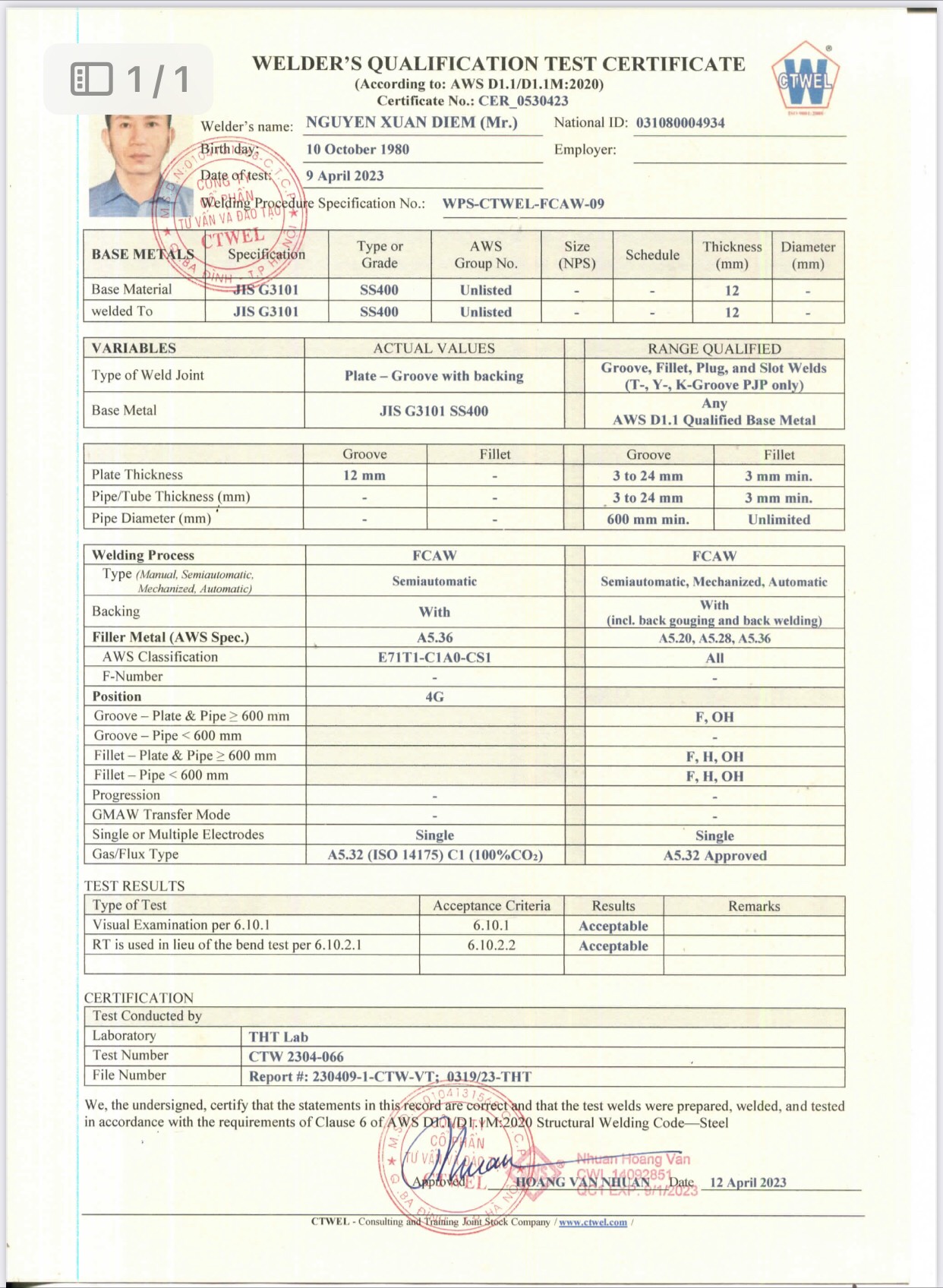
Vietnamese welders have obtained certifications according to international standards ISO 9606 – AWS – ASME IX – EN287-1.
Practical Welding Tests for Employer Selection
A well-designed practical test gives Korean employers direct evidence of candidate performance.
Before testing begins, the employer and recruitment partner should agree on the test specification. This includes the process, test piece, joint preparation, position, consumables, equipment, time allowance, and assessment method.
The test should also evaluate how candidates work. Assessors can observe preparation, equipment setup, instruction-following, cleaning between passes, and safe handling of tools and materials.
Where required by the employer’s test plan, the assessment may include visual examination, destructive testing, or nondestructive testing by suitably qualified personnel.
Results should be recorded consistently. A useful candidate assessment file can include the test specification, photographs, assessor comments, inspection results, and a clear selection decision.
Employer selection testing and any assessment required for the applicable immigration route must be distinguished. The recruitment team should establish which tests are needed and how their results will be recognized before advertising a campaign.
A Structured E-7-3 Recruitment Support Process
1. Confirm the Employer and Recruitment Requirement
The first step is to identify the actual employing company, workplace, occupation, and recruitment volume.
If the workers will be employed by a subcontractor, its legal identity and responsibilities should be clear. The name of the larger shipyard should not replace identification of the company signing the employment contract.
The Korean side should confirm whether the proposed recruitment can proceed under the applicable rules and what evidence will be required.
2. Source and Screen Candidates in Vietnam
Candidate sourcing should follow the approved job specification.
Initial screening can review identity documents, work history, qualifications, overseas employment experience, and availability. Candidates should receive accurate information about the job before investing time in interviews or tests.
Screening should also identify inconsistencies that require clarification, such as conflicting employment dates or certificates unrelated to the proposed work.
3. Conduct Interviews and Practical Assessments
Interviews help employers understand technical experience and expectations. Practical assessments provide evidence of welding performance.
The employer may participate directly or agree on a documented assessment arrangement with the recruitment partner. Selection criteria should be consistent across candidates.
Candidates who need additional preparation should receive specific feedback. Training can address identified gaps, but it should not be presented as a guarantee of later selection or visa approval.
4. Confirm Employment Terms
Selected workers should receive a clear explanation of the employment offer.
The explanation should cover wages, payment arrangements, working hours, overtime, accommodation, meals, insurance, deductions, and contract duration where applicable.
Workers need to understand which payments are fixed and which depend on actual working arrangements. Questions should be resolved before final acceptance.
5. Coordinate Documents and Application Preparation
The Vietnam recruitment partner can organize candidate records and coordinate with the Korean employer or its authorized representative.
Depending on the applicable requirements, preparation may involve identity documents, employment evidence, qualifications, contracts, translations, authentication, and other supporting records.
The current checklist must come from the responsible authorities and the adviser handling the case. Document requirements should not be copied unchanged from an earlier recruitment campaign.
6. Prepare Workers and Coordinate Departure
Departure planning should follow the necessary approvals.
Pre-departure preparation can cover basic Korean communication, workplace expectations, personal finances, emergency contacts, travel arrangements, and the employment conditions already agreed.
The employer and recruitment partner should confirm arrival responsibilities so that workers know who will meet them and how they will reach their accommodation and workplace.
Documents and Record Quality
Accurate records support both recruitment decisions and application preparation.
Employers benefit from a candidate file that clearly connects identity, employment history, qualifications, and test results. Names, dates, job titles, and document details should be checked for consistency.
Experience letters should describe the candidate’s actual duties. A general statement that someone worked for a fabrication company provides less useful evidence than a record identifying welding processes and production assignments.
Document handling should also protect personal information. Candidate records should be shared only with parties who need them for the recruitment or application process.
A reliable recruitment partner identifies missing evidence early, explains how it can be addressed, and avoids submitting unverified claims.
Training for Shipyard Readiness
Technical preparation is most effective when it follows the employer’s requirements and the candidate’s assessment results.
A training plan might focus on joint preparation, welding parameters, positional practice, defect recognition, drawing interpretation, or the use of relevant workshop equipment.
Safety preparation should address the hazards workers may encounter, including hot work, fumes, confined spaces, work at height, and moving equipment. Training in Vietnam supports readiness, while the Korean employer remains responsible for workplace-specific induction and supervision.
Basic Korean language preparation can help workers recognize instructions, understand warning signs, report defects, and request assistance.
Workers should be encouraged to ask when an instruction is unclear. Early communication can prevent a small misunderstanding from becoming a production or safety problem.
Recruiting Other Shipbuilding Trades
Shipbuilding recruitment projects may also involve pipe fitters, fabricators, painters, electricians, and hull assembly workers.
Each trade needs its own job specification and assessment method. Welding experience does not automatically demonstrate competence in fabrication, pipe fitting, electrical installation, or surface preparation.
The applicable immigration classification and conditions must also be checked separately for each occupation. Employers should not assume that every job performed inside a shipyard follows the same E-7-3 requirements.
For a mixed recruitment campaign, separate candidate lists, technical criteria, and document checklists make the process easier to manage and review.
Choosing a Vietnam Manpower Recruitment Partner
Korean employers should evaluate a Vietnam manpower supplier through verifiable evidence and a clearly defined service scope.
The partner should explain its legal role, relevant authorization, sourcing methods, assessment facilities, document controls, and responsibilities after deployment.
Employers can request a sample candidate file and assessment report. These show how the supplier records experience, verifies qualifications, and presents selection evidence.
Commercial terms also deserve careful review. The agreement should identify recruitment costs, payment responsibilities, reporting arrangements, and any replacement provisions.
A good recruitment proposal explains assumptions and dependencies. It gives the employer a realistic picture of what can be delivered, when decisions are needed, and which matters require government approval.
Deployment Planning and Worker Retention
Recruitment timelines depend on several stages: candidate availability, testing, document preparation, employer readiness, administrative review, and travel coordination.
A useful deployment plan identifies milestones rather than promising a single arrival date before the necessary work is complete.
Employers can monitor the number of candidates screened, tested, selected, documented, approved, and ready to travel. This makes delays easier to identify and address.
Support should continue after arrival. Workers may need help understanding accommodation arrangements, payslips, transport, workplace communication, or administrative procedures.
Early follow-up gives both sides a chance to resolve problems. A worker may need further instruction in a specific task, while an employer may need clarification about an expectation communicated during recruitment.
Retention is supported by accurate job matching, transparent employment terms, effective supervision, and accessible communication.
Frequently Asked Questions
Can Korean shipyards recruit Vietnamese welders through E-7-3?
Vietnamese workers have participated in officially documented shipbuilding initiatives involving E-7-3. For a new project, the employer must confirm the applicable occupation, candidate conditions, and current application requirements. Eligibility is assessed for the specific case.
Does every Vietnamese welder qualify for E-7-3?
No. Recruitment suitability and immigration eligibility require separate review. Welding experience alone should not be treated as proof that a candidate meets every requirement.
Are 3G, 4G, or 6G qualifications required?
The required qualification depends on the job and the applicable assessment framework. Employers should define the welding process, position, material, and accepted evidence rather than requesting a position label without further detail.
Can employers organize welding tests in Vietnam?
Tests can be planned with the recruitment partner where suitable facilities and assessment arrangements are available. The parties should confirm the specification, inspection method, assessor responsibilities, and any recognition needed for the recruitment route.
How long does recruitment and deployment take?
Timing varies with sourcing, assessment, document readiness, application review, and travel arrangements. Employers should request a milestone-based schedule and update it as the project progresses.
Can recruitment include painters, electricians, and fabricators?
A recruitment campaign can assess several trades, but each occupation needs separate technical criteria and immigration verification. A shipyard location does not establish that all roles share the same visa conditions.
Is visa approval guaranteed after passing a welding test?
No. Passing a practical test supports the employer’s selection decision. The relevant authorities make immigration decisions based on the applicable requirements and submitted evidence.
What should an employer send to a Vietnam recruitment partner?
Provide the employing company’s details, workplace, trade, headcount, welding specification, selection criteria, employment terms, and proposed schedule. A detailed brief helps the partner assess candidate availability and prepare an appropriate recruitment proposal.
Discuss Your Vietnamese Welder Recruitment Requirements
For Korean shipbuilding employers, a successful recruitment project starts with a defined production requirement and a process that verifies each candidate’s suitability.
VXT Group welcomes enquiries from Korean shipyards and shipbuilding contractors seeking Vietnamese welders and related technical personnel.
Share your required headcount, welding processes, test positions, workplace, employment conditions, and preferred deployment schedule. These details provide the basis for discussing candidate sourcing, practical testing, documentation coordination, and worker preparation.
With clear responsibilities and careful assessment, Vietnamese welder recruitment can become a practical part of your shipyard workforce planning.
Contact Vietnam Manpower Supply Agency today to discuss your specific workforce needs and discover the difference that skilled Vietnamese workers make.
Do you want to hire #workers, seasonal workers and long-term workers from Vietnam?
But you don’t know about:
❓ What kind of service we provide?
👉 Consulting on finding Vietnamese welders
👉 Looking for a supply of welder human resources
👉 Consult about Vietnam’s labor market
👉 Source suitable workers meeting your requirements
👉 Take documents procedures in Vietnam
👉 Train workers languages and vocational skills
👉 Handle problems while Vietnamese workers work in EU
Please contact #Vietnammanpowersupply for #internationalhiring,
We will support you to do all things.
DETALL: #GLOBALSTAFFRECRUITMENT
Tel/Whatsapp: (+84 ) 982 0303 66 – CEO
🌐 LinkedIn: https://www.linkedin.com/company/vietnam-human-resources-group/
Website: vnmanpower.net
Email: namnq.vtc@gmail.com
Youtobe: https://www.youtube.com/@vietnammanpowersupply
#InternationalRecruitmentAgency #ManpowersupplyAgency #vietnammanpowersupply #manpoweragency #manpowersupply #manpowergroup #manpowervietnam #manpowercompany #manpowersupplycompany #Weldersupply #Supplyofshipwelders #weldermanpowersupply