
Vietnamese 6G Pipe Welders: How to Assess Candidate Skills
Assessing Vietnamese 6G pipe welders requires more than reviewing a certificate or watching a short welding demonstration. Employers need evidence that candidates can perform the specified pipe welding work, follow the applicable welding procedure and produce results that satisfy the project’s acceptance criteria.
The term “6G welder” describes a welding position. It does not establish the welding process, material experience or complete qualification scope of an individual worker.
For shipyards, piping contractors and industrial employers recruiting from Vietnam, a structured assessment helps connect candidate skills to actual production requirements. The process should combine experience verification, qualification review, practical testing and examination of the completed weld.
This guide explains how to assess Vietnamese 6G pipe welders and use the results to make better hiring decisions.
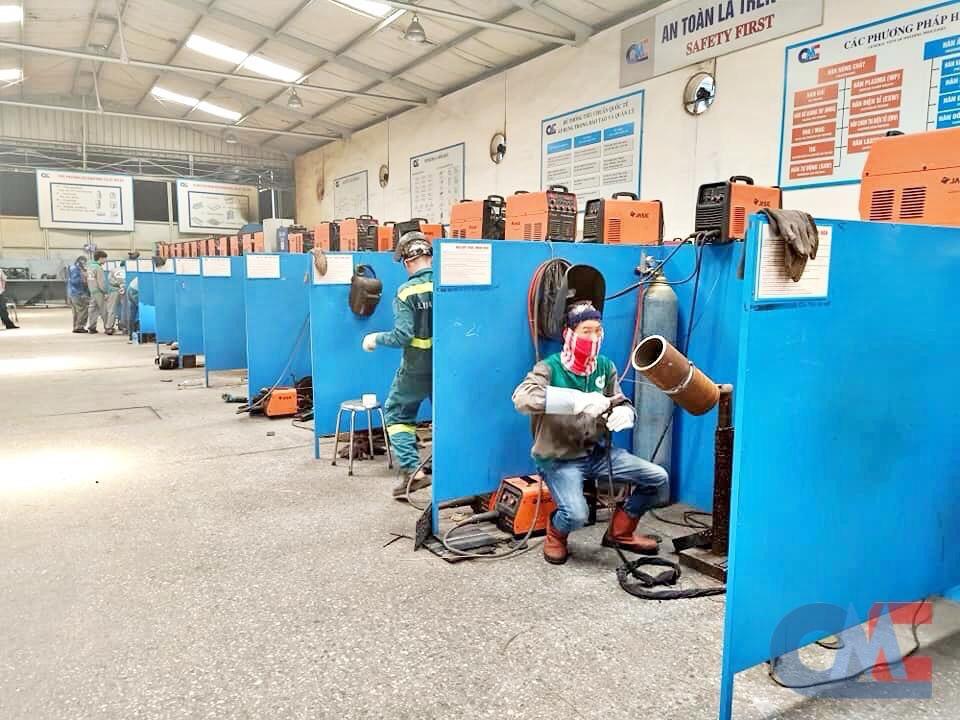
6G welders from Vietnam are the solution for shipbuilding companies and boiler manufacturers in South Korea.
What Is a 6G Pipe Welding Position?
The 6G position involves welding a fixed pipe with its axis inclined at approximately 45 degrees. The welder works around the joint without rotating the pipe to keep the weld in an easier position. TWI describes 6G as an inclined pipe welding position.
This arrangement challenges the candidate to adapt technique around the circumference while maintaining the required weld quality.
However, the position is only one part of the assessment. Employers also need to define the process, material, pipe dimensions, joint configuration and other applicable requirements.
A candidate may have passed a 6G test using one process but lack experience with another. Similarly, experience on one pipe material does not automatically establish suitability for a different assignment.
The assessment must reflect the proposed job.
Vietnamese welders are a top choice for international employers – Search for welders
Start with the Actual Pipe Welding Assignment
Before reviewing candidates, prepare a technical description of the work.
A request for “experienced Vietnamese 6G pipe welders” leaves too many details unresolved. Recruiters need to know what the workers will weld and under which requirements.
The employer’s brief should identify:
- Welding process or process combination.
- Pipe material and relevant specifications.
- Typical diameters and wall thicknesses.
- Joint configuration and backing arrangements.
- Required welding position and progression.
- Applicable WPS and governing requirements.
- Examination and acceptance criteria.
- Production environment and supervision.
For example, a carbon steel assignment with a GTAW root and SMAW fill requires different evidence from a stainless steel assignment using GTAW throughout.
These details guide sourcing, interviews and practical testing.
Review Relevant Production Experience
Years of experience provide background, but they do not explain what a candidate can do.
Employers should examine the worker’s actual responsibilities, including the welding processes used, pipe materials, project types and inspection arrangements.
A useful interview asks the candidate to describe a completed assignment:
- What pipework did you weld?
- Which process did you use for each part of the joint?
- What procedure or instructions did you follow?
- How was the weld inspected?
- What happened when a repair was required?
- Who supervised or approved the work?
Specific answers help distinguish hands-on pipe welding experience from general participation in a fabrication team.
Where possible, compare the interview with employment records and qualification documents. Resolve inconsistencies before final selection.
Separate Welding Competence from Pipe Fitting Skills
Pipe welding and pipe fitting are related activities, but they should not be treated as identical competencies.
Some candidates can interpret isometric drawings, prepare joints and complete fit-up as well as weld. Others work primarily as welders after a fitter has prepared the assembly.
The employer should define whether the position includes fitting responsibilities.
If it does, assess those tasks separately. Relevant checks may include component identification, dimensional understanding and interpretation of the required drawings.
A strong 6G weld result does not establish that the candidate can independently assemble a piping system. Likewise, fitting experience does not prove welding competence.
Clear role boundaries help employers select the right person and plan supervision accurately.
Verify the Welding Processes Used
The process used in the candidate’s previous work and qualifications must match the recruitment requirements.
GTAW or TIG Pipe Welders
For GTAW roles, assess the candidate’s actual pipe welding experience, including whether it involved root welding, filling and capping or only part of the joint.
TWI notes that TIG welding offers controlled penetration useful in pipe root runs. This makes process-specific assessment important where root welding forms part of the assignment.
The test should reflect the employer’s required material and configuration.
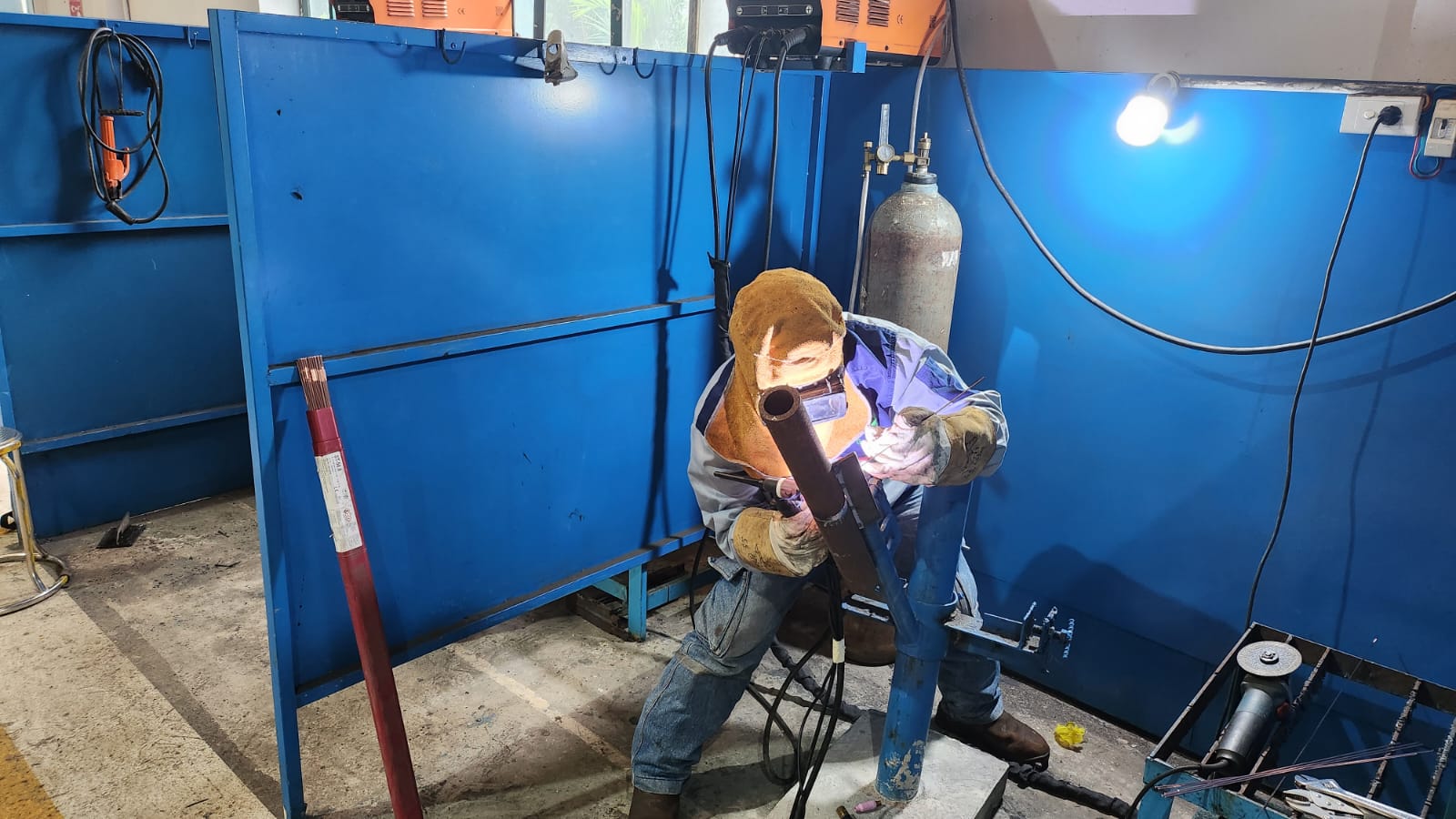
Vietnamese 6G welders are the top choice for international employers – Search for welders
SMAW Pipe Welders
For SMAW assignments, verify experience with the specified consumables, pipework and progression.
Candidates should demonstrate familiarity with the applicable instructions and produce acceptable results under the agreed test conditions.
FCAW and GMAW Candidates
Where the assignment involves FCAW or GMAW, assess the specified application directly.
Experience with plate welding or another pipe welding process should not automatically be accepted as proof of competence.
Combined-Process Candidates
For combined-process work, identify which process is used for each part of the weld.
The assessment records should preserve this distinction so the employer can review the result and any qualification limitations correctly.
Check Qualification Documents for Scope and Relevance
A certificate should be reviewed as technical evidence, not simply counted as a recruitment credential.
Check the candidate’s identity, governing standard or code, welding process, test configuration, examination results and issuing arrangements.
AWS guidance explains that welder performance qualification records should capture the applicable process variables and test results, with documentation requirements determined by the individual code or standard.
A competent reviewer should establish whether the documented qualification covers the proposed assignment.
Review applicable validity and continuity requirements as well. Avoid adopting a universal expiry rule across different qualification frameworks.
A 6G qualification should not be assumed to cover every process, pipe diameter, thickness or material.
Authenticity and acceptance by the receiving project are separate checks. Both matter.
Design a Representative 6G Practical Test
A practical assessment should provide evidence relevant to the job.
Agree on the test specification before candidates arrive. This prevents inconsistent conditions and results that cannot support the employer’s decision.
| Test element | What to define |
|---|---|
| Process | Single process or specified combination |
| Material | Pipe specification |
| Dimensions | Diameter and wall thickness |
| Joint | Preparation and applicable backing arrangements |
| Position | Fixed inclined configuration and required progression |
| Instructions | Applicable WPS and supporting documents |
| Examination | Required methods and acceptance criteria |
| Witnessing | Accepted assessor or examiner arrangements |
| Records | Candidate identification and reporting format |
The test facility should provide suitable equipment, consistent materials and appropriate workplace controls.
Candidates should receive a clear briefing, with language support where needed to understand instructions.
Assess the Candidate’s Understanding of the WPS
The welding procedure specification provides the instructions applicable to the assessment.
AWS guidance on performance qualification emphasizes following a WPS suitable for the qualification, including relevant variables and limitations. Employers should confirm the requirements of the framework governing their test.
Ask candidates to explain the parts of the instructions relevant to their task.
They should know when clarification is necessary and avoid substituting their preferred method without approval.
The assessment should observe whether the worker follows the supplied instructions throughout the test.
Remember that welder performance qualification and welding procedure qualification address different questions. Demonstrating an individual’s skill does not automatically qualify a new production procedure.
Observe Preparation and Working Method
The finished weld is important, but observation during the test adds useful evidence.
Assessors should record how candidates organize their work, interpret instructions and respond to problems.
Where preparation or fit-up forms part of the role, include it explicitly in the assessment. Where those activities are supplied by the facility, keep that arrangement consistent across candidates.
Identity and test-piece references should remain traceable throughout the event.
Document any permitted assistance and any departures from the agreed test conditions.
This helps employers distinguish independent performance from a result achieved with substantial coaching or unrecorded intervention.
Evaluate Root, Fill and Cap Responsibilities
For recruitment purposes, it is useful to understand which parts of a pipe weld the candidate can perform.
Some workers specialize in root welding, while others complete the entire joint. Combined-process assignments may divide responsibilities further.
The practical test should reflect the intended role.
Assessors should observe the candidate’s performance across the assigned stages and record relevant interruptions or corrections.
Final examination remains necessary under the agreed requirements. Observations during welding support the review but do not replace the specified tests.
If different candidates complete different portions of an assessment joint, records must identify their individual contributions accurately.
Examine the Completed Weld Correctly
Agree on examination methods and acceptance criteria before testing.
Visual examination can provide information about surface condition and weld profile. Depending on the governing requirements, additional non-destructive or mechanical testing may be needed.
Radiographic testing, ultrasonic testing and other methods should be selected through technical review. They should not be treated as interchangeable by default.
A visually attractive cap does not prove acceptable internal weld quality.
Examination reports should identify the test piece and candidate clearly. Qualified personnel should interpret the results under the applicable criteria.
For formal qualification, follow the required examination and acceptance arrangements rather than relying on a recruitment score alone.
Use a Balanced Recruitment Assessment
Technical acceptance should be combined with other evidence relevant to employment.
A recruitment review can consider:
| Assessment area | Evidence to review |
|---|---|
| Welding ability | Practical performance and examination results |
| Procedure compliance | Observed adherence to instructions |
| Relevant experience | Specific duties and supporting records |
| Quality awareness | Response to defects and inspection feedback |
| Communication | Ability to understand and report issues |
| Safety judgment | Response to workplace scenarios |
Where formal qualification applies, mandatory acceptance requirements must be met. Strong communication or experience should not compensate for a failed required welding examination.
The employer should document whether a candidate is approved, declined or referred for further preparation and reassessment.
Keep Trade Tests and Certification Claims Clear
An employer’s trade test supports a hiring decision. It does not automatically create a recognized qualification or certification.
If formal qualification is intended, confirm the governing requirements, accepted witnessing arrangements and authority to issue the records.
Recruitment reports should describe the result accurately.
Avoid advertising a candidate as universally qualified because they passed one 6G test. The documented scope remains important.
Remote video can support screening, but it may not satisfy formal witnessing requirements. Employers should verify those arrangements separately.
Transparent reporting protects the usefulness of the assessment and reduces misunderstandings during project acceptance.
Address Safety and Communication
Candidate assessment should include practical judgment.
Ask what the worker would do if the instructions conflict, equipment appears unsuitable or an unexpected condition prevents work from continuing correctly.
The response should demonstrate willingness to stop, report the issue and obtain guidance.
Language assessment should reflect the employer’s communication arrangements. Workers need to understand instructions and report technical or safety concerns through the available channels.
Site-specific duties, including restricted-area or confined-space work, require separate preparation and authorization.
A successful 6G test demonstrates performance under its conditions. It does not establish readiness for every production environment.
Use Results to Plan Recruitment and Training
Assessment results should identify each candidate’s approved duties and preparation needs.
A worker may be suitable for one process or material assignment while requiring additional assessment for another.
Targeted training can address identified gaps. Any subsequent retest should be recorded separately from the original result.
For Korean recruitment, technical approval should also remain separate from immigration eligibility. A 6G certificate or trade test result does not guarantee visa approval.
Share assessment records with receiving supervisors so they can assign work appropriately.
After deployment, use feedback on workmanship, repairs and communication to improve future selection.
Frequently Asked Questions
What does 6G mean in pipe welding?
It refers to welding a fixed pipe inclined at approximately 45 degrees. The position challenges the welder to work around the circumference without rotating the pipe.
Are all Vietnamese 6G pipe welders TIG welders?
No. Candidates may use GTAW, SMAW, FCAW, GMAW or specified combinations. Employers should verify and assess the process required for the job.
Does a 6G certificate cover every pipe welding assignment?
No universal assumption should be made. Review the applicable qualification range for process, dimensions, material and other relevant variables.
Should pipe fitting be included in the test?
Include it when fitting forms part of the position. Assess fitting skills separately rather than infer them from welding performance.
Is visual inspection enough?
The required examination depends on the test purpose and governing requirements. Additional examination may be necessary, and the employer should establish this beforehand.
Can employers assess candidates remotely?
Remote review can support recruitment screening with suitable identity checks and documentation. Acceptance for formal witnessing requires separate confirmation.
Does passing a trade test guarantee certification?
No. Recognized qualification or certification requires the applicable framework, examination arrangements and issuing process.
What documents should an employer request?
Request relevant experience records, qualification documents, test specifications, individual assessment results and examination reports linked to the correct candidate.
Discuss Your 6G Pipe Welder Assessment Requirements
Assessing Vietnamese 6G pipe welders works best when the employer defines the assignment clearly and evaluates candidates through relevant, traceable evidence.
Experience reviews, qualification checks and practical examinations provide a stronger basis for selection. Accurate reporting then helps supervisors understand each worker’s capabilities.
Employers exploring cooperation with VXT GROUP can begin by sharing the required processes, materials, pipe dimensions, qualification requirements and candidate numbers.
A project-specific discussion can establish the assessment scope, testing arrangements and reporting format, helping identify Vietnamese pipe welders suited to the actual work.
Contact Vietnam Manpower Supply Agency today to discuss your specific workforce needs and discover the difference that skilled Vietnamese workers make.
Do you want to hire #workers, seasonal workers and long-term workers from Vietnam?
But you don’t know about:
❓ What kind of service we provide?
👉 Consulting on finding Vietnamese welders
👉 Looking for a supply of welder human resources
👉 Consult about Vietnam’s labor market
👉 Source suitable workers meeting your requirements
👉 Take documents procedures in Vietnam
👉 Train workers languages and vocational skills
👉 Handle problems while Vietnamese workers work in EU
Please contact #Vietnammanpowersupply for #internationalhiring,
We will support you to do all things.
DETALL: #GLOBALSTAFFRECRUITMENT
Tel/Whatsapp: (+84 ) 982 0303 66 – CEO
🌐 LinkedIn: https://www.linkedin.com/company/vietnam-human-resources-group/
Website: vnmanpower.net
Email: namnq.vtc@gmail.com
Youtobe: https://www.youtube.com/@vietnammanpowersupply
#InternationalRecruitmentAgency #ManpowersupplyAgency #vietnammanpowersupply #manpoweragency #manpowersupply #manpowergroup #manpowervietnam #manpowercompany #manpowersupplycompany #Weldersupply #Supplyofshipwelders #weldermanpowersupply