
Hull Welding and Pipe Welding: Selecting the Right Workers
Selecting workers for hull welding and pipe welding starts with understanding the job. Both roles involve welding, procedure compliance and quality control, but their production tasks and required experience can differ substantially.
A candidate experienced in structural plate welding may not be ready for a pipe assignment involving a different process, material or root configuration. Similarly, a pipe welder with strong practical skills may need additional assessment before joining a hull fabrication team.
For shipyards and subcontractors recruiting Vietnamese workers, the objective is to match demonstrated competence to the actual work package. Job titles and certificate labels provide useful information, but they need supporting evidence.
This guide compares hull welding and pipe welding and explains how employers can evaluate experience, qualification documents and practical performance before making recruitment decisions.
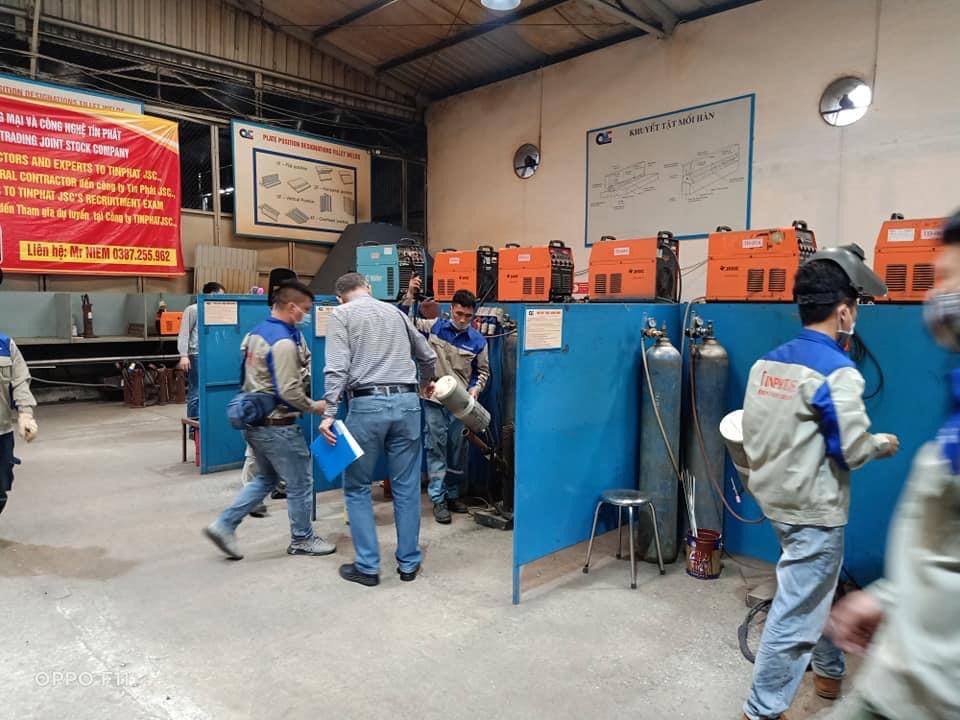
Screening Vietnamese welders, Finding the best 6G welders
Understanding Hull Welding Work
Hull welding concerns the vessel’s structural construction, including assigned welding work on plates, stiffeners, frames, bulkheads and other structural components.
The exact role depends on the employer’s work package. A worker may be involved in workshop fabrication, block assembly or joining structures at a later construction stage.
Recruitment should identify the joints, welding processes and positions involved. It should also explain whether the job includes preparation, fitting or other fabrication duties.
Hull welders may work alongside fitters, fabricators and inspection personnel. Employers should assess how candidates follow instructions and coordinate with these teams.
A general claim of “shipbuilding experience” is insufficient. The candidate’s profile should describe which structural tasks they actually performed.
Understanding Pipe Welding Work
Pipe welding concerns joining pipework under the applicable project requirements.
Assignments can involve different materials, dimensions, processes and joint configurations. Some workers weld prepared joints in a fabrication workshop, while others perform defined installation duties onboard.
The required role may involve a single process or a combination. Employers should specify whether a candidate must complete the entire weld or perform a particular stage.
Root welding responsibilities deserve clear identification because they can differ between assignments.
Pipe welding should also be distinguished from pipe fitting. Some candidates have both skills, but welding performance alone does not establish drawing interpretation, dimensional control or assembly competence.
The recruitment brief should define those responsibilities separately.
Hull Welding vs. Pipe Welding: Main Recruitment Differences
The comparison below provides a starting point. Actual requirements must come from the employer’s project documents.
| Selection area | Hull welding | Pipe welding |
|---|---|---|
| Typical workpiece | Structural plates and assembled components | Pipe joints and piping assemblies |
| Relevant experience | Structural fabrication and assembly welding | Specified pipe welding assignments |
| Joint requirements | Project-specific groove and fillet welds | Project-specific pipe joint configurations |
| Position assessment | Positions relevant to structural work | Fixed or rotated configurations relevant to pipework |
| Additional skills | Fabrication coordination and structural drawing knowledge | Pipe drawing or fitting knowledge where required |
| Qualification review | Scope matching the structural assignment | Scope matching process, dimensions and pipe assignment |
| Practical test | Representative structural welding task | Representative pipe welding task |
Neither role should be treated as automatically interchangeable with the other.
The correct decision depends on the worker’s verified experience, qualification range and practical performance.
Begin with a Detailed Job Specification
Before sourcing candidates, prepare separate requirements for hull and pipe welding positions.
For each role, identify:
- Welding process or combination of processes.
- Material specification.
- Relevant dimensions and joint configuration.
- Required positions and progression.
- Applicable welding procedure specification.
- Qualification and examination requirements.
- Additional preparation or fitting duties.
- Expected supervision level.
The brief should also include the employing company, workplace, headcount and employment conditions.
Clear specifications help recruiters select candidates accurately and prevent assessments from becoming generic demonstrations unrelated to the assignment.
Where technical details remain uncertain, obtain clarification from the employer’s welding specialists before testing begins.
Select by Welding Process, Not Job Title Alone
A candidate’s title does not identify their process competence.
Hull and pipe assignments may use FCAW, SMAW, GMAW, GTAW or other specified processes. The employer should state which process applies to each part of the work.
For a combined-process pipe assignment, establish the candidate’s experience with both the root process and the filling or capping process.
For structural recruitment, verify that the worker’s process experience matches the required production application.
A successful assessment using one process should not automatically be extended to another.
Candidate profiles should describe the process actually used in previous employment and qualification tests. This provides a stronger basis for selection than a broad statement such as “experienced welder.”
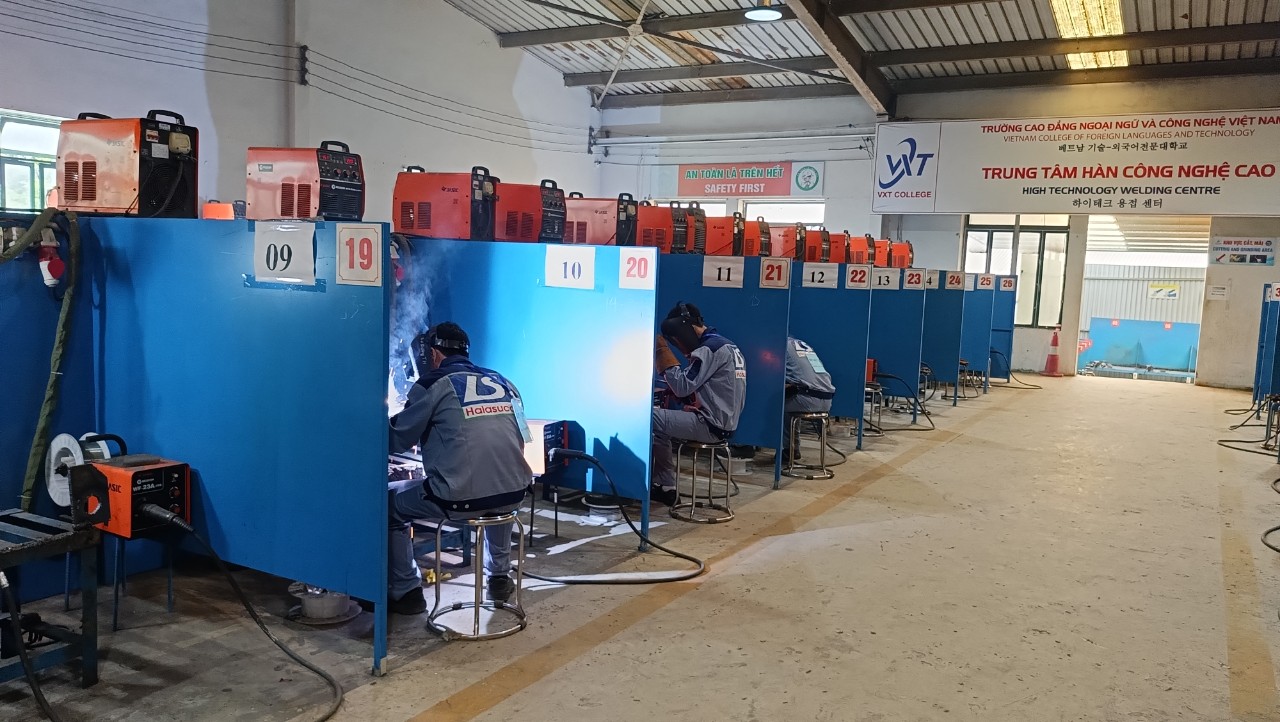
3G Welders in Vietnam: A manpower solution for shipbuilding companies, seeking the best 3G welders.
Review Materials and Production Experience
Material experience is another important selection factor.
A worker’s carbon steel background should not automatically be treated as evidence of competence with stainless steel, aluminum or another material.
The employer should identify the required material and review both qualification records and practical experience against it.
Interviews should explore actual assignments rather than only years of service.
Ask candidates to describe the workpiece, process, instructions and examination methods used. Their answers should explain their personal responsibilities, including the level of supervision.
Where possible, compare those descriptions with employment records.
Relevant production experience helps employers understand how candidates may perform beyond the controlled conditions of a test.
Interpret 3G, 4G and 6G Qualifications Carefully
Position labels are useful, but incomplete.
In common AWS terminology, 3G describes vertical groove welding, 4G overhead groove welding and 6G fixed inclined pipe groove welding.
These terms do not establish the process, material or full qualification range.
A 6G qualification should not automatically be interpreted as universal competence across every welding task. A structural welder’s position qualifications should likewise be reviewed against the actual production duties.
The governing framework determines the applicable coverage.
Employers should request the complete records and obtain a technical review where necessary. Recruitment decisions should consider both qualification coverage and practical suitability for the proposed work.
Review International Welding Qualifications
Qualification references may include ISO 9606, AWS D1.1 and ASME Section IX, depending on the assignment.
ISO identifies ISO 9606-1 as covering qualification testing for fusion welding of steels. Employers should review the applicable part and documented qualification scope rather than rely on the phrase “ISO certified welder.”
ASME Section IX addresses qualification of welding procedures and personnel where the governing requirements invoke it. Its presence on a candidate’s records does not establish acceptance for every project.
Review candidate identity, test configuration, process, examination results and issuing arrangements.
Applicable validity and continuity records should also be checked. Avoid applying one universal expiry rule to all qualification frameworks.
Distinguish Welder Qualification from Procedure Qualification
Employers should keep individual competence and procedure approval separate.
TWI explains that procedure approval demonstrates that welding under the procedure produces the required properties, while welder approval demonstrates the individual’s ability to produce acceptable weld quality.
A worker passing a practical test does not automatically qualify a new production procedure.
Likewise, an approved procedure does not prove that every candidate can use it successfully.
For recruitment, establish the applicable WPS and assess the candidate’s ability to follow it. For production, ensure the relevant procedure and personnel requirements are satisfied.
This distinction prevents misunderstandings when employers review testing records.
Practical Tests for Hull Welder Candidates
A hull welding assessment should represent the structural assignment.
Define the material, joint, position, process and instructions before the event.
Where preparation or fabrication forms part of the role, include those tasks explicitly. Otherwise, provide consistent preparation across candidates.
Observe how the worker interprets instructions, organizes the task and completes the welding.
Assessors should record relevant departures from the agreed requirements and any assistance provided.
The finished test piece should undergo the examination specified by the assessment plan.
A recruitment test can also consider communication and working discipline, but these factors should not replace mandatory technical acceptance.
Practical Tests for Pipe Welder Candidates
Pipe assessments should reflect the required process combination, dimensions, material and configuration.
If the role requires complete joint welding, assess the relevant stages. If the candidate is being recruited for a narrower responsibility, make that scope clear.
Pipe fitting tasks should be included only where they form part of the job and should receive separate evaluation.
Observe procedure compliance, work organization and response to problems.
A neat cap does not establish acceptable internal weld quality. Examination must follow the agreed requirements.
Keep candidate identity, test pieces and reports traceable throughout the assessment.
This allows the employer to connect the result confidently with the worker being selected.
Use Appropriate Examination and Acceptance Criteria
The employer should determine examination methods and acceptance criteria before testing begins.
Visual examination may form part of the review. Additional non-destructive or mechanical testing can be required under the governing framework.
Radiographic Testing and Ultrasonic Testing should not be treated as interchangeable without technical review.
The suitability of an examination method depends on the configuration and applicable requirements.
Formal qualification decisions must follow the relevant acceptance rules. A high interview score or long employment history should not compensate for failure to meet a mandatory examination requirement.
Where retesting is allowed, document the reason, additional preparation and subsequent result separately.
Assess Drawing Knowledge and Supporting Skills
Drawing comprehension should match the position.
Hull welding candidates may need to understand structural identification, joint locations or welding symbols relevant to their assigned work.
Pipe welders may need to interpret joint references and other documents associated with the welding task. Isometric reading and dimensional control should be assessed where fitting responsibilities are included.
Do not require unrelated skills simply to make a test more demanding.
Equally, do not assume that strong welding performance proves competence in assembly, fitting or supervision.
Define supporting duties explicitly and verify them with appropriate evidence.
This helps employers build teams with complementary skills.
Make Individual Recruitment Decisions
Selection should combine qualification review, relevant experience and current practical results.
Useful outcomes include:
- Approved for the defined assignment.
- Suitable for specified duties with additional supervision.
- Further preparation and reassessment required.
- Unsuitable for the proposed role.
Avoid reporting only a group pass rate.
Each candidate should have a clear assessment record describing approved scope and limitations.
For example, a strong plate FCAW candidate may suit a hull welding position but still need a separate assessment for a GTAW pipe assignment.
The same principle applies in the other direction: pipe experience does not remove the need to assess unfamiliar structural production duties.
Recruit Vietnamese Workers Through an Organized Process
Employers recruiting from Vietnam should work through an appropriately authorized arrangement and clearly identify the actual employing company.
The recruitment partner should explain sourcing, assessment, document review and preparation responsibilities.
Technical approval should remain separate from immigration eligibility.
For Korean employment involving a proposed E-7-3 route, confirm the current requirements for the occupation, employer and candidate rather than infer eligibility from a welding certificate.
Workers should receive understandable employment terms and preparation linked to their assignment.
After arrival, supervisors should review assessment records, provide site induction and assign duties within demonstrated competence.
Frequently Asked Questions
What is the main difference between hull welding and pipe welding?
Hull welding concerns structural components, while pipe welding concerns pipe joints. Their specific processes, configurations and qualification requirements depend on the assignment.
Can a hull welder become a pipe welder?
A candidate can be assessed for the role, but structural experience alone does not establish pipe welding competence. Additional training, testing or qualification may be needed.
Can a 6G pipe welder perform hull welding?
Review the qualification coverage and assess the actual structural tasks. Do not assume suitability solely from the 6G designation.
Should employers recruit all welders under one job description?
Separate specifications are more useful when processes, materials or duties differ. This improves sourcing and assessment accuracy.
Is a certificate enough to approve a worker?
A certificate provides supporting evidence. Review its scope and authenticity alongside relevant experience and current practical performance.
Must every test include RT and UT?
No universal requirement should be assumed. Follow the examination methods specified by the governing requirements and agreed assessment plan.
Are pipe fitting and pipe welding the same skill?
They are related but distinct. Assess fitting duties separately when included in the role.
What should employers provide in a recruitment inquiry?
Provide the work package, process, material, joint configuration, positions, qualification requirements, headcount and employment conditions.
Discuss Your Hull and Pipe Welding Workforce Requirements
Selecting the right workers for hull welding and pipe welding depends on matching verified skills to defined production tasks.
Clear job specifications, qualification reviews and representative trade tests help employers identify suitable candidates and understand their limitations.
Shipyards and subcontractors exploring cooperation with VXT GROUP can begin by sharing their structural and piping requirements separately.
A project-specific discussion can then establish candidate selection, assessment arrangements and preparation needs, helping build a Vietnamese welding workforce suited to the actual shipbuilding work.
Contact Vietnam Manpower Supply Agency today to discuss your specific workforce needs and discover the difference that skilled Vietnamese workers make.
Do you want to hire #workers, seasonal workers and long-term workers from Vietnam?
But you don’t know about:
❓ What kind of service we provide?
👉 Consulting on finding Vietnamese welders
👉 Looking for a supply of welder human resources
👉 Consult about Vietnam’s labor market
👉 Source suitable workers meeting your requirements
👉 Take documents procedures in Vietnam
👉 Train workers languages and vocational skills
👉 Handle problems while Vietnamese workers work in EU
Please contact #Vietnammanpowersupply for #internationalhiring,
We will support you to do all things.
DETALL: #GLOBALSTAFFRECRUITMENT
Tel/Whatsapp: (+84 ) 982 0303 66 – CEO
🌐 LinkedIn: https://www.linkedin.com/company/vietnam-human-resources-group/
Website: vnmanpower.net
Email: namnq.vtc@gmail.com
Youtobe: https://www.youtube.com/@vietnammanpowersupply
#InternationalRecruitmentAgency #ManpowersupplyAgency #vietnammanpowersupply #manpoweragency #manpowersupply #manpowergroup #manpowervietnam #manpowercompany #manpowersupplycompany #Weldersupply #Supplyofshipwelders #weldermanpowersupply