
How Korean Employers Can Recruit Shipyard Workers from Vietnam
Korean employers can recruit shipyard workers from Vietnam through a structured process that connects workforce planning, candidate selection, practical testing, employment agreements and immigration preparation.
For shipyards and subcontractors, successful recruitment starts with a clear description of the work. Employers need to know which trades they require, what each worker must be able to do and how those skills will be assessed before deployment.
Vietnam offers a potential recruitment source for welders, fabricators, ship electricians, painters and other technical candidates. However, each worker’s suitability must be established through relevant experience, verified records and task-specific evaluation.
This guide explains how Korean employers can organize recruitment from Vietnam, work with a recruitment partner and prepare incoming workers for their assigned shipyard roles.
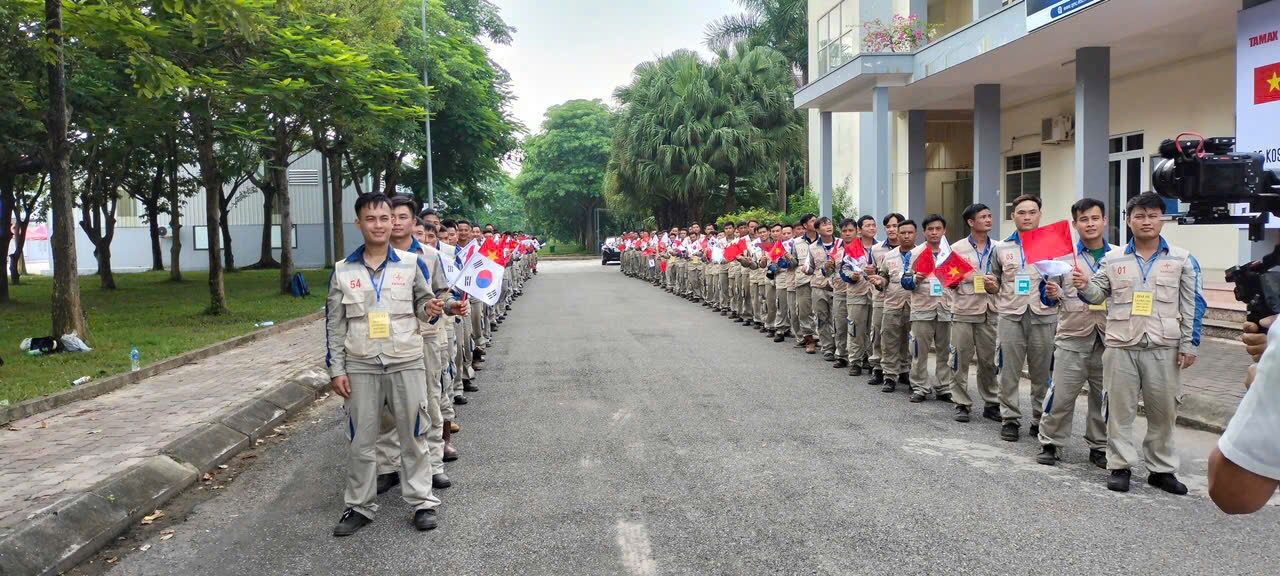
Korean employers sign contracts directly with companies licensed to send Vietnamese workers abroad.
1. Define Your Shipyard Workforce Requirements
Before contacting a recruitment partner, prepare a written job order.
A request for “50 shipyard workers” is too broad to support accurate selection. The recruiter needs to understand the trades, duties and experience levels required.
For example, a welding subcontractor may need FCAW welders for structural work, while an electrical contractor may require cable installation workers and experienced termination electricians. These positions need different sourcing and assessment methods.
Your recruitment brief should include:
- Required trades and worker numbers.
- Specific duties for each position.
- Workplace and employing company.
- Required technical experience.
- Practical assessment criteria.
- Supervision and communication arrangements.
- Proposed employment conditions.
- Preferred deployment schedule.
Separate essential requirements from preferences. This helps the recruitment partner identify suitable candidates without excluding capable workers for reasons unrelated to the job.
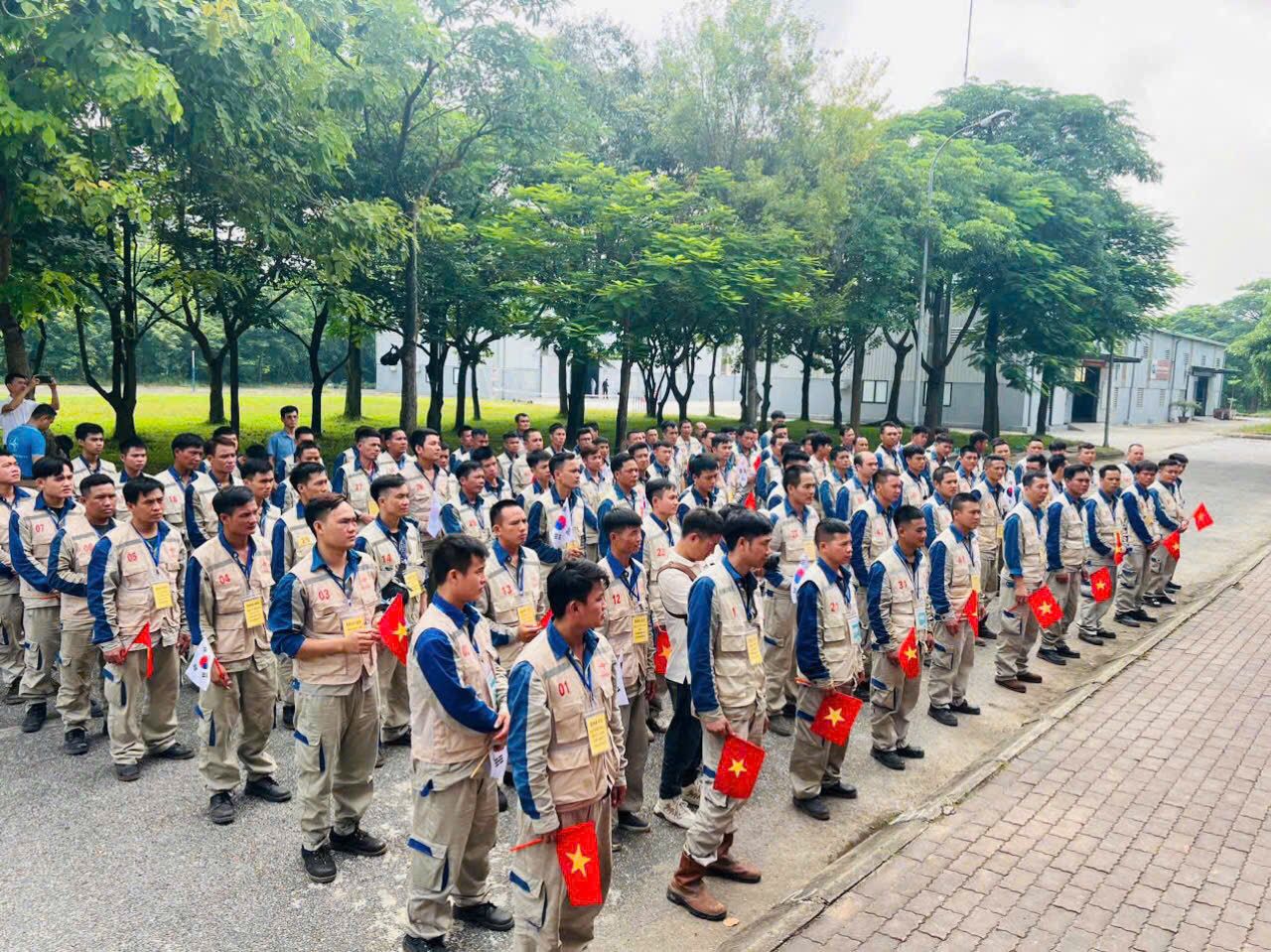
Vietnamese welders prepare for skills assessment from the Korea Shipbuilding Association (Koshipa).
2. Identify the Actual Employer and Employment Structure
The recruitment process should clearly identify which Korean company will employ the workers.
A worker assigned to a major shipyard may be employed by a subcontractor rather than the shipyard operator. Candidates should understand that distinction before accepting an offer.
The employer’s identity should remain consistent across recruitment communications, contracts and relevant application records.
Clarify who will manage payroll, accommodation, daily supervision and worker support. Where several organizations participate, document their responsibilities.
This information helps candidates evaluate the opportunity and gives the Vietnamese recruitment partner a clear basis for preparing the recruitment arrangement.
Changes to the employer, workplace or assigned duties should be reviewed through the appropriate process rather than treated as routine substitutions.
3. Review the Appropriate Immigration Route Early
Immigration planning should begin before a large recruitment campaign is launched.
For employers considering an E-7-3 route, confirm the current requirements for the exact occupation, sponsoring company and candidate. A general description such as “shipyard worker” does not establish the applicable visa category.
Korean government guidance states that foreign workers must check employment eligibility and identifies employment contracts and employer-related documents among the relevant E-7 application materials. The detailed requirements depend on the applicable issuance and residence guidelines.
Employers should obtain current confirmation of:
- The occupation and applicable category.
- Candidate education and experience requirements.
- Employer eligibility.
- Any required recommendation or skills verification.
- Applicable remuneration conditions.
- Required documents and submission arrangements.
This early review helps prevent employers from selecting technically suitable candidates who cannot meet the requirements of the proposed route.
4. Choose a Qualified Recruitment Partner in Vietnam
A recruitment partner should provide more than access to candidate lists. It should explain how applicants are sourced, screened, assessed and supported.
Korean employers should request evidence of experience relevant to the proposed trades. Sample candidate profiles and assessment reports can help demonstrate the quality of the process.
Confirm the relevant Vietnamese authorization for the proposed overseas employment cooperation and identify the legal entity responsible for the agreement.
Questions to ask include:
- How are employment histories checked?
- Who conducts technical assessments?
- Can the employer participate in interviews and testing?
- How are documents reviewed for consistency?
- What preparation is provided before departure?
- Who handles issues after arrival?
Agree on service scope, commercial terms and reporting arrangements in writing. Any replacement provisions should state their conditions clearly.
5. Match Recruitment to the Required Trades
Different shipyard occupations require different selection criteria.
Welders
Define the welding process, material, joint configuration and positions relevant to the job.
Review the candidate’s actual welding duties and assess current performance through an appropriate test. Existing certificates should be checked for scope and relevance.
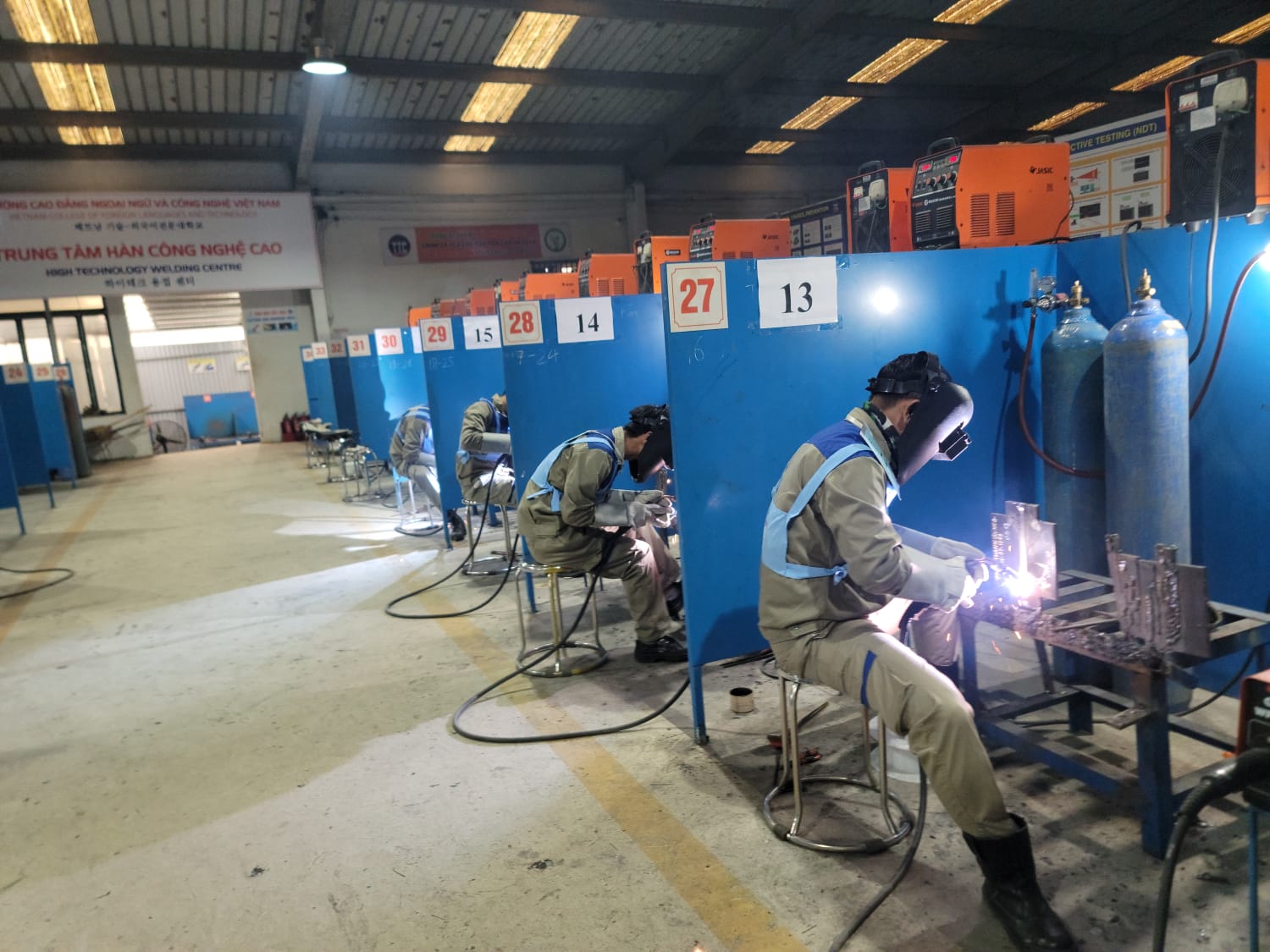
Vietnamese welders are the top choice for South Korean shipbuilding companies looking to hire welders.
Fabricators and Hull Assembly Workers
Assess drawing interpretation, measurement, component identification and assembly experience.
Distinguish fabrication duties from welding duties, even when candidates have experience in both.
Pipe Fitters
Specify whether the work involves preparation, spool assembly, onboard installation or another assignment.
Assess relevant drawing skills, dimensional accuracy and familiarity with the required components.
Ship Electricians
Identify whether the position concerns cable routing, termination, equipment installation or specialized electrical work.
Review competence for each assigned responsibility rather than relying on the general title “electrician.”
Ship Painters
Match candidates to the required surface preparation and coating application tasks.
Assess their experience with the specified methods and their ability to follow project instructions.
Other trades should receive equally specific technical and immigration reviews.
6. Screen Candidates Through Detailed Experience Reviews
A useful candidate profile should explain what the worker has done, where and for how long.
Employment history should identify previous employers, dates, project types and actual responsibilities. Broad descriptions such as “five years in shipbuilding” need supporting detail.
Technical interviews can explore a completed assignment. Ask the candidate which drawings were used, what equipment was involved and how work quality was checked.
Recruiters should resolve inconsistent dates or unclear employment information before submitting the candidate for final selection.
Education and training records can support the review, but they should not replace evidence of practical competence.
Employers should receive individual profiles that explain relevant strengths and any limitations affecting the proposed assignment.
7. Conduct Practical Trade Tests in Vietnam
Practical tests help employers evaluate current ability before workers travel.
The assessment should reflect the actual role and use criteria agreed with the Korean employer.
| Trade | Practical assessment focus |
|---|---|
| Welding | Specified process, joint, position and accepted workmanship |
| Fabrication | Drawing interpretation, measurement and assembly accuracy |
| Pipe fitting | Component identification, dimensions and fit-up |
| Electrical installation | Cable identification, installation or termination quality |
| Painting | Preparation, application control and recognition of defects |
Employers can participate through visits to Vietnam or suitable remote arrangements.
Test records should identify the candidate, task, assessor and result. Where formal qualification is required, confirm the applicable standard, examination and witnessing requirements separately.
Passing an internal recruitment test should not be presented as a recognized certification unless the assessment and documents satisfy the relevant framework.
8. Make Individual Selection Decisions
Recruitment decisions should combine technical results, relevant experience, communication ability and readiness for the employment conditions.
Avoid approving an entire group based only on a general pass rate. Each candidate should have a documented decision.
Some applicants may be suitable for particular tasks under supervision. Others may need further training and reassessment before approval.
The employer should define the approved role accurately and avoid extending a successful test result to unrelated duties.
Maintain separate records for technical approval and documentation or immigration review. This makes progress easier to understand and prevents an incomplete stage from being mistaken for final deployment approval.
9. Establish Clear Employment Terms
Candidates should receive an understandable explanation of the proposed employment arrangement before making commitments.
The agreement should address the employing company, duties, contract duration and workplace. It should also explain remuneration, working hours and relevant accommodation arrangements.
Employers should distinguish basic pay from amounts dependent on overtime or other conditions. Recruitment communications should not present potential earnings as guaranteed income.
Workers should understand any applicable deductions and the services covered by the agreed arrangement.
Clear terms help reduce misunderstandings after arrival. Where translation is needed, provide a version workers can understand and ensure it reflects the agreed conditions accurately.
Any material changes should be communicated and handled through the appropriate contractual and administrative process.
10. Organize Documentation and Application Responsibilities
Document preparation works best when each party knows what it must provide.
The employer, recruitment partner and candidate should use a coordinated checklist based on the confirmed requirements.
Potential records may include identity documents, employment agreements, education records and evidence of relevant experience. The exact list should be confirmed for the application concerned.
Check consistency in names, dates, employer details and job descriptions. Resolve discrepancies before submission wherever possible.
Translation, certification and legalization requirements should also be confirmed rather than assumed.
A recruitment partner can coordinate preparation, but official authorities determine the outcome. Complete paperwork and successful trade testing do not guarantee visa approval.
11. Provide Targeted Pre-Departure Preparation
Pre-departure preparation should address the employer’s actual expectations.
Technical sessions can focus on gaps identified during assessment, such as drawing interpretation or task-specific exercises. They should support existing competence rather than claim to replace substantial experience.
Language preparation should prioritize workplace instructions, trade terminology and communication with supervisors.
Workers should also understand their contract conditions, arrival arrangements and support contacts.
Useful preparation topics include:
- Reporting unclear instructions.
- Communicating quality problems.
- Understanding the receiving employer’s safety expectations.
- Following attendance and reporting procedures.
- Raising accommodation or employment concerns.
The Korean employer should still provide site-specific induction and the necessary task authorization after arrival.
12. Plan Deployment Around Confirmed Milestones
A realistic recruitment schedule separates sourcing, testing, documentation, official review and travel.
Employers should avoid treating an initial candidate list as confirmation that the entire group is ready to deploy.
A shared progress tracker can show which candidates have completed each stage and which items remain outstanding.
For larger requirements, recruitment can be organized in stages. This allows the employer to evaluate the first team’s performance and refine later selection.
Travel arrangements should follow the required approvals and confirmed receiving arrangements.
Before departure, establish who will meet the workers, how they will reach accommodation and when site induction will take place.
13. Prepare Supervisors for the Incoming Team
Successful recruitment also depends on the receiving workplace.
Supervisors should know the workers’ assessed skills, approved duties and identified preparation needs.
Assign tasks within demonstrated competence and provide clear instructions. Where language assistance is needed, establish a practical arrangement before production begins.
The employer should explain reporting lines and identify who can authorize changes or answer technical questions.
Early feedback is particularly useful. It helps identify whether a worker needs additional guidance, a different assignment or further assessment.
Recruitment records should support the handover so supervisors do not have to rediscover each worker’s capabilities from the beginning.
14. Evaluate Performance and Improve Future Recruitment
After deployment, review whether the recruitment process delivered workers suited to the project.
Useful indicators include workmanship, rework, attendance, communication and ability to follow instructions.
Assess productivity alongside accepted quality. Increased output has limited value if it creates repeated corrections.
Share specific feedback with the Vietnamese partner. If several workers struggle with the same task, revise the assessment or preparation for future groups.
Worker feedback also matters. Clear reporting channels help reveal misunderstandings about instructions, accommodation or employment terms.
A long-term recruitment partnership improves when both parties use actual workplace evidence to refine their process.
Frequently Asked Questions
Which shipyard workers can Korean employers recruit from Vietnam?
Employers can assess Vietnamese candidates for welding, fabrication, pipe fitting, electrical installation, painting and other defined trades. Each role requires its own technical and eligibility review.
Can Korean subcontractors recruit Vietnamese workers?
Subcontractors can explore recruitment cooperation, but they should confirm employer eligibility, the applicable process and the responsibilities of participating organizations before proceeding.
Does every shipyard position qualify for E-7-3?
Employers should not assume this. The appropriate category and current requirements must be confirmed for the exact occupation, duties, employer and candidate.
Can employers visit Vietnam to interview and test candidates?
In-person selection can be organized at suitable facilities. Agree on the candidate shortlist, test specification, assessment responsibilities and reporting format before the visit.
Are existing welding certificates sufficient for recruitment?
Certificates provide supporting information, but their scope and relevance need review. Employers may also require practical assessment or project-specific qualification.
How long does the recruitment process take?
Timing depends on sourcing, assessment, document preparation, official review and deployment arrangements. Request a schedule showing these stages and their dependencies separately.
Can workers be recruited in several groups?
Yes. Staged recruitment can align deployment with project needs and use feedback from the first group to improve later selection.
What should employers include in their first inquiry?
Provide the employing company, workplace, trades, headcount, technical requirements, employment conditions and preferred deployment period.
Start Planning Your Vietnam Shipyard Recruitment
Korean employers can recruit shipyard workers from Vietnam more effectively when the process begins with clear duties and measurable selection criteria.
Verified experience, practical tests and transparent employment terms provide a stronger basis for hiring. Organized documentation and preparation then support deployment and workplace integration.
Employers exploring cooperation with VXT GROUP can begin by sharing their required trades, worker numbers, testing expectations and proposed schedule.
A project-specific discussion can establish the recruitment scope, candidate assessment process, preparation needs and documentation responsibilities, helping build a workforce suited to the employer’s shipbuilding requirements.
Contact Vietnam Manpower Supply Agency today to discuss your specific workforce needs and discover the difference that skilled Vietnamese workers make.
Do you want to hire #workers, seasonal workers and long-term workers from Vietnam?
But you don’t know about:
❓ What kind of service we provide?
👉 Consulting on finding Vietnamese welders
👉 Looking for a supply of welder human resources
👉 Consult about Vietnam’s labor market
👉 Source suitable workers meeting your requirements
👉 Take documents procedures in Vietnam
👉 Train workers languages and vocational skills
👉 Handle problems while Vietnamese workers work in EU
Please contact #Vietnammanpowersupply for #internationalhiring,
We will support you to do all things.
DETALL: #GLOBALSTAFFRECRUITMENT
Tel/Whatsapp: (+84 ) 982 0303 66 – CEO
🌐 LinkedIn: https://www.linkedin.com/company/vietnam-human-resources-group/
Website: vnmanpower.net
Email: namnq.vtc@gmail.com
Youtobe: https://www.youtube.com/@vietnammanpowersupply
#InternationalRecruitmentAgency #ManpowersupplyAgency #vietnammanpowersupply #manpoweragency #manpowersupply #manpowergroup #manpowervietnam #manpowercompany #manpowersupplycompany #Weldersupply #Supplyofshipwelders #weldermanpowersupply