
Hire Vietnamese FCAW Welders for Shipbuilding Projects
Shipbuilding projects need welders who can deliver consistent workmanship while following production schedules, approved welding procedures, and demanding safety requirements. From hull block fabrication to structural assembly and ship repair, the quality of welding directly affects inspection results, rework, and project delivery.
For employers seeking an international recruitment channel, hiring Vietnamese FCAW welders can form part of a structured workforce strategy. The key is to select candidates whose practical experience matches the work, verify their qualifications, and prepare them for the destination shipyard.
Vietnamese welders should be assessed as individuals, with clear evidence of their skills and work history. A successful recruitment program connects the employer’s technical requirements with targeted sourcing, practical testing, documentation, and support after arrival.
This guide explains how to hire Vietnamese FCAW welders for shipbuilding projects and what employers should check before selecting a workforce supplier.
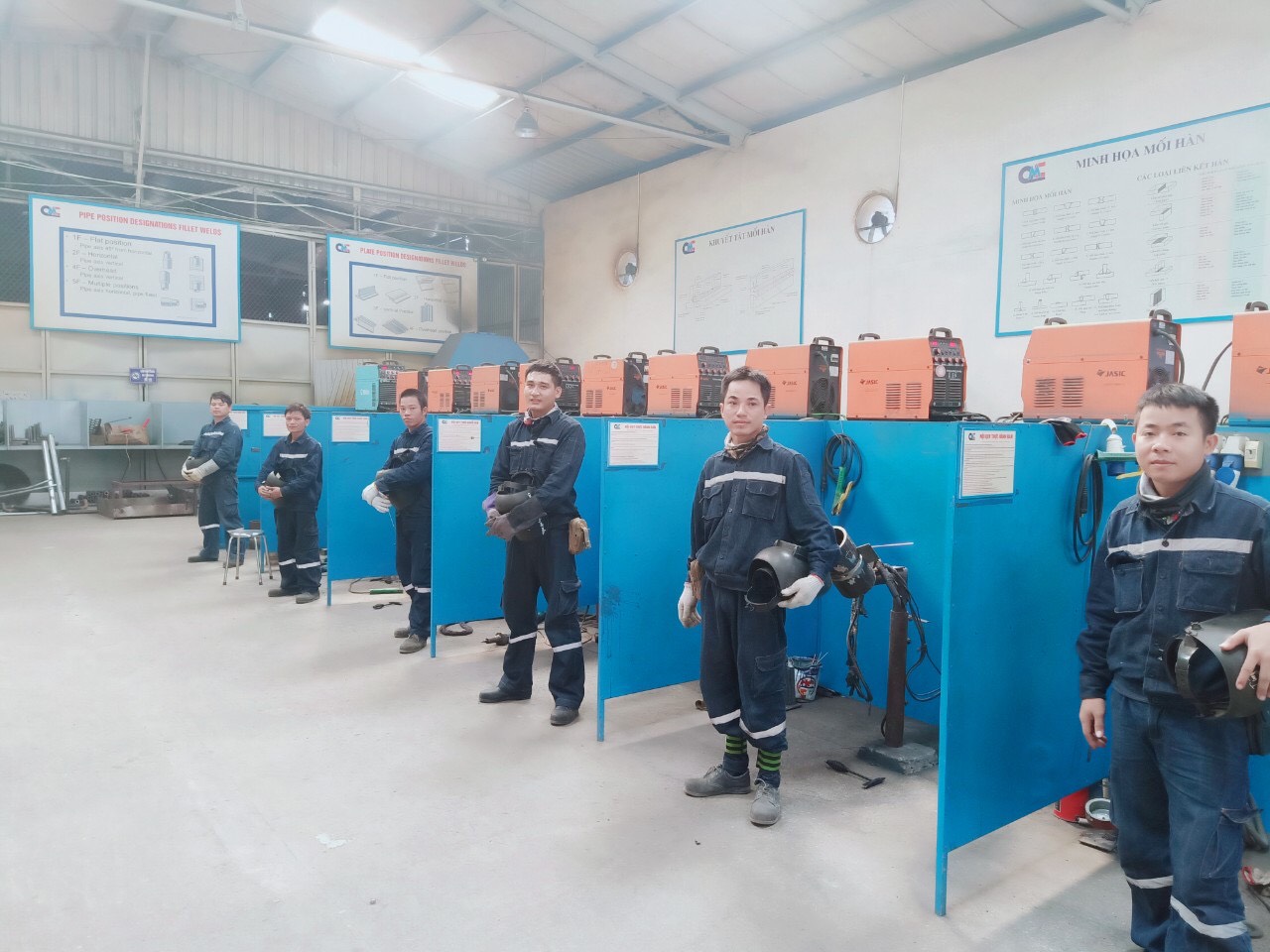
Korean shipbuilding industry human resources solutions are seeking welders from Vietnam.
What Is FCAW Welding?
Flux-cored arc welding, commonly called FCAW, uses a continuously fed tubular wire containing flux. The process has gas-shielded and self-shielded variants, so employers must identify which type their projects require. Experience with one variant should not automatically be treated as equivalent experience with the other.
For recruitment purposes, specifying “FCAW welder” is only the starting point. Employers should also define the material, wire, shielding arrangement, welding positions, joint configurations, and approved procedures used in production.
A candidate who performs well on a simple workshop coupon may still need further assessment before working on complex ship structures. Access restrictions, joint preparation, changing positions, and production conditions all influence performance.
The recruitment specification should therefore describe the actual job as closely as possible. This gives the manpower supplier a clear basis for screening and helps the employer avoid selecting workers with unsuitable experience.
Where Vietnamese FCAW Welders Can Support Shipbuilding Projects
Depending on their verified skills and qualifications, Vietnamese FCAW welders may be considered for several shipbuilding work packages.
Hull Blocks and Structural Fabrication
Hull fabrication involves welding plates, stiffeners, frames, and other structural components. Employers should assess candidates against the joint types and positions involved in their particular fabrication process.
Relevant experience may include repetitive structural welding, multi-pass welds, and working from fabrication drawings under a supervisor’s direction.
Ship Section Assembly
Assembly work can introduce more difficult access and changing welding positions. Candidates should understand how to maintain workmanship while following the approved procedure and coordinating with fitters, supervisors, and inspectors.
Decks, Bulkheads, and Supporting Structures
These work packages may involve a mixture of fillet and butt welds. Employers should identify which tasks dominate the job and design recruitment tests accordingly.
Ship Repair and Conversion
Repair work may require welders to operate in existing vessel spaces and coordinate with other trades. Previous newbuilding experience alone does not establish suitability for every repair assignment.
The employer should explain access conditions, work locations, and safety requirements before selecting candidates.
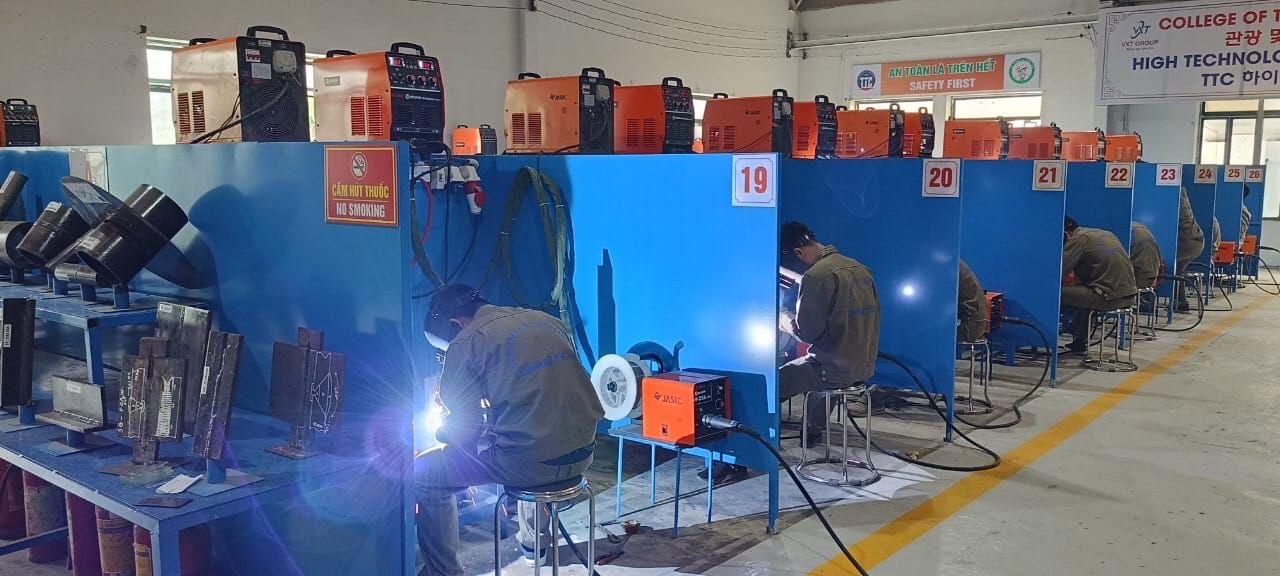
3G Fcaw welders in Vietnam are the solution for shipbuilding companies in South Korea.
Why Consider Recruiting FCAW Welders from Vietnam?
Recruiting from Vietnam gives employers an additional sourcing channel when planning international welding manpower. Its value depends on how well recruitment is organized and how closely candidates match the project.
Access to Candidates with Different Industrial Backgrounds
Recruitment can target candidates with experience in shipbuilding, steel fabrication, heavy industry, or related welding work.
However, a general welding background should not be presented as proven shipyard competence. Employers need a screening process that distinguishes directly relevant experience from skills requiring further preparation.
Employer-Defined Practical Testing
A recruitment program in Vietnam can include practical tests designed around the employer’s requirements.
This allows the employer to compare candidates using a consistent assessment method before committing to mobilization. It also creates an opportunity to identify training needs early.
Planned Recruitment in Batches
Employers may need a small initial team followed by additional workers as production expands. Recruitment batches can be linked to fabrication milestones, supervisor availability, and onboarding capacity.
This approach allows the employer to review the first team’s performance before expanding the workforce.
Preparation Before Departure
Selected candidates can receive job-specific orientation covering workplace communication, safety terminology, employment conditions, and destination-country expectations.
Preparation should reflect the actual assignment. Generic orientation alone may leave workers unfamiliar with the procedures and reporting arrangements they will encounter.
Define Your Welding Requirements Before Recruitment
The most useful first step is a detailed manpower request. Without it, suppliers may submit candidates whose profiles look suitable but do not match production needs.
The employer’s request should include:
- Required number of welders and preferred arrival stages.
- Project location and expected contract duration.
- Shipbuilding, fabrication, or repair work scope.
- FCAW variant and relevant consumables.
- Base materials and typical thicknesses.
- Fillet and butt weld requirements.
- Welding positions and access conditions.
- Applicable qualification and classification requirements.
- Practical test format and acceptance criteria.
- Language expectations and supervision arrangements.
- Working hours, compensation, accommodation, and transport.
If drawings or approved welding procedure specifications can be shared, they can help the supplier understand the assignment more accurately.
Employers should also separate essential requirements from skills that can be developed through induction. This supports realistic candidate selection without weakening production standards.
Vietnamese shipbuilding workforce is a solution for South Korean shipbuilding corporations.
How to Assess Vietnamese FCAW Welders
A reliable assessment combines work-history screening, document checks, and practical testing.
Review Relevant Work Experience
Ask candidates to explain their previous assignments in detail. Useful questions include the structures they welded, positions they used, consumables they handled, and inspection processes they encountered.
A credible interview should reveal practical familiarity with the work. Listing a famous shipyard or a welding process on a CV is insufficient evidence by itself.
Check Understanding of Welding Instructions
Candidates should demonstrate that they can follow the welding instructions relevant to their role.
Assessment may cover joint preparation, equipment setup, sequence, cleaning between passes, and how to report a problem. Supervisors should establish whether the candidate follows instructions consistently rather than relying only on personal habits.
Observe Preparation and Working Method
During a practical test, assess how the candidate prepares the work area, checks equipment, and organizes the task.
The assessment should consider both the finished weld and the method used to produce it. A worker who overlooks preparation or safety controls may create difficulties even when a single test weld appears acceptable.
Evaluate Welding Performance
Use a test representative of the intended assignment. Record the position, material, thickness, joint design, consumable, backing arrangement, and procedure used.
These details make the result more useful when deciding where the candidate can work.
Record Results Consistently
Each candidate should have an identifiable assessment record. Photographs or videos can support the record, but they should accompany a documented evaluation with clear acceptance criteria.
Consistent records help the employer compare candidates and resolve questions before departure.
Verify Welding Qualifications and Their Scope
A welding certificate must be checked against the intended work. Employers should review the issuing body, candidate identity, qualification scope, and applicable validity or continuity requirements.
DNV provides welder and welding operator approval services for maritime work. Employers requiring classification-related approval should confirm the acceptance arrangements for their specific project.
Do not assume that a certificate mentioning a recognized standard or classification society covers every assignment. The employer should establish whether the qualification matches the process, position, material, and other conditions relevant to production.
Recruitment testing and formal qualification also need to be distinguished. An employer may use a practical test to select candidates while requiring a separate approved qualification before production welding.
Where additional approval is necessary, responsibilities should be agreed before recruitment proceeds. The supplier, employer, testing organization, and relevant approving body should understand who arranges testing and who bears the associated costs.
Design Practical Tests Around the Shipyard’s Work
A useful test answers a specific question: can this candidate perform the welding tasks required by the project?
Testing should be planned with the employer’s welding or quality team. The format should reflect the assignment closely enough to support a meaningful selection decision.
For example, an employer recruiting mainly for structural plate work should prioritize relevant plate welding tasks. A pipe test alone would provide limited evidence for that role.
Similarly, labels such as 3G, 4G, or 6G should be interpreted within the applicable qualification system. They should not be used as a general ranking of overall welding ability.
The test plan should establish:
- The intended work and required qualification range.
- Test materials, joint details, and welding instructions.
- Permitted equipment and consumables.
- Supervision or witnessing arrangements.
- Inspection and acceptance requirements.
- How results will be recorded and reviewed.
Any destructive or nondestructive testing should follow the applicable procedure and project requirements. Employers should avoid using an arbitrary inspection method simply because it is familiar.
A Structured Recruitment Process for Shipbuilding Employers
Step 1: Confirm the Manpower Specification
Agree the technical requirements, employment terms, headcount, and recruitment schedule.
Resolve major uncertainties before sourcing begins, especially qualification requirements and arrival priorities.
Step 2: Source and Screen Candidates
The Vietnamese recruitment partner identifies candidates and checks their work history, availability, and suitability for the assignment.
Initial screening should remove obvious mismatches before the employer invests time in interviews and tests.
Step 3: Conduct Interviews and Practical Assessments
The employer or its authorized technical representatives review shortlisted candidates.
Testing should use the agreed criteria so that selection decisions are consistent and explainable.
Step 4: Complete Selection and Documentation
After selection, confirm identity documents, required medical examinations, employment contracts, and supporting records.
Both parties should maintain a clear list of outstanding documents and responsibilities.
Step 5: Arrange Destination-Country Authorization
The employer and recruitment partner coordinate the applicable employment and immigration process.
Requirements depend on the destination, role, and employment arrangement. A passed welding test does not by itself establish eligibility to work abroad.
Step 6: Prepare Workers for Departure
Provide orientation on employment conditions, workplace expectations, communication, and reporting channels.
Workers should understand their assignment and know whom to contact when they need assistance.
Step 7: Complete Shipyard Induction
After arrival, the employer introduces site procedures, equipment, supervisors, and quality requirements.
Any additional authorization or qualification needed before production work should be completed at this stage.
Step 8: Review Performance and Support Retention
Monitor workmanship, attendance, communication, and adjustment to the workplace.
Early feedback helps identify issues while they can still be addressed through supervision, training, or agreed corrective action.
Plan Workforce Costs Beyond the Hourly Rate
Employers should evaluate recruitment using the total cost of deploying and maintaining a productive team.
Relevant costs may include sourcing, assessment, qualification, documentation, travel, accommodation, transport, induction, and supervision. The allocation of these costs should be clearly agreed in the commercial and employment arrangements.
Production performance also affects the overall result. Rework, poor task allocation, or communication problems can reduce the value of an apparently inexpensive workforce.
A useful review therefore considers accepted work, inspection outcomes, attendance, and integration into the production team.
Starting with a pilot batch can help employers evaluate these factors under real conditions before committing to a larger recruitment program.
Safety and Communication Must Be Part of Selection
Welding competence includes the ability to follow site safety instructions and report unsafe conditions.
Shipbuilding employers should explain the hazards and controls relevant to each assignment, including hot work, confined spaces, work at height, lifting operations, and simultaneous activities.
FCAW can generate welding fumes, and shielding gases can create additional hazards in confined spaces. Appropriate controls should be determined through the employer’s site-specific risk assessment.
Communication should also be assessed realistically. Workers need to understand essential instructions, inspection feedback, emergency procedures, and task changes.
Where language support is required, employers should establish a clear arrangement involving supervisors, interpreters, or bilingual team leaders.
Choosing a Vietnamese Shipbuilding Manpower Supplier
Select a supplier that can translate your manpower request into a verifiable recruitment process.
Ask how it checks experience, organizes practical tests, records results, and coordinates documentation. Request clear evidence of the services it can actually provide.
Commercial terms should explain responsibilities for recruitment, testing, mobilization, worker support, and any replacement process.
Employers should also verify the supplier’s legal capacity for the proposed recruitment arrangement and confirm the destination employer’s responsibilities.
A dependable partnership rests on clear commitments and accurate candidate information. Broad promises about guaranteed productivity, universal certification, or immediate deployment offer little value without supporting evidence.
Discuss Your FCAW Welder Recruitment Requirements
To begin recruiting Vietnamese FCAW welders, prepare a brief covering your headcount, work scope, welding requirements, project location, and preferred mobilization schedule.
A detailed request allows a Vietnamese manpower partner to propose suitable sourcing, testing, and deployment arrangements.
With careful selection and effective supervision, international recruitment can support shipbuilding workforce planning and provide a practical route to building a team matched to your project.
Frequently Asked Questions
Can Vietnamese FCAW welders work on shipbuilding projects?
Yes, provided the selected workers demonstrate the required skills, hold any necessary qualifications, and obtain the applicable authorization to work in the destination country.
What should employers include in a recruitment request?
Include headcount, work scope, materials, welding process, positions, qualification requirements, testing criteria, employment conditions, and the preferred arrival schedule.
Should employers test welders before hiring them?
A practical assessment provides useful evidence of job suitability. It should reflect the intended work and use documented acceptance criteria agreed with the employer.
Are existing welding certificates enough?
Not always. Employers must verify authenticity, scope, validity, and acceptance for the project. Additional testing or approval may be required.
Can employers recruit welders in several batches?
Yes. Batch recruitment can follow production milestones and help employers assess workforce performance before increasing headcount.
How long does recruitment and deployment take?
Timing depends on candidate availability, testing, documentation, required approvals, and travel arrangements. A project-specific schedule should be agreed after these requirements are reviewed.
Can FCAW welders also perform fitting or other welding processes?
Some candidates may have additional skills, but each required capability should be assessed separately. FCAW experience alone does not establish competence in fitting, TIG, or other processes.
How can a shipyard request Vietnamese FCAW welders?
Send a detailed manpower specification to a qualified Vietnamese recruitment partner and agree the screening, testing, documentation, and mobilization process before candidate selection begins.
Contact Vietnam Manpower Supply Agency today to discuss your specific workforce needs and discover the difference that skilled Vietnamese workers make.
Do you want to hire #workers, seasonal workers and long-term workers from Vietnam?
But you don’t know about:
❓ What kind of service we provide?
👉 Consulting on finding Vietnamese welders
👉 Looking for a supply of welder human resources
👉 Consult about Vietnam’s labor market
👉 Source suitable workers meeting your requirements
👉 Take documents procedures in Vietnam
👉 Train workers languages and vocational skills
👉 Handle problems while Vietnamese workers work in EU
Please contact #Vietnammanpowersupply for #internationalhiring,
We will support you to do all things.
DETALL: #GLOBALSTAFFRECRUITMENT
Tel/Whatsapp: (+84 ) 982 0303 66 – CEO
🌐 LinkedIn: https://www.linkedin.com/company/vietnam-human-resources-group/
Website: vnmanpower.net
Email: namnq.vtc@gmail.com
Youtobe: https://www.youtube.com/@vietnammanpowersupply
#InternationalRecruitmentAgency #ManpowersupplyAgency #vietnammanpowersupply #manpoweragency #manpowersupply #manpowergroup #manpowervietnam #manpowercompany #manpowersupplycompany #Weldersupply #Supplyofshipwelders #weldermanpowersupply