
Vietnamese Ship Painters for Korea: Skills and Recruitment
Recruiting Vietnamese ship painters for Korea requires a clear understanding of marine coating skills, shipyard working conditions, and international recruitment procedures. For Korean shipyards and subcontractors, successful hiring begins with selecting workers who can follow coating specifications, work safely, and deliver consistent results under production schedules.
Ship painting involves much more than applying a decorative finish. Marine painters help protect steel structures from corrosion, prepare surfaces for coating, and support the quality of newbuilding and repair projects. Their work must coordinate with welding, fabrication, inspection, and other shipyard activities.
Vietnam can be a sourcing market for employers seeking experienced marine painters, abrasive blasting operators, and coating preparation workers. However, employers should assess each candidate individually. Experience in residential painting, general construction, or factory finishing does not automatically demonstrate competence in marine coating application.
This guide explains the skills to assess, how to structure practical tests, and the recruitment considerations involved in hiring Vietnamese ship painters for Korean projects.
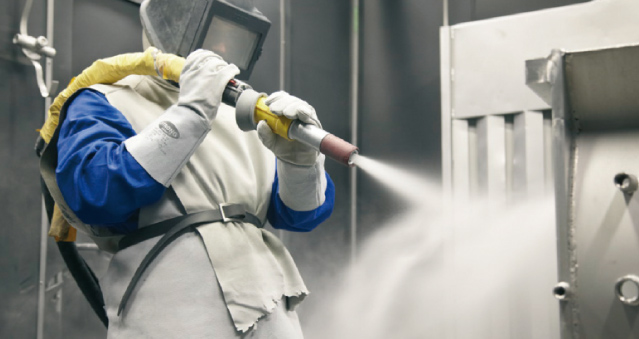
1. Understanding the Role of Ship Painters in Korean Shipyards
Marine painting teams work across different vessel areas, including hulls, decks, superstructures, steel blocks, and designated internal spaces. Their duties depend on the project stage, coating system, equipment, and employer’s division of responsibilities.
Typical assignments may include:
- Preparing steel surfaces before coating.
- Removing rust, contaminants, and damaged paint.
- Operating approved blasting or power tools.
- Mixing coating components according to instructions.
- Applying coatings by airless spray, brush, or roller.
- Performing stripe coating and local repairs.
- Assisting with coating checks and inspection preparation.
Employers should distinguish between surface preparation workers, blasting operators, spray painters, and painting supervisors. These roles overlap in some teams, but they require different levels of competence.
For example, a worker experienced in brush-and-roller touch-up may need additional training before operating an airless spray unit. Similarly, an experienced blaster may not be ready to mix and apply a complex coating system independently.
Clear job descriptions help recruitment partners identify suitable candidates and prevent misunderstandings after deployment.
2. Why Consider Vietnamese Marine Painters?
The strongest reason to recruit from Vietnam is access to candidates whose experience matches the employer’s actual work requirements.
Potential candidates may have backgrounds in shipbuilding, ship repair, offshore fabrication, steel structures, or industrial coating. Their suitability depends on the tasks they performed, the equipment they used, and the quality controls they followed.
A structured recruitment program can help employers assess workers before making hiring commitments. Interviews, document checks, practical demonstrations, and targeted training provide a more reliable basis for selection than nationality or years of experience alone.
Vietnamese marine painters may be particularly relevant to employers seeking workers who can demonstrate:
- Experience coating large steel structures.
- Familiarity with marine or industrial coating products.
- Safe handling of painting equipment.
- Ability to follow a supervisor’s instructions.
- Willingness to learn Korean workplace communication.
- Understanding of team-based production work.
Employers should prioritize verified competence and preparation. These factors support a smoother transition into Korean shipyard operations.
3. Essential Skills for Vietnamese Ship Painters
Surface preparation
Surface preparation should be a central part of candidate assessment. A painter needs to recognize whether a surface is ready for coating and understand when a problem must be reported.
During recruitment, employers can ask candidates to explain how they identify oil, dust, corrosion, moisture, and other contamination. Candidates should also describe the preparation methods they have used and the circumstances in which those methods were appropriate.
Manufacturer guidance emphasizes confirming that the specified surface preparation has been achieved before coating application. The required preparation must therefore come from the approved coating specification rather than a single rule applied to every job. jotun.com
A strong candidate should be comfortable stopping work when the surface condition is uncertain and requesting a supervisor’s decision.
Airless spray application
For jobs involving airless spraying, practical competence should be demonstrated on representative steel surfaces.
The assessment can cover equipment setup, spray control, movement around corners, and the ability to maintain an even application. Employers should observe whether candidates follow the approved procedure and recognize problems during spraying.
Workers should understand that equipment settings depend on the coating product and application instructions. Memorizing one pressure setting or spray tip size is insufficient for work involving different coating systems.
Coating mixing and material handling
Candidates should be able to read or follow instructions for identifying coating components, measuring quantities, and mixing materials.
For multicomponent products, employers should assess whether workers understand the importance of the specified mixing ratio, any required induction period, and pot life. They should also know that thinning requires authorization under the applicable product instructions.
Material handling should include checking product labels, protecting containers from contamination, and reporting inconsistencies before use.
Stripe coating and repair work
Recruitment tests should include detailed work around welds, edges, corners, and other difficult areas where specified by the project.
Employers can assess whether candidates work systematically, avoid missing sections, and prepare repair areas properly. A worker who sprays broad surfaces well may still need training in detailed preparation and touch-up work.
Quality awareness
Painters should recognize visible defects and understand the employer’s reporting process.
Useful interview scenarios include discovering a contaminated surface, observing runs or uneven coverage, and finding damaged coating after another trade has completed work nearby.
Painters do not automatically qualify as coating inspectors. However, they should understand inspection hold points and cooperate with the project’s quality team.
4. Match Candidates to the Coating System
Marine coatings serve different purposes. An employer recruiting hull painters may require a different experience profile from an employer recruiting workers for ballast tanks or maintenance repairs.
Manufacturer product information distinguishes between anticorrosive primers, ballast tank coatings, antifouling products, and other marine coating categories. This supports the need to define the coating assignment before selecting candidates. Jotun|[VN]
During interviews, ask candidates about specific products and tasks rather than accepting a general statement such as “experienced in ship painting.”
Useful questions include:
- Which vessel areas have you painted?
- Did you perform preparation, spraying, or both?
- What application equipment did you operate?
- Who supplied the mixing and application instructions?
- How did you report coating defects?
- What restrictions applied before recoating?
The objective is to understand the candidate’s real responsibilities. Employers should avoid assuming that experience with one product establishes competence with all marine coating systems.
5. Safety Competence Must Be Assessed
A recruitment assessment should evaluate safe working behavior alongside technical performance.
Marine painting assignments can involve pressurized equipment, chemicals, restricted spaces, elevated work areas, and nearby shipyard operations. Employers should define the hazards of the actual assignment and provide the corresponding site training and controls.
Chemical awareness and protective equipment
Candidates should know how to follow safety data sheets and employer instructions. They should be prepared to use the protective equipment specified for the task and report damaged or unsuitable equipment.
Respiratory protection requires particular attention. The employer should determine the appropriate system for the exposure and task, including any fit testing or training requirements.
Confined-space awareness
Candidates assigned to tanks or other restricted spaces must understand that entry depends on the shipyard’s authorization process.
Recruitment interviews can assess whether workers recognize the need for entry permits, atmosphere checks, ventilation, supervision, and emergency arrangements.
Previous experience in a tank does not replace site-specific authorization.
Airless equipment safety
The practical test should assess how candidates handle spray guns, hoses, connections, and equipment shutdown. Unsafe conduct should trigger an immediate stop and review.
Working at height and coordination
Painters should respect access restrictions, approved work platforms, and the employer’s fall protection procedures. They should also understand how to coordinate with other trades and report conflicting activities.
Safety decisions should carry substantial weight in selection. Fast application cannot compensate for unsafe work.
6. How to Design a Practical Test
A practical test should resemble the expected assignment and use clear evaluation criteria.
For a spray painter, the test might involve a steel panel or representative structure containing welds, edges, and corners. For a preparation worker, the test should emphasize the specified cleaning and preparation tasks.
A useful assessment sequence is:
- Review the job instruction and confirm understanding.
- Check equipment and required protective measures.
- Inspect the surface and report concerns.
- Prepare materials under the approved procedure.
- Apply the coating or perform the assigned preparation.
- Identify defects and explain corrective action.
- Clean and secure the work area.
The evaluator should record observations, test conditions, and the result. Photographs or video can support the record when collected with consent and handled appropriately.
| Assessment area | What the employer should evaluate |
|---|---|
| Surface preparation | Recognition of contamination and suitability for coating |
| Material handling | Correct identification and use of coating components |
| Equipment operation | Safe setup, control, and shutdown |
| Application | Consistency and handling of difficult areas |
| Quality awareness | Recognition and reporting of defects |
| Communication | Understanding instructions and asking for clarification |
A worker should pass the tasks required for the intended role. Employers should not use a general painting test to approve candidates for specialized assignments that were never assessed.
7. Recruitment Process for Korean Employers
Step 1: Define the manpower requirement
The employer should specify the number of workers, role categories, work location, expected duties, experience requirements, and assessment method.
The job order should also explain wages, working hours, overtime arrangements, accommodation, deductions, and other employment conditions.
Accurate information helps candidates make informed decisions and enables the recruitment partner to screen effectively.
Step 2: Check the employer and recruitment partner
Before sourcing begins, verify the Korean employer’s legal identity and the responsibilities of any subcontractor involved.
The Vietnamese recruitment partner should have the authorization required for its activities. Employers should also review its document verification process, training capability, fee transparency, and worker support arrangements.
Step 3: Screen candidate experience
Candidate profiles should describe previous employers, dates of employment, vessel or project types, duties, and equipment experience.
Employment records and references should be checked where available. Interviews should distinguish direct experience from work performed by other members of the candidate’s former team.
Step 4: Conduct employer-approved tests
The Korean employer should approve the test content and acceptance criteria. Direct participation by employer representatives can help align selection with site expectations.
Candidates who require additional training should be identified clearly rather than presented as fully qualified.
Step 5: Confirm immigration eligibility
Technical selection and immigration eligibility are separate requirements. Both should be reviewed before committing to deployment.
Step 6: Prepare workers for departure
Pre-departure preparation should cover workplace communication, contract terms, safety expectations, living arrangements, and reporting channels.
Step 7: Support onboarding
After arrival, the employer should provide site induction, task-specific instruction, and supervision. Early communication between the employer, worker, and recruitment partner helps address misunderstandings before they affect performance.
8. E-7-3 Recruitment Considerations
Employers considering E-7-3 recruitment should verify the current rules for the intended occupation and application route.
Korea’s Ministry of Justice has published information about a shipbuilding skills pathway involving conversion from D-4-6 training status to E-7-3. That announcement concerns a specific pilot program and should not be treated as proof that every overseas painting candidate qualifies for direct recruitment. immigration.go.kr
For an actual recruitment project, confirm the applicable requirements with the competent Korean authorities or a qualified immigration professional.
The review should address:
- Whether the proposed duties fit an eligible occupation.
- Whether the employer meets the applicable conditions.
- Which qualifications and experience records are required.
- Whether recommendations or additional assessments apply.
- Which employment and remuneration conditions must be met.
- Which documents require translation or legalization.
Employers should avoid publishing a universal education or experience threshold without checking the current occupation-specific rules. Likewise, a successful practical test does not guarantee visa approval.
Deployment schedules should account for document verification, immigration review, and possible requests for additional information.
9. Training Before Deployment
Training should address identified gaps and the Korean employer’s requirements.
Technical preparation may cover the employer’s coating instructions, equipment, repair procedures, quality reporting, and safe work practices. Training materials should reflect the expected assignment instead of a generic painting course.
Korean language preparation should emphasize workplace communication. Workers need to recognize instructions to stop, wait, evacuate, report a problem, or seek clarification.
Contract orientation is equally important. Candidates should understand their pay structure, overtime arrangements, accommodation conditions, deductions, and support contacts before departure.
A final readiness review can confirm that technical training, document checks, and worker orientation have been completed.
10. Evaluate Total Recruitment Value
The lowest recruitment quotation does not necessarily deliver the best workforce outcome.
Employers should compare what each proposal includes: screening, practical testing, document verification, training, deployment coordination, and post-arrival support.
The cost of unsuitable recruitment can include additional supervision, retraining, rework, and disruption to production planning.
A transparent service agreement should define responsibilities, payment milestones, and the process for handling selection or deployment problems. Any replacement arrangements should be specific and consistent with employment obligations.
Useful performance measures include test results, attendance, quality outcomes, safety observations, and retention. These measures help employers improve later recruitment rounds without relying on unsupported productivity promises.
11. Request Vietnamese Ship Painters for Your Korean Project
Korean shipyards and subcontractors seeking Vietnamese marine painters should begin with a detailed manpower request.
Include the required worker numbers, coating assignments, equipment, experience expectations, practical test criteria, employment conditions, and target mobilization period.
A clear brief enables the recruitment team to identify relevant candidates, arrange meaningful assessments, and check document readiness.
The goal is to build a painting team that understands the work, follows approved procedures, and integrates into the employer’s safety and quality systems.
Contact our recruitment team to discuss your Korean shipbuilding project and develop a candidate screening and practical testing plan for Vietnamese ship painters.
Frequently Asked Questions
What skills should Vietnamese ship painters have?
The required skills depend on the assignment. Employers commonly assess surface preparation, coating mixing, application, equipment handling, defect recognition, and safe working behavior.
Can construction painters work in Korean shipyards?
Some may be suitable after assessment and training. Construction painting experience alone does not demonstrate competence in marine spraying, shipyard preparation, or specialized coating work.
Should employers test painters before recruitment?
Yes. A representative practical test helps employers confirm that a candidate can perform the intended duties and follow instructions safely.
Are ship painters and blasting operators the same?
They are distinct roles, although some workers have experience in both. Employers should assess preparation, blasting, and coating application separately where those tasks are required.
Can Vietnamese ship painters qualify for E-7-3?
Eligibility must be assessed under the current rules for the occupation, employer, candidate, and application route. A job title or practical test result alone cannot establish eligibility.
Do painters need coating inspector certification?
Painter and coating inspector responsibilities differ. Employers should specify any certification required for the actual role rather than assuming every painter must hold an inspector qualification.
How long does recruitment take?
The schedule depends on candidate availability, testing, training, document preparation, immigration review, and employer readiness. A deployment date should be agreed after these factors are assessed.
What should Korean employers provide to start recruitment?
Employers should provide a job description, worker numbers, assessment criteria, employment conditions, work location, and proposed recruitment schedule. These details form the basis for accurate sourcing and selection.
Contact Vietnam Manpower Supply Agency today to discuss your specific workforce needs and discover the difference that skilled Vietnamese workers make.
Do you want to hire #workers, seasonal workers and long-term workers from Vietnam?
But you don’t know about:
❓ What kind of service we provide?
👉 Consulting on finding Vietnamese Construction
👉 Looking for a supply of welder human resources
👉 Consult about Vietnam’s labor market
👉 Source suitable workers meeting your requirements
👉 Take documents procedures in Vietnam
👉 Train workers languages and vocational skills
👉 Handle problems while Vietnamese workers work in EU
Please contact #Vietnammanpowersupply for #internationalhiring,
We will support you to do all things.
DETALL: #GLOBALSTAFFRECRUITMENT
Tel/Whatsapp: (+84 ) 982 0303 66 – CEO
🌐 LinkedIn: https://www.linkedin.com/company/vietnam-human-resources-group/
Website: vnmanpower.net
Email: namnq.vtc@gmail.com
Youtobe: https://www.youtube.com/@vietnammanpowersupply
#InternationalRecruitmentAgency #ManpowersupplyAgency #vietnammanpowersupply #manpoweragency #manpowersupply #manpowergroup #manpowervietnam #manpowercompany #manpowersupplycompany #Weldersupply #Supplyofshipwelders #weldermanpowersupply #Vietnameseconstruction workers #constructionworkers