
Onboarding Vietnamese Workers at Korean Shipyards
Onboarding Vietnamese workers at Korean shipyards begins before their first shift. Employers need to prepare accommodation, workplace access, understandable instructions and a clear introduction to the assigned job.
Recruitment establishes whether a candidate is suitable for a position. Onboarding helps that worker apply their skills within the receiving company’s procedures, equipment and production environment.
For shipyards and subcontractors employing Vietnamese welders, painters, electricians and fabricators, an organized onboarding process can reduce misunderstandings, identify training needs and support consistent workmanship. It also gives workers a practical way to ask questions and report concerns.
This guide explains how Korean employers can prepare for arrival, deliver site and trade orientation, support communication and evaluate progress during the first weeks of employment.
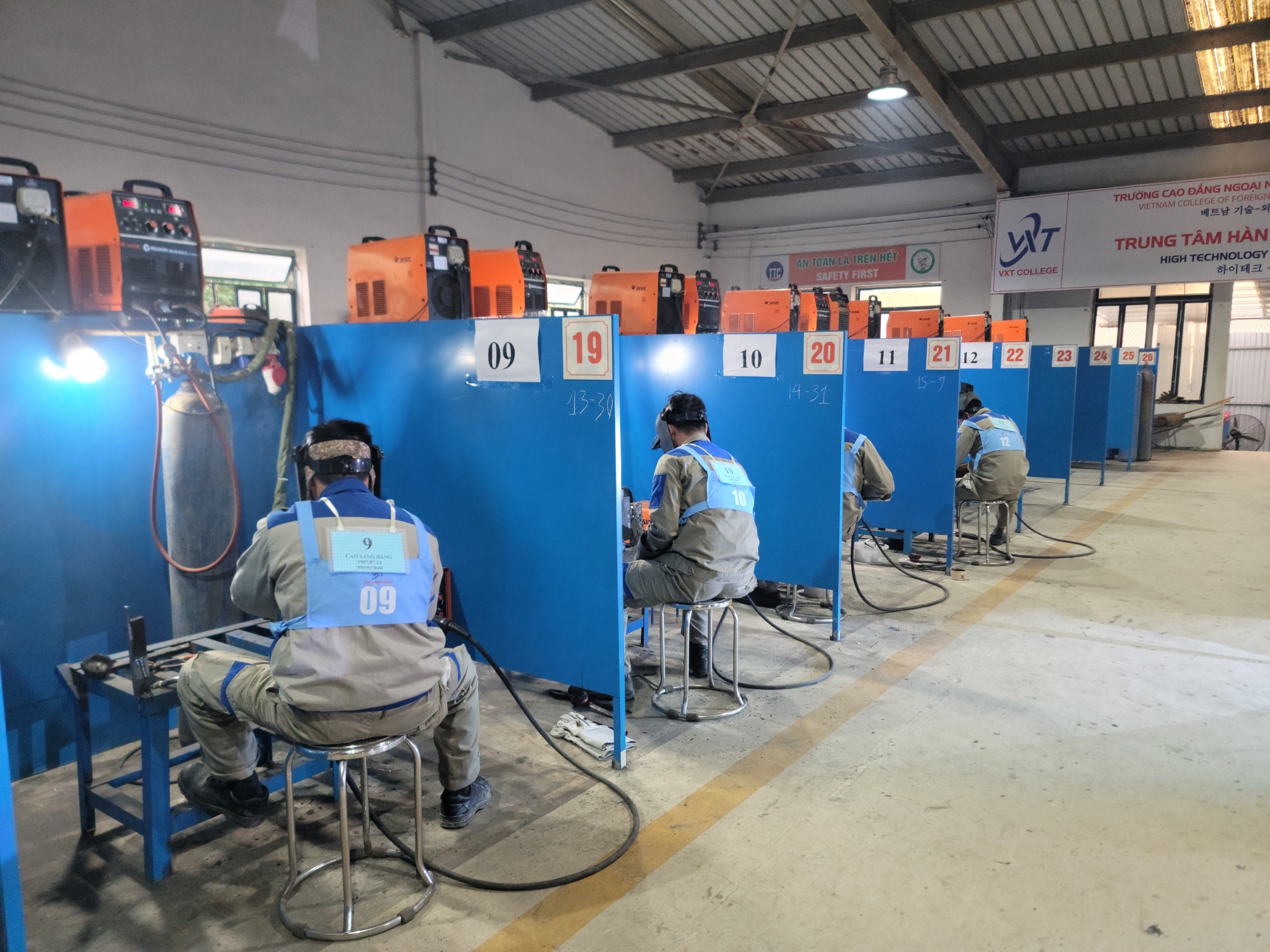
Recruiting Vietnamese welders is a manpower solution for shipbuilding companies in South Korea.
Why Shipyard Onboarding Matters
An experienced worker still needs to understand a new workplace.
A welder may be familiar with the required process but unfamiliar with the employer’s drawings, consumable arrangements or inspection reporting. An electrician may need guidance on cable identification conventions. A painter may need instruction on the project’s coating specifications and inspection sequence.
Workers also need to know who supervises them, where they may work and which activities require authorization.
Onboarding connects technical ability with these workplace requirements.
It should establish clear expectations while giving supervisors evidence that workers understand the instructions. Attendance at an induction session alone does not demonstrate readiness for every task.
Prepare an Onboarding Plan Before Arrival
The Korean employer should assign an onboarding coordinator before the group travels.
This person can organize receiving arrangements, communicate with the Vietnamese recruitment partner and ensure that supervisors have the necessary information.
The plan should cover both practical living arrangements and workplace integration.
Before arrival, confirm:
- Travel and pickup details.
- Accommodation readiness.
- Transport to the workplace.
- Induction arrangements.
- Assigned supervisors.
- Language support.
- Required clothing and equipment.
- Administrative appointments.
- Emergency and support contacts.
Recruitment partners should receive accurate instructions early enough to brief workers in Vietnam.
Avoid relying on informal messages passed between candidates. A consistent written briefing helps everyone understand the same arrangements.
Transfer Candidate Information to Supervisors
Supervisors need more than a list of names.
The recruitment handover should explain each worker’s assessed trade, relevant experience, qualifications and identified training needs.
For welders, this may include the tested process, position and approved scope. For electricians and painters, provide the practical assessment information relevant to their duties.
Keep medical and other sensitive information separate, sharing only what is necessary through appropriate channels.
Technical records help supervisors assign work within demonstrated competence.
For example, a worker approved for supervised cable installation should not immediately receive specialized testing duties. A welder selected for one process should not be assumed competent in another without review.
Organize Arrival and Accommodation
A clear arrival process gives workers a stable start.
Confirm who will meet the group and how workers will recognize that person. Provide contact details in a format they can access after landing.
At accommodation, explain room arrangements, facilities, transport and practical house rules.
Workers should understand how to report maintenance issues and whom to contact if travel or accommodation arrangements differ from the briefing.
Allow suitable time for rest before workplace orientation. Long travel followed by an overloaded induction can make important information difficult to absorb.
Provide a simple first-day schedule rather than presenting every administrative and production requirement at once.
Explain the Employment Arrangement Clearly
Workers should understand the actual employing company, workplace and reporting structure.
A subcontractor employee working inside a major shipyard should know which organization manages payroll, daily supervision and employment questions.
Review the agreed duties, pay structure, working hours, overtime arrangements and relevant accommodation conditions.
Explain how attendance is recorded and how workers can raise payroll questions.
Korea’s Ministry of Employment and Labor identifies wages, working hours, holidays and leave among the matters governed by the Labor Standards Act. Employers should ensure their explanations reflect the applicable conditions and requirements.
Use language assistance where necessary, and give workers an opportunity to clarify the information.
Deliver Safety Training Workers Can Understand
Safety induction should use communication methods suited to the incoming workforce.
Korean-language slides alone may be insufficient when workers do not yet understand the terminology. Vietnamese explanations, demonstrations, photographs and short practical exercises can make instructions clearer.
KOSHA has highlighted foreign-language safety education and the development of foreign-language training materials for workers, including those in shipbuilding. This supports an approach that addresses language barriers directly.
Employers should follow the applicable training requirements and site procedures.
The onboarding team should check understanding through questions and demonstrations. Asking workers simply to sign an attendance sheet does not establish that they can follow the instructions.
Introduce Site Hazards and Reporting Procedures
The induction should explain the hazards and controls relevant to the assigned workplace.
Shipyard activities can overlap, so workers need to understand restricted areas, pedestrian routes and coordination with nearby teams.
The employer’s competent safety personnel should explain the applicable procedures for work involving hot work, lifting, heights, electrical equipment, confined spaces and other relevant activities.
Workers should know:
- When to stop and seek guidance.
- How to report an unsafe condition.
- Who may authorize a task.
- Where to find emergency information.
- How to respond to alarms.
- Where to assemble after evacuation.
Site orientation should include the actual work area. Familiarity with a training room does not establish awareness of routes and hazards onboard or around production facilities.
Provide Trade-Specific Orientation
General induction should be followed by orientation for the assigned trade.
Vietnamese Welders
Explain the applicable welding instructions, equipment arrangements and quality reporting process.
Confirm the worker’s approved duties before production starts. Existing qualifications and recruitment tests should be reviewed against the assignment.
Show how workers obtain instructions, request clarification and present completed work for inspection.
Ship Painters
Introduce the project’s preparation and coating requirements, equipment and inspection arrangements.
Explain how to report unsuitable conditions or defects. Workers should follow the approved specification rather than apply methods from a previous job without checking.
Ship Electricians
Review drawings, identification conventions and assigned installation duties.
Clarify authorization boundaries, especially for testing, energization or other specialized work.
Fabricators and Pipe Fitters
Explain drawing revisions, component identification, measurement requirements and coordination with welding teams.
The orientation should match the actual responsibilities rather than use the same technical briefing for every trade.
Establish a Practical Communication System
Workers need a reliable way to understand instructions and ask questions.
Identify who provides language assistance and how that person can be reached during the shift. Avoid making one bilingual worker responsible for every technical, administrative and personal question without support.
Prepare a short vocabulary guide based on actual workplace needs.
Useful topics include task instructions, quality issues, equipment problems and requests for clarification.
Supervisors should use clear sentences and confirm understanding. Demonstrations can support communication, but they should not replace the required technical documentation.
Encourage workers to repeat or explain an instruction in their own words before starting an unfamiliar task.
Use a Buddy System with Clear Limits
An experienced coworker can help a new worker navigate routines, locate facilities and understand everyday procedures.
Choose buddies who communicate patiently and follow the employer’s requirements consistently.
Explain the limits of the role. A buddy supports integration but does not replace the supervisor, interpreter or authorized technical specialist.
The employer remains responsible for instruction and task authorization.
A buddy can also help identify confusion early. For example, repeated questions about attendance or tool collection may indicate that the original briefing needs improvement.
Review the arrangement after the first weeks rather than assume informal support is working.
Introduce Production Tasks Gradually
Early assignments should reflect demonstrated competence and the worker’s understanding of the workplace.
Supervisors can begin with defined tasks, observe performance and provide feedback before increasing responsibility.
This does not mean treating every experienced worker as a beginner. It means confirming how their skills transfer to the receiving project.
Check quality, communication and compliance with instructions alongside output.
If a worker struggles, identify the cause. The issue may involve unfamiliar equipment, unclear instructions, language or a mismatch between the assessment and assignment.
Use targeted guidance or reassessment rather than repeatedly assigning work that the person is not ready to perform.
Use a Suggested First-Month Schedule
The following is a planning example, not a fixed legal timetable. Employers should adapt it to required training and project conditions.
| Stage | Suggested focus |
|---|---|
| Before travel | Confirm arrangements and transfer candidate records |
| Arrival period | Accommodation, contacts and employment briefing |
| Initial workplace days | Site induction, communication and trade orientation |
| First working week | Supervised tasks and understanding checks |
| Following weeks | Targeted guidance and performance feedback |
| Around one month | Review integration, remaining gaps and support needs |
Allow flexibility for required appointments, additional training or assessment.
Completing a calendar stage should not automatically authorize a worker for a task. Readiness needs to be confirmed against the applicable requirements.
Support Everyday Administration
Practical administrative issues can distract workers and supervisors if responsibilities are unclear.
Provide guidance on the applicable residence-related steps, payroll setup, insurance information and necessary appointments.
Confirm current procedures with the responsible personnel rather than relying on an old checklist.
Workers should know how to access their pay information and ask about deductions.
Explain the process for reporting illness, requesting leave and attending appointments.
Personal documents should remain accessible to their owners. Where records are collected for an authorized procedure, explain the purpose and return arrangements clearly.
A named administrative contact helps prevent conflicting answers from different people.
Create Accessible Worker Support Channels
Workers need channels for technical questions and employment concerns.
Explain how to contact the supervisor, HR team and recruitment partner. Make the distinction between these roles clear.
Offer a route for concerns that workers may be uncomfortable raising with their immediate supervisor.
Questions about pay, accommodation or treatment should receive a clear response and follow-up.
Record recurring issues so the employer can improve the process.
For example, several workers asking the same payroll question may indicate that the payslip explanation is unclear.
Support should help resolve concerns while they are manageable, rather than waiting until communication has broken down.
Evaluate Quality, Understanding and Integration
An onboarding review should assess more than attendance.
Useful indicators include:
- Understanding of assigned duties.
- Ability to follow instructions.
- Accepted workmanship and rework.
- Communication with supervisors.
- Knowledge of reporting channels.
- Completion of required training.
- Unresolved administrative or accommodation issues.
Avoid judging safety performance only by the absence of reported incidents. Workers must also feel able to report concerns and near misses.
Feedback should be specific and understandable.
The employer and Vietnamese recruitment partner can use the findings to improve pre-departure briefings, assessments and future workforce preparation.
Common Onboarding Mistakes
Several mistakes can weaken an otherwise well-organized recruitment campaign.
One is assuming that a qualification certificate replaces site induction. Another is providing extensive instructions without checking understanding.
Other problems include unclear employer identity, missing accommodation information and assigning unfamiliar duties immediately.
Treating every trade as interchangeable also creates avoidable mismatches.
Employers should address these issues through a defined plan, accurate handover records and ongoing supervision.
When conditions change, update workers and the recruitment partner promptly. Consistent information is especially valuable when teams operate across languages and organizations.
Frequently Asked Questions
What is onboarding for Vietnamese shipyard workers?
It is the process of helping workers understand their employment arrangement, workplace, safety procedures, assigned duties and support channels after recruitment.
Should onboarding begin before arrival?
Yes. Receiving arrangements, supervisor assignments and worker briefings should be prepared before travel.
Do experienced welders still need site induction?
Yes. Experience does not establish knowledge of the receiving shipyard’s procedures, hazards, equipment or reporting arrangements.
Should training be provided in Vietnamese?
Use communication methods workers can understand, including Vietnamese support where appropriate. Follow the applicable training requirements and verify understanding.
Can one induction cover welders, painters and electricians?
General site information can be shared, but each trade needs orientation relevant to its duties and authorization limits.
How long should onboarding take?
There is no single timetable suitable for every project. Plan the required induction and continue supervision and feedback until readiness for assigned duties is established.
What should supervisors receive from the recruitment partner?
Relevant experience summaries, assessment results, qualification information and identified preparation needs.
Does a buddy replace the supervisor?
No. A buddy supports everyday integration, while supervision and task authorization remain with the responsible employer personnel.
How can employers improve retention?
Clear employment terms, understandable instructions, suitable receiving arrangements and accessible support channels help workers settle into the role.
Plan a Better Start for Vietnamese Shipyard Workers
Effective onboarding connects recruitment decisions with daily workplace performance.
Korean shipyards and subcontractors should prepare clear arrival arrangements, understandable induction and trade-specific orientation. Supervisors then need to confirm readiness, provide feedback and address questions as workers adapt.
VXT GROUP can discuss pre-departure preparation and coordination with receiving employers as part of Vietnamese workforce recruitment.
Employers can begin by sharing the assigned trades, workplace requirements, induction arrangements and support contacts. This provides a practical basis for helping Vietnamese workers integrate into Korean shipyard teams.
Contact Vietnam Manpower Supply Agency today to discuss your specific workforce needs and discover the difference that skilled Vietnamese workers make.
Do you want to hire #workers, seasonal workers and long-term workers from Vietnam?
But you don’t know about:
❓ What kind of service we provide?
👉 Consulting on finding Vietnamese welders
👉 Looking for a supply of welder human resources
👉 Consult about Vietnam’s labor market
👉 Source suitable workers meeting your requirements
👉 Take documents procedures in Vietnam
👉 Train workers languages and vocational skills
👉 Handle problems while Vietnamese workers work in EU
Please contact #Vietnammanpowersupply for #internationalhiring,
We will support you to do all things.
DETALL: #GLOBALSTAFFRECRUITMENT
Tel/Whatsapp: (+84 ) 982 0303 66 – CEO
🌐 LinkedIn: https://www.linkedin.com/company/vietnam-human-resources-group/
Website: vnmanpower.net
Email: namnq.vtc@gmail.com
Youtobe: https://www.youtube.com/@vietnammanpowersupply
#InternationalRecruitmentAgency #ManpowersupplyAgency #vietnammanpowersupply #manpoweragency #manpowersupply #manpowergroup #manpowervietnam #manpowercompany #manpowersupplycompany #Weldersupply #Supplyofshipwelders #weldermanpowersupply