
E-7-3 Shipyard Recruitment: Documents Employers Should Prepare
E-7-3 shipyard recruitment from Vietnam requires coordination between the Korean employer, the licensed Vietnamese manpower supplier, assessment organizations and the relevant authorities. Preparing employer documents early helps these parties establish a clear recruitment arrangement and identify issues before candidate selection proceeds.
For South Korean shipyards and subcontractors seeking welders, painters and electricians, recruitment should begin with an accurate description of the work and confirmation of the applicable employment pathway. The documents must consistently identify the actual employer, workplace, duties and employment conditions.
A reliable Vietnamese supplier can support sourcing, screening, trade testing and documentation coordination. However, recruitment capacity, technical competence and immigration eligibility remain separate matters that must each be verified.
This guide explains the employer documents to organize, how they connect with Vietnamese recruitment procedures and what to prepare for worker assessment and visa-related stages.
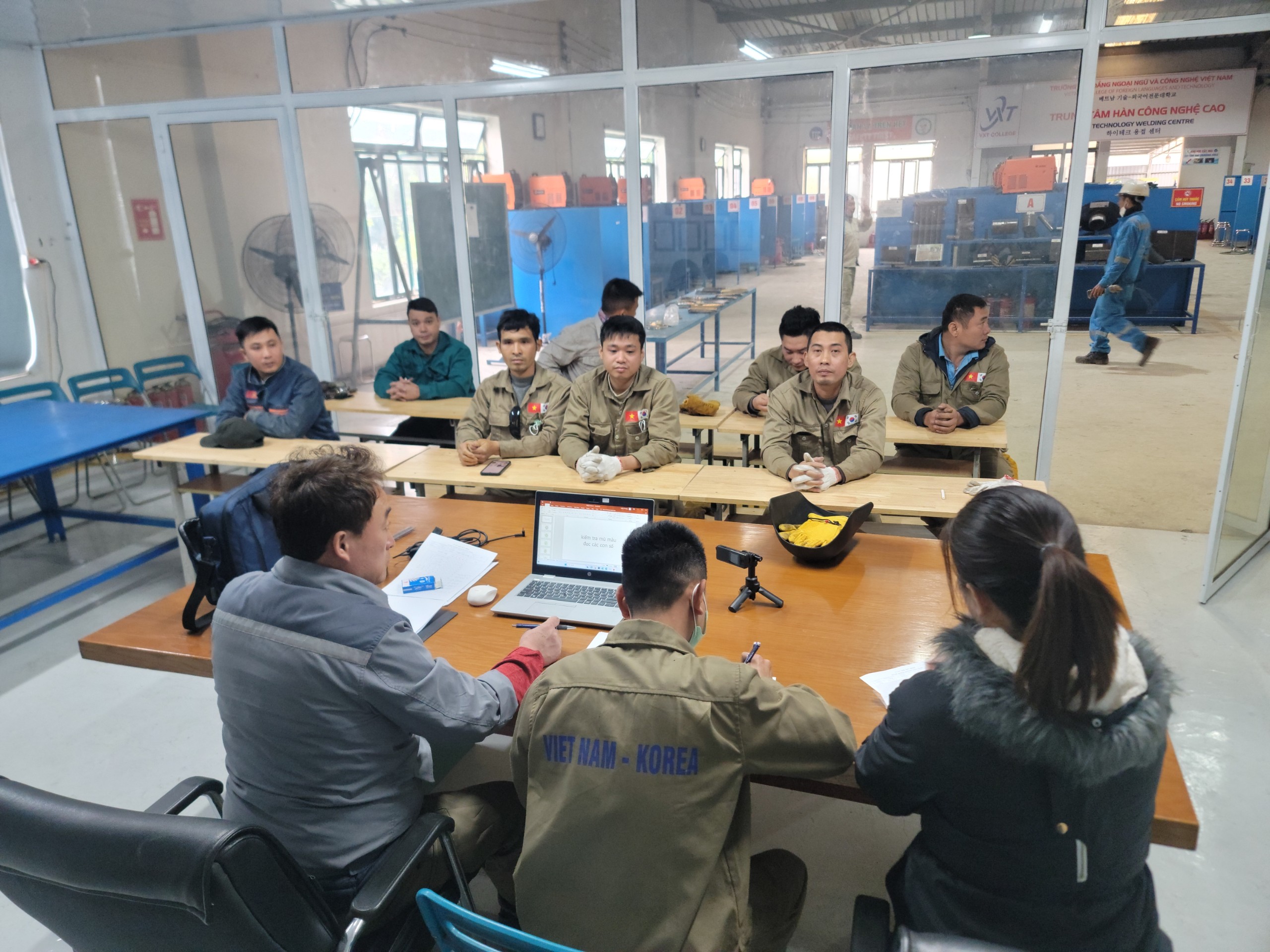
Korean employers directly assess the skills of Vietnamese welders.
1. Confirm the Employer and Recruitment Scope
Before preparing letters or signing agreements, identify the Korean company that will actually employ the workers.
A subcontractor recruiting personnel for work at a major shipyard should use its own correct legal details where it is the employer. The recruitment documents should not imply direct employment by the shipyard operator.
Confirm the business name, registration details, authorized signatory and workplace. These details should remain consistent across the recruitment letter, supply contract and worker employment agreements.
Next, define the required trades and headcount.
Welders, painters and electricians need different selection criteria. A general request for “shipyard workers” is insufficient for technical screening or determining the appropriate occupation requirements.
2. Assess the Vietnamese Supplier’s Recruitment Capacity
Vietnamese manpower suppliers can source candidates from welding, shipbuilding, fabrication, industrial painting and electrical installation backgrounds.
Employers should evaluate how the supplier will meet the requested worker numbers while maintaining selection quality.
Ask for a recruitment plan showing sourcing, screening, testing, document preparation and proposed deployment stages. For larger orders, phased selection can provide a more realistic schedule than promising a complete workforce immediately.
The plan should distinguish applicants from assessed candidates and approved workers.
For welders, request evidence of the required processes, materials and qualification scope. For painters and electricians, use trade-specific evidence rather than welding credentials.
Consistent supply depends on a suitable candidate pool, acceptable employment conditions and completion of the relevant procedures.
3. Verify the Vietnamese Company’s License
The cooperation agreement should identify the Vietnamese legal entity responsible for overseas recruitment.
Request its overseas employment service license and verify the current status through the relevant official records. A general business registration or domestic employment service credential should not be assumed to authorize the proposed overseas arrangement.
Vietnam’s overseas employment administration now falls under the Ministry of Home Affairs. Older licenses and documents may refer to the former Ministry of Labor, Invalids and Social Affairs.
The ministry name printed on an older document is therefore not, by itself, proof that authorization is invalid or current. Check the company’s actual status.
Also distinguish the supplier’s general license from any project-specific contract registration or approval needed for the Korean recruitment order.
4. Prepare a Recruitment Request Letter
A recruitment request letter gives the Vietnamese agency a clear basis for sourcing and preparing the proposed cooperation.
It should identify the employer and describe the recruitment order accurately.
Recommended contents include:
- Employer’s legal name and contact details.
- Workplace and shipbuilding assignment.
- Required trades and worker numbers.
- Technical experience and qualification expectations.
- Proposed employment duration.
- Pay structure and working arrangements.
- Accommodation and other relevant conditions.
- Assessment requirements.
- Preferred recruitment and deployment schedule.
Separate basic pay from amounts dependent on overtime or other conditions. Avoid presenting potential earnings as guaranteed income.
The letter should be signed by an authorized representative. Confirm whether a particular template, translation or authentication is required for the intended submission.
5. Prepare a Letter of Authorization
A letter of authorization defines what the Vietnamese manpower agency may do on the employer’s behalf.
Its scope should be specific. Depending on the cooperation, it may authorize sourcing, preliminary screening, interview coordination or preparation of designated recruitment records.
It should identify both companies, the recruitment assignment, the authorized activities and the period of authorization.
The letter should not imply that the agency can make decisions reserved for the employer or official authorities.
For example, coordinating document preparation does not authorize the agency to guarantee immigration approval.
Confirm the accepted format and any translation or authentication requirements before execution. These can differ according to the recipient and procedure concerned.
6. Execute the Manpower Supply Contract
The manpower supply contract establishes the cooperation between the Korean company and the Vietnamese supplier.
It should explain the recruitment scope, employment conditions and responsibilities of each party.
Important topics include candidate selection, assessments, documentation, preparation, deployment coordination, service terms and post-arrival communication.
The contract should also address how changes, cancellations and any agreed replacement arrangements will be handled.
Vietnam’s official public service portal lists a procedure for registration of labor supply contracts by overseas employment service enterprises, with a written response from the Ministry of Home Affairs. Signing the contract should therefore be distinguished from completing the applicable registration process.
The licensed supplier should confirm the current requirements for the specific arrangement.
7. Organize the Korean Employer’s Company Records
Prepare a company document file before candidate submission.
The exact application checklist must be confirmed for the occupation and receiving authority. A useful preparation file can include the following categories:
| Document category | Purpose |
|---|---|
| Business registration and company identity | Establish the actual employer |
| Authorized representative records | Confirm who may sign or submit |
| Workplace and project information | Explain where and why workers are needed |
| Workforce records | Support review of applicable hiring limits |
| Tax-related evidence, where requested | Demonstrate relevant compliance |
| Insurance records, where requested | Support review of applicable obligations |
| Recruitment and employment agreements | Describe the proposed arrangement |
| Technical job specifications | Support candidate matching and assessment |
This is a planning framework, not a universal official checklist. Confirm required documents, dates and formats before submission.
8. Check Hiring Limits and Insurance Compliance
Employers should verify the applicable conditions for hiring foreign workers before committing to a large recruitment order.
Where a quota, foreign-worker ratio or another limit applies, confirm how it is calculated and what evidence is required.
Do not assume that one percentage applies to every company, trade or recruitment pathway.
Similarly, review mandatory insurance obligations and prepare evidence of enrollment or payment where requested. Address relevant arrears before relying on the records as evidence of compliance.
Whether a specific clearance certificate is required must be confirmed for the application concerned.
A Vietnamese supplier’s authorization does not establish the Korean company’s eligibility to employ the requested number of workers.
9. Prepare Clear Worker Employment Agreements
The employer’s employment terms should match the recruitment letter and supply contract.
Each worker should understand the employing company, duties, workplace, duration and pay structure.
Explain working hours, overtime arrangements, accommodation, relevant deductions and available support channels accurately.
Where translation is needed, ensure the worker can understand the agreement and that the translated information reflects the signed conditions.
Avoid using a general template that assigns painters, electricians and welders identical duties.
Material changes should be communicated and reviewed through the appropriate process. Inconsistencies between agreements and application records can create questions during recruitment or official review.
10. Define Welding Qualification Requirements Correctly
Employers may request welding records under ISO 9606, AWS D1.1, ASME Section IX or legacy EN 287-1 arrangements.
These references should be reviewed individually. They are not interchangeable credentials, and each candidate should only be described as holding qualifications supported by their records.
Check the process, position, material, dimensions, examination results and applicable qualification range.
The correct designation is EN 287-1. Legacy records require review for current project acceptance.
Welding qualifications apply to welding duties. They should not be presented as required credentials for painters or electricians.
For those trades, identify the relevant experience, education, technical assessments and current occupation requirements separately.
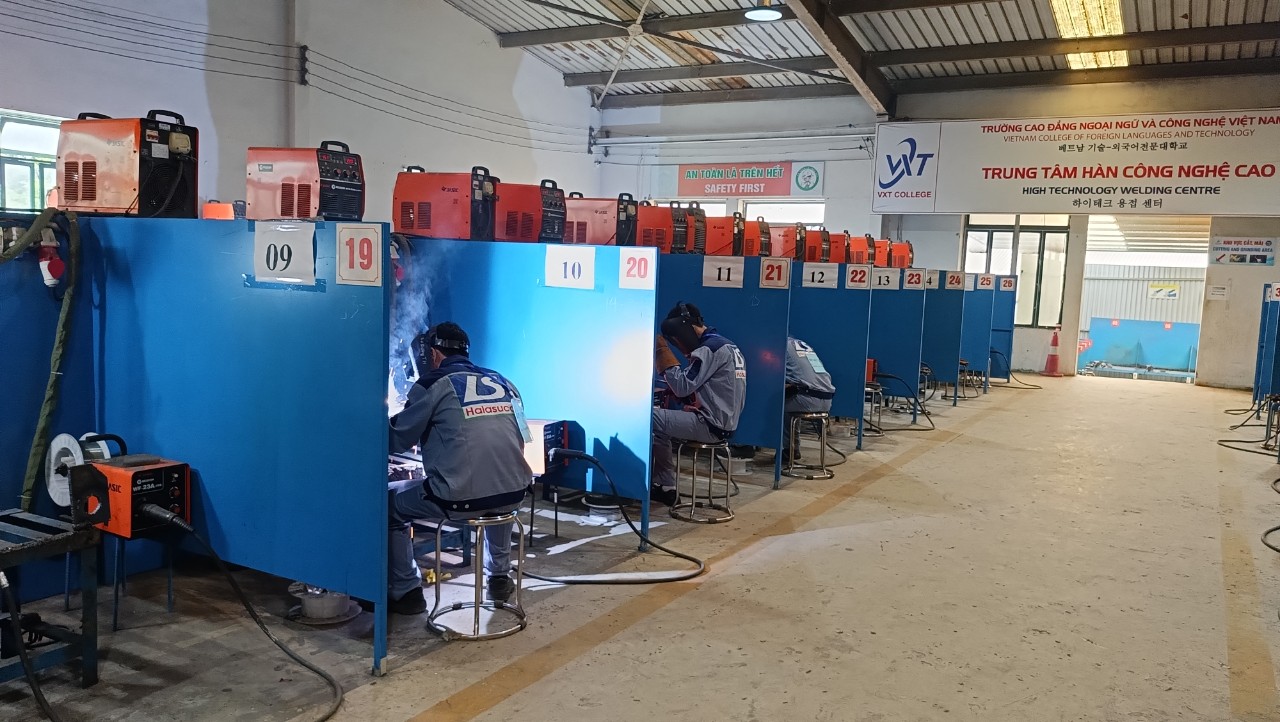
Korean shipbuilding industry human resources solutions are seeking skilled welders from Vietnam.
11. Screen and Select Candidates
The Vietnamese supplier should prepare individual profiles matching the employer’s job specifications.
For welders, review production experience, processes, positions and qualification records. Practical testing should reflect the actual assignment.
For painters, assess the specified preparation and coating duties. For electricians, evaluate the assigned installation responsibilities and drawing comprehension.
Candidate screening should also address passport details and other required records.
Health, background and education documentation should follow the applicable recruitment and immigration requirements rather than an assumed universal checklist.
Employers should approve candidates individually and record any limitations or additional preparation needs.
12. Coordinate KOSHIPA Assessments Where Required
Where the applicable shipbuilding recruitment pathway requires KOSHIPA skills verification, confirm the current registration arrangements before submitting candidates.
KOSHIPA, the Korea Offshore & Shipbuilding Association, should not be treated as issuing the same assessment document for every trade or application.
The responsible parties should obtain the current occupation-specific checklist and accepted submission channel.
Prepare candidate lists and supporting records in the required format. Passport identity details, qualification information and employment histories should remain consistent.
The employer should also confirm the assessment specification, participation arrangements and expected result documentation.
Preliminary registration is not evidence that a worker has passed or received an accepted certificate.
13. Prepare for Visa Issuance Confirmation
The phrase “visa code” is often used in recruitment discussions, but employers should identify the precise immigration procedure and document involved.
Where visa issuance confirmation is the applicable route, prepare the employer and worker records required for that application.
An assessment result may support the dossier, but it does not replace the remaining requirements or guarantee approval.
Korea’s official visa application form states that failure to submit required documents may delay or prevent approval. It also warns that false information or documents can lead to serious consequences. Accurate, complete records are therefore essential.
Confirm the subsequent consular application steps before arranging deployment.
14. Assign Document Responsibilities
A shared responsibility table helps prevent duplication and missing items.
| Preparation area | Main coordination responsibility |
|---|---|
| Employer identity and company records | Korean employer |
| Recruitment letter and authorization | Korean employer with agency coordination |
| Manpower supply contract | Both contracting parties |
| Vietnamese recruitment procedures | Licensed Vietnamese supplier |
| Candidate profiles and records | Supplier and workers |
| Technical selection | Employer with agreed assessors |
| Association submission | Designated party under current arrangements |
| Immigration submission | Employer or appropriately authorized representative |
| Travel and receiving arrangements | Employer and supplier |
Identify the responsible person, status and deadline for each item.
Technical approval, document completion and immigration approval should be tracked separately.
15. Why Vietnamese Recruitment Cooperation Is a Strong Choice
Cooperation with a licensed Vietnamese supplier can be a strong sourcing option for Korean employers seeking assessed welding personnel and other shipyard trades.
The value comes from combining candidate access with organized screening, practical tests and coordination of Vietnamese procedures.
Employers should evaluate partners through relevant experience, sample records and realistic commitments.
A dependable partnership explains what has been verified, what remains outstanding and which decisions belong to official authorities.
VXT GROUP’s international labor supply experience supports a cooperation approach focused on employer requirements, worker preparation and communication between the parties.
Frequently Asked Questions
What should a Korean employer prepare first?
Start with company details, a technical job order, proposed employment conditions and confirmation of the applicable occupation pathway.
How can an employer identify a licensed Vietnamese supplier?
Request the legal entity name and overseas employment service license, then verify current authorization through official records.
Are recruitment letters and authorization letters the same?
No. The recruitment letter describes the order; the authorization letter defines activities the agency may perform on the employer’s behalf.
Does signing a supply contract complete Vietnamese procedures?
Not necessarily. The supplier must confirm and complete any applicable registration or approval requirements.
Must all welders hold AWS, ISO and ASME qualifications?
No. Require qualifications relevant to the assignment and review each candidate’s actual records and scope.
Do painters and electricians need welding certificates?
Welding certificates do not establish competence in those trades. Use occupation-specific evidence and assessments.
Are hiring quotas and insurance certificates identical for every employer?
No universal checklist should be assumed. Confirm the applicable limits, obligations and required evidence for the company and pathway.
Does passing a KOSHIPA assessment guarantee a visa?
No. Assessment success supports progression where relevant, while immigration approval remains a separate official decision.
Start Preparing Your E-7-3 Recruitment Documents
Effective E-7-3 shipyard recruitment begins with a clearly identified employer, accurate job requirements and cooperation with an appropriately licensed Vietnamese supplier.
Recruitment letters, authorization documents, supply contracts and employer records should tell a consistent story about the proposed employment arrangement.
Korean shipyards and subcontractors exploring cooperation with VXT GROUP can begin by sharing their required trades, headcount, technical criteria and employment conditions.
A project-specific review can then establish the document checklist, assessment arrangements and responsibilities needed to recruit suitable Vietnamese workers.
Contact Vietnam Manpower Supply Agency today to discuss your specific workforce needs and discover the difference that skilled Vietnamese workers make.
Do you want to hire #workers, seasonal workers and long-term workers from Vietnam?
But you don’t know about:
❓ What kind of service we provide?
👉 Consulting on finding Vietnamese welders
👉 Looking for a supply of welder human resources
👉 Consult about Vietnam’s labor market
👉 Source suitable workers meeting your requirements
👉 Take documents procedures in Vietnam
👉 Train workers languages and vocational skills
👉 Handle problems while Vietnamese workers work in EU
Please contact #Vietnammanpowersupply for #internationalhiring,
We will support you to do all things.
DETALL: #GLOBALSTAFFRECRUITMENT
Tel/Whatsapp: (+84 ) 982 0303 66 – CEO
🌐 LinkedIn: https://www.linkedin.com/company/vietnam-human-resources-group/
Website: vnmanpower.net
Email: namnq.vtc@gmail.com
Youtobe: https://www.youtube.com/@vietnammanpowersupply
#InternationalRecruitmentAgency #ManpowersupplyAgency #vietnammanpowersupply #manpoweragency #manpowersupply #manpowergroup #manpowervietnam #manpowercompany #manpowersupplycompany #Weldersupply #Supplyofshipwelders #weldermanpowersupply