
Vietnamese 3G Welders: A Hiring Guide for Korean Shipyards
Hiring Vietnamese 3G welders for Korean shipyards starts with defining the welding work they will perform. Employers need candidates who can use the required process, follow a welding procedure and produce acceptable welds under the assigned working conditions.
The term “3G welder” provides useful information about a welding position, but it is not a complete description of a worker’s competence. Employers must also review the welding process, material, joint configuration, qualification scope and relevant production experience.
For Korean shipyards and subcontractors considering recruitment from Vietnam, a structured selection process can help identify suitable workers before deployment. That process should combine experience verification, practical trade tests, document review and preparation for the receiving workplace.
This guide explains what 3G means, which skills employers should assess and how to organize recruitment around actual shipbuilding requirements.
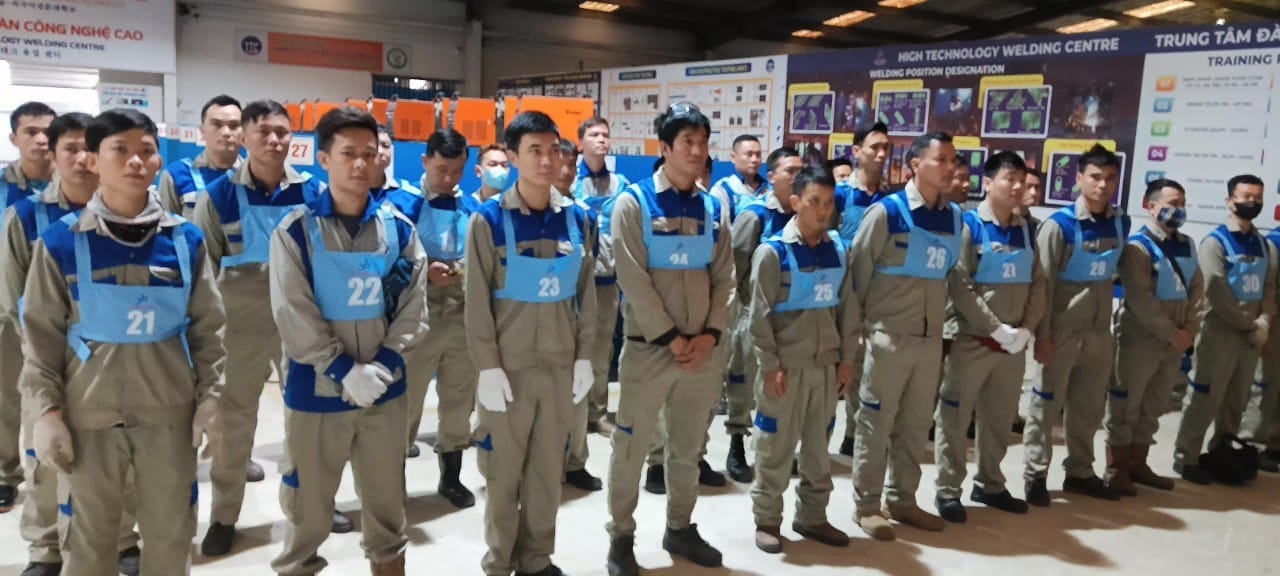
Korean shipbuilding industry human resources solutions are seeking mechanical engineers from Vietnam.
What Is a 3G Welder?
In AWS welding position terminology, 3G refers to a groove weld in the vertical position. AWS distinguishes this from 1G, the flat position; 2G, the horizontal position; and 4G, the overhead position.
The position describes the orientation of the welding task. It does not identify the welding process or establish the full range of work a candidate is qualified to perform.
A candidate may have completed a 3G assessment using FCAW, SMAW or another process. Employers need to establish which process was used and whether it matches the proposed assignment.
Vertical progression also matters. Recruitment specifications should state whether the required work involves vertical-up or vertical-down progression rather than leaving this detail unclear.
A complete candidate review therefore goes beyond the label “3G certified.”
Why 3G Experience Matters for Shipyard Recruitment
Vertical welding experience can be relevant to structural fabrication and assembly work where the joint orientation requires that skill.
However, the relevance of a 3G test depends on the actual production assignment. Employers should identify the joints, processes and materials involved before choosing the recruitment assessment.
A worker who performs well on a controlled test may still need orientation to the shipyard’s equipment, documentation and production arrangements. Conversely, an experienced production welder may need a new qualification or employer-specific assessment before starting the assigned work.
Recruitment should connect three questions:
- Can the candidate perform the required welding task?
- Does the available qualification cover the assignment?
- What additional preparation or approval is required?
This approach gives employers a more useful basis for hiring than selecting candidates solely by certificate title.
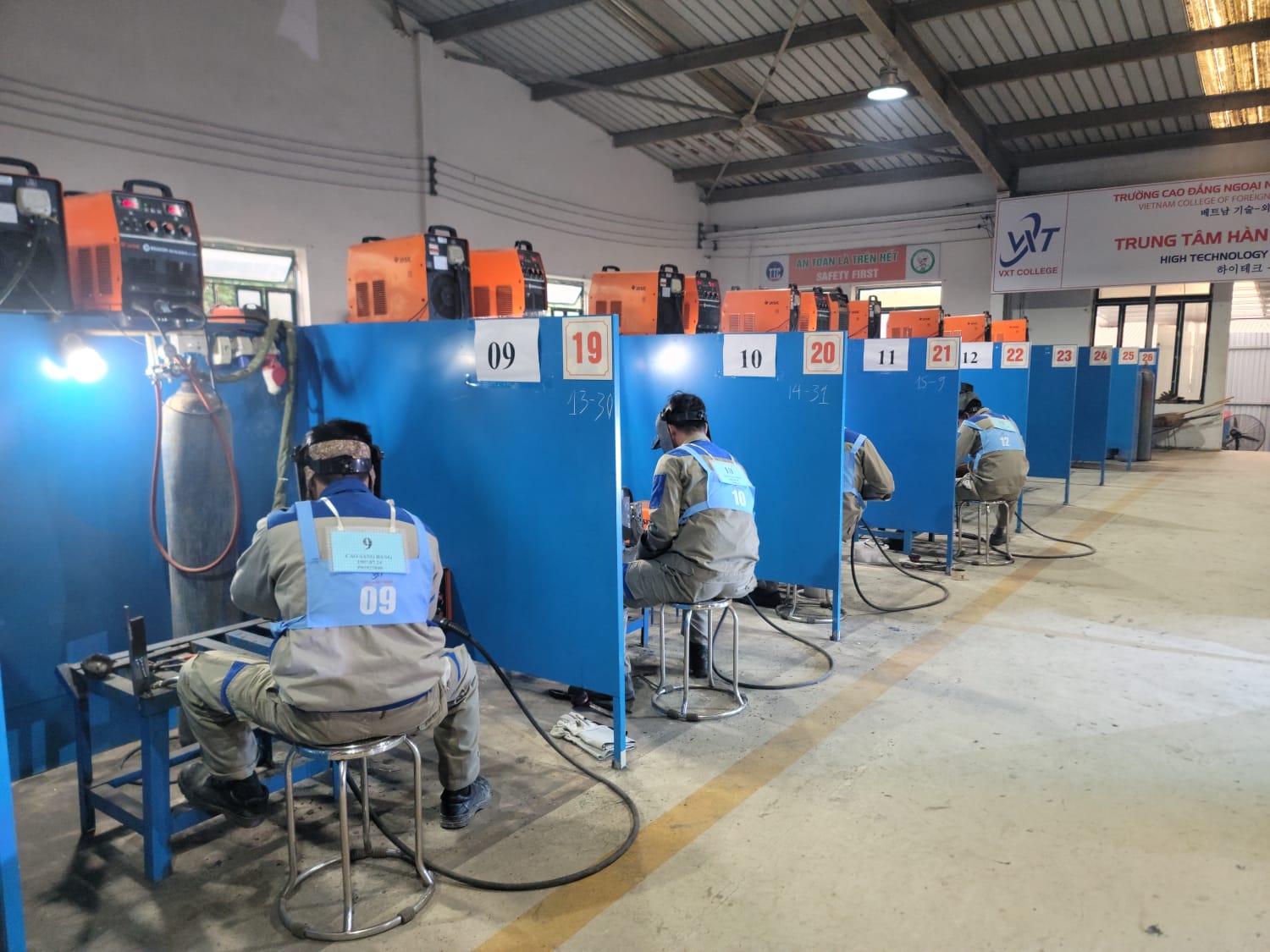
3G Fcaw welders in Vietnam are the solution for shipbuilding companies in South Korea.
Why Consider Vietnamese 3G Welders?
Vietnam offers a potential recruitment source for welders with shipbuilding, structural fabrication and industrial project backgrounds.
The value of each candidate depends on the relevance of that experience. Employers should assess individuals rather than assume that nationality or years of service establish welding quality.
A structured recruitment campaign in Vietnam allows Korean employers to review candidates and organize practical tests before travel. Workers can be grouped by demonstrated ability, while training needs can be identified early.
For employers recruiting several welders, consistent assessment conditions also make comparison easier. Each candidate can be evaluated against the same job requirements.
The objective is a team whose skills match the assigned work, with accurate information about qualifications, experience and supervision needs.
Define the Welding Process Before Sourcing Candidates
A request for “Vietnamese 3G welders” should identify the required welding process.
FCAW Welders
Where the job requires flux-cored arc welding, employers should assess experience with the specified application and consumable system.
Candidates should demonstrate familiarity with the equipment and the ability to follow the applicable welding instructions.
Experience with one FCAW application should not automatically be extended to a different setup or production requirement.
SMAW Welders
For shielded metal arc welding roles, review experience with the required consumables, materials and positions.
The practical assessment should reflect the actual task rather than a general demonstration unrelated to the project.
GMAW Welders
Gas metal arc welding candidates should be assessed against the specified process conditions.
Where the proposed assignment depends on a particular transfer mode or equipment arrangement, include those requirements in the selection brief.
Combined-Process Roles
Some jobs involve more than one welding process.
Employers should confirm which duties each process covers and assess the candidate accordingly. Passing a test with one process does not automatically establish competence in another.
Prepare a Detailed Recruitment Specification
A clear job order helps the Vietnam recruitment partner source candidates accurately.
The specification should identify the employing company, workplace and welding duties. It should also define technical requirements and the selection process.
| Recruitment item | Information to provide |
|---|---|
| Welding process | Required process or combination of processes |
| Production work | Structural assembly, fabrication or another defined task |
| Materials | Relevant material specifications |
| Welding position | Required position and progression |
| Qualification | Governing requirements and employer acceptance |
| Practical test | Test configuration, examination and decision criteria |
| Experience | Relevant production background |
| Deployment | Headcount, proposed schedule and employment conditions |
Separate essential requirements from preferences. This gives recruiters a realistic selection target and helps candidates understand the opportunity.
Technical uncertainties should be resolved before the test event.
Review Candidate Experience Carefully
A useful welder profile describes actual work, not only job titles.
Employers should review previous companies, employment periods, project types and welding responsibilities. Candidates should explain which processes they used and how their work was inspected.
Useful interview questions include:
- What materials and joint types did you weld?
- Which welding process did you use most frequently?
- Have you performed vertical welding in production?
- What instructions or WPS did you follow?
- How were defects and repairs handled?
- What supervision did you receive?
Answers should be compared with supporting records where available.
A candidate with relevant production experience may be more suitable than someone whose only evidence is a recent training exercise. However, experience should still be supported by a current practical assessment.
Check the Scope of Welding Qualifications
Qualification documents need a technical review before acceptance.
Employers should confirm the candidate’s identity, test details, issuing or examining arrangements and the applicable qualification range.
TWI identifies material, welding process, joint type, dimensions and welding position among the variables relevant to welding approval tests. These details explain why a position label alone cannot establish suitability for every assignment.
Depending on the governing requirements, employers should also review applicable validity, confirmation and continuity records.
Do not assume that a 3G certificate covers all positions, processes, materials or thicknesses. The permitted range must be determined under the relevant standard or code.
Certificate authenticity and project acceptance are separate checks. A genuine document may still be outside the scope required for the job.
Organize Practical 3G Trade Tests in Vietnam
Practical tests should be designed around the Korean employer’s assignment.
Before testing, agree on the process, material, dimensions, joint configuration, position, progression and welding instructions.
The employer should also define the examination methods, acceptance criteria and witnessing arrangements.
A recruitment assessment can observe:
- Interpretation of the supplied instructions.
- Equipment familiarity.
- Preparation and work organization.
- Welding performance.
- Response to problems.
- Finished weld quality.
- Safety judgment and communication.
Use consistent test conditions so candidates can be compared fairly.
Employers can attend in person or use suitable remote arrangements for recruitment screening. Formal qualification witnessing requirements must be reviewed separately.
Each test piece and report should be traceable to the correct candidate.
Distinguish Trade Testing from Certification
An internal trade test supports a recruitment decision. Formal welder qualification follows the requirements of a specified framework.
TWI describes welder qualification as evaluating a person’s capability to produce welds to an industry standard while following a welding procedure. It also notes that acceptance of certification depends on the applicable examining arrangements and requirements.
A worker who passes an employer’s screening test should be described as having passed that assessment.
The result should not be presented as an AWS, ISO or classification society certification unless the relevant requirements and issuing arrangements support that claim.
If formal qualification is required, establish who will examine the test, review the results and issue the records before testing begins.
Use the Appropriate Welding Procedure
The assessment should provide the welding instructions applicable to the task.
Candidates should demonstrate that they can understand and follow the relevant WPS rather than rely entirely on habits from a previous workplace.
Assessors should record departures from the agreed instructions and handle questions consistently.
Welder qualification and welding procedure qualification are different activities. TWI explains that a welder approval test demonstrates an individual’s skill, while procedure approval addresses the welding procedure and its applicable range.
A successful welder test therefore does not automatically establish a new production procedure.
The Korean employer’s welding specialists should confirm the technical basis for the assessment and production assignment.
Inspect Results Against Agreed Criteria
A visually neat weld is not sufficient evidence for every hiring or qualification decision.
The employer should define the required examination methods and acceptance criteria before the test.
Visual examination may form part of the assessment. Additional non-destructive or mechanical testing may be required depending on the configuration and governing requirements.
Radiographic testing, ultrasonic testing and other methods should not be treated as interchangeable without technical review.
Reports should explain the result clearly and identify the candidate and test piece.
If a candidate needs further training or retesting, record the reason and the new assessment separately. Transparent records help employers distinguish initial performance from later improvement.
Plan Recruitment and Immigration as Separate Workstreams
Technical approval should be coordinated with employment and immigration preparation, but the decisions are separate.
For recruitment involving a proposed E-7-3 route, employers should confirm current requirements for the precise occupation, sponsoring company and candidate.
A 3G test result should not be treated as automatic evidence of immigration eligibility or a substitute for any separately required official verification.
Prepare a current document checklist and assign responsibilities to the employer, recruitment partner and worker.
Keep names, dates, employment history and job descriptions consistent across records.
The deployment schedule should allow for candidate selection, documentation and official review without promising approval based solely on welding performance.
Prepare Welders for the Receiving Shipyard
Pre-departure preparation should address gaps identified during testing.
Technical refresher sessions can focus on procedure interpretation, project terminology and representative exercises. Training should support relevant experience rather than claim to replace it.
Workers should understand employment terms, arrival arrangements and communication channels.
Language preparation can prioritize workplace instructions and welding terminology. Candidates should know how to report an unclear instruction, equipment issue or quality concern.
After arrival, the employer should provide site induction, explain reporting lines and assign work within the worker’s demonstrated competence and authorization.
Supervisors should receive the assessment records so they understand the incoming team’s capabilities.
Evaluate Quality and Workforce Performance
Recruitment quality becomes clearer through production performance.
Employers can monitor workmanship, repair levels, attendance, communication and adherence to instructions.
Productivity should be assessed alongside accepted quality. Faster welding provides limited benefit when repeated repairs delay subsequent work.
Give workers clear feedback and identify where additional guidance is needed.
Share specific findings with the Vietnam recruitment partner. Recurring gaps can inform the next recruitment campaign’s interviews, test configuration and preparation.
Clear employment conditions and accessible support contacts also help workers understand expectations and raise concerns early.
Frequently Asked Questions
What does 3G mean in welding?
In AWS terminology, 3G identifies a groove weld in the vertical position. It describes the position, while the process and other test variables need separate identification.
Are all Vietnamese 3G welders FCAW welders?
No. A 3G assessment can involve different welding processes. Employers must verify which process the candidate used and whether it matches the job.
Does a 3G qualification cover overhead welding?
Employers should not assume this. Review the qualification range under the governing requirements before assigning overhead or other duties.
Can Korean employers test candidates in Vietnam?
Practical selection tests can be organized at suitable facilities. Agree on the specification, examination, witnessing and reporting arrangements in advance.
Is a welding certificate enough to make a hiring decision?
A certificate provides supporting evidence, but employers should also review relevant experience, qualification scope and current practical performance.
Can a 3G welder perform pipe welding?
Do not infer pipe welding competence from the title alone. Review the applicable qualification range and assess the specific pipe welding assignment where required.
Does passing a 3G test guarantee visa approval?
No. Technical assessment and immigration eligibility are separate matters. The applicable authorities determine approval under the relevant requirements.
What should employers include in a recruitment inquiry?
Provide the welding process, position and progression, materials, production duties, qualification requirements, headcount, employment conditions and preferred deployment schedule.
Discuss Your Vietnamese 3G Welder Requirements
Hiring Vietnamese 3G welders works best when employers define the job precisely and assess candidates against measurable technical requirements.
Verified experience, qualification reviews and practical trade tests provide a stronger basis for selection. Targeted preparation and clear supervision then help workers adapt to the receiving shipyard.
Korean shipyards and subcontractors exploring recruitment cooperation with VXT GROUP can begin by sharing their welding process, production scope, assessment requirements and worker numbers.
A project-specific discussion can establish candidate selection, testing arrangements, preparation needs and documentation responsibilities, helping employers build a welding team suited to their shipbuilding projects.
Contact Vietnam Manpower Supply Agency today to discuss your specific workforce needs and discover the difference that skilled Vietnamese workers make.
Do you want to hire #workers, seasonal workers and long-term workers from Vietnam?
But you don’t know about:
❓ What kind of service we provide?
👉 Consulting on finding Vietnamese welders
👉 Looking for a supply of welder human resources
👉 Consult about Vietnam’s labor market
👉 Source suitable workers meeting your requirements
👉 Take documents procedures in Vietnam
👉 Train workers languages and vocational skills
👉 Handle problems while Vietnamese workers work in EU
Please contact #Vietnammanpowersupply for #internationalhiring,
We will support you to do all things.
DETALL: #GLOBALSTAFFRECRUITMENT
Tel/Whatsapp: (+84 ) 982 0303 66 – CEO
🌐 LinkedIn: https://www.linkedin.com/company/vietnam-human-resources-group/
Website: vnmanpower.net
Email: namnq.vtc@gmail.com
Youtobe: https://www.youtube.com/@vietnammanpowersupply
#InternationalRecruitmentAgency #ManpowersupplyAgency #vietnammanpowersupply #manpoweragency #manpowersupply #manpowergroup #manpowervietnam #manpowercompany #manpowersupplycompany #Weldersupply #Supplyofshipwelders #weldermanpowersupply