
Vietnamese Workers for Korean Shipyard Subcontractors: Skilled Manpower and Recruitment Support
Recruiting Vietnamese workers for Korean shipyard subcontractors requires more than filling a headcount. Each subcontractor needs people who can perform a defined work package, follow the shipyard’s procedures and maintain consistent workmanship under the assigned supervision.
A welding contractor may need workers experienced in a particular welding process and position. An electrical contractor may require cable installation teams, termination technicians or equipment installation electricians. A painting contractor needs candidates familiar with surface preparation, coating application and inspection requirements.
For Korean employers considering recruitment from Vietnam, the strongest approach combines clear job specifications, verified experience, practical testing and organized deployment planning. This helps employers understand what candidates can do before making hiring decisions.
This guide explains the main trades to consider, how to assess workers and how to develop a recruitment partnership suited to shipyard subcontracting projects.
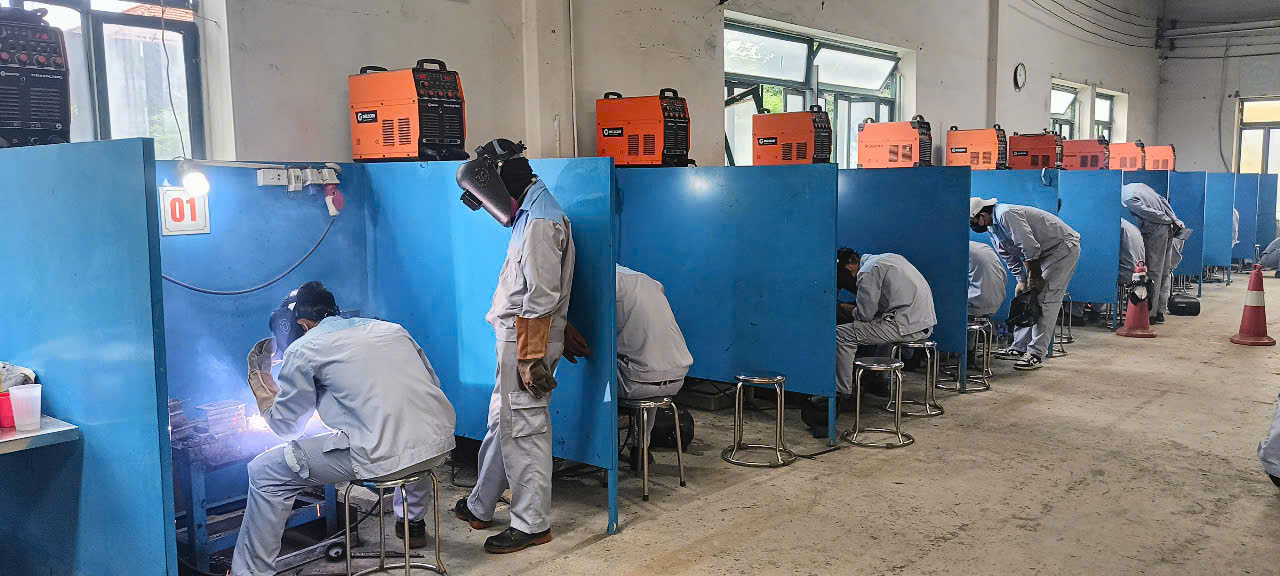
Training and screening of Vietnamese welders.
Understanding the Workforce Needs of Shipyard Subcontractors
Shipbuilding projects involve multiple stages and interconnected work packages. A subcontractor’s workforce requirements depend on its actual responsibilities, the construction stage and the receiving shipyard’s standards.
HD Hyundai Heavy Industries describes its shipbuilding business as responding to demand for green, energy-efficient vessels and specialized offshore ships. For recruitment planning, this reinforces the importance of defining the vessel and work scope rather than treating every shipbuilding assignment as identical.
The practical question is not simply how many workers are available. It is how many qualified workers are available for a particular task, under the proposed employment conditions and within a realistic deployment schedule.
Before recruitment starts, subcontractors should identify:
- The trade and specific duties.
- Required experience and technical ability.
- Project location and expected assignment duration.
- Practical testing and acceptance criteria.
- Supervision and communication arrangements.
- Employment terms and planned deployment stages.
A detailed recruitment brief gives the Vietnamese recruitment partner a useful basis for sourcing candidates and preparing assessments.
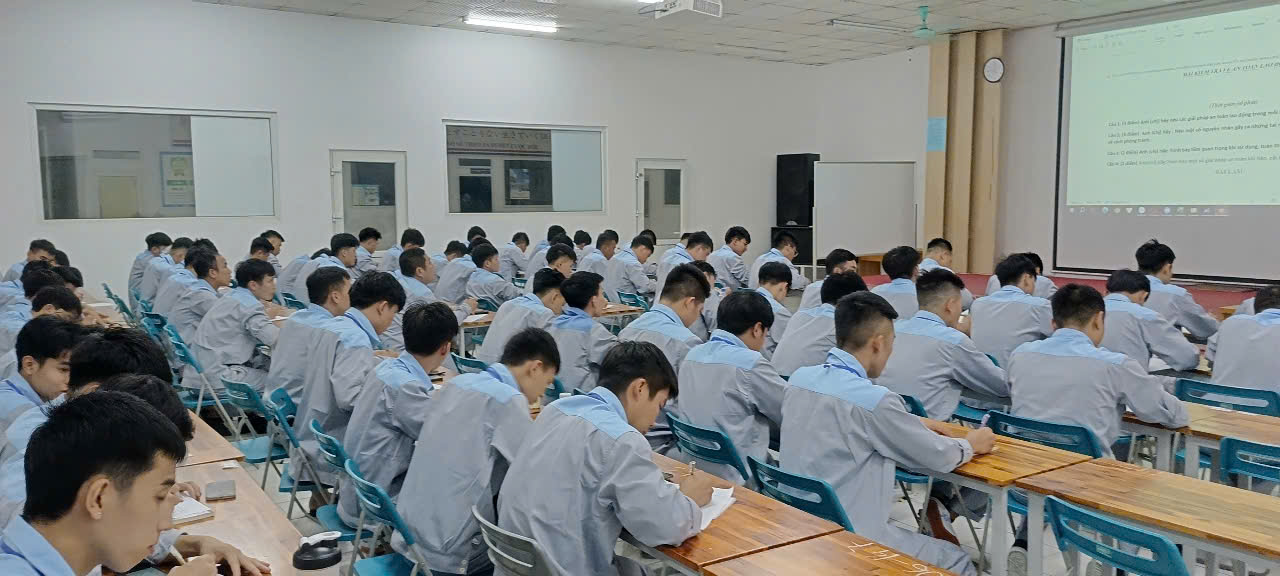
Providing Korean language training and workplace safety training for Vietnamese workers going to work in South Korea.
Why Consider Vietnamese Workers for Korean Shipbuilding Projects?
Vietnam provides a potential recruitment source for candidates with backgrounds in welding, fabrication, electrical installation, industrial maintenance, painting and related technical work.
The suitability of each candidate depends on the relevance and quality of that experience. Employers should assess workers individually rather than assume that nationality, a job title or a training certificate establishes competence.
Experienced candidates may bring skills that transfer to the subcontractor’s work package. Others may require additional preparation before they can perform the role consistently.
Recruitment from Vietnam can also allow employers to organize selection and testing before departure. Candidates can be interviewed, assessed and grouped by demonstrated ability, giving supervisors a clearer picture of the incoming team.
The objective should be a workforce matched to the project’s requirements, with transparent information about each worker’s strengths, limitations and preparation needs.
Main Trades for Korean Shipyard Subcontractors
Vietnamese Welders
Welding recruitment should begin with the employer’s technical requirements. The requested process, material, thickness range, joint configuration and welding positions all influence candidate selection.
Employers recruiting Vietnamese welders should review actual experience with the specified process, such as FCAW, GMAW, GTAW or SMAW. Familiarity with one process should not be treated as proof of competence in another.
Candidates should demonstrate that they can follow the supplied instructions, prepare their work correctly and maintain consistent technique.
Any certificates should be checked for their applicable scope and validity. Employer acceptance should also reflect the project’s approved assessment requirements.
Practical testing is especially useful because it shows the candidate’s current performance under controlled conditions.
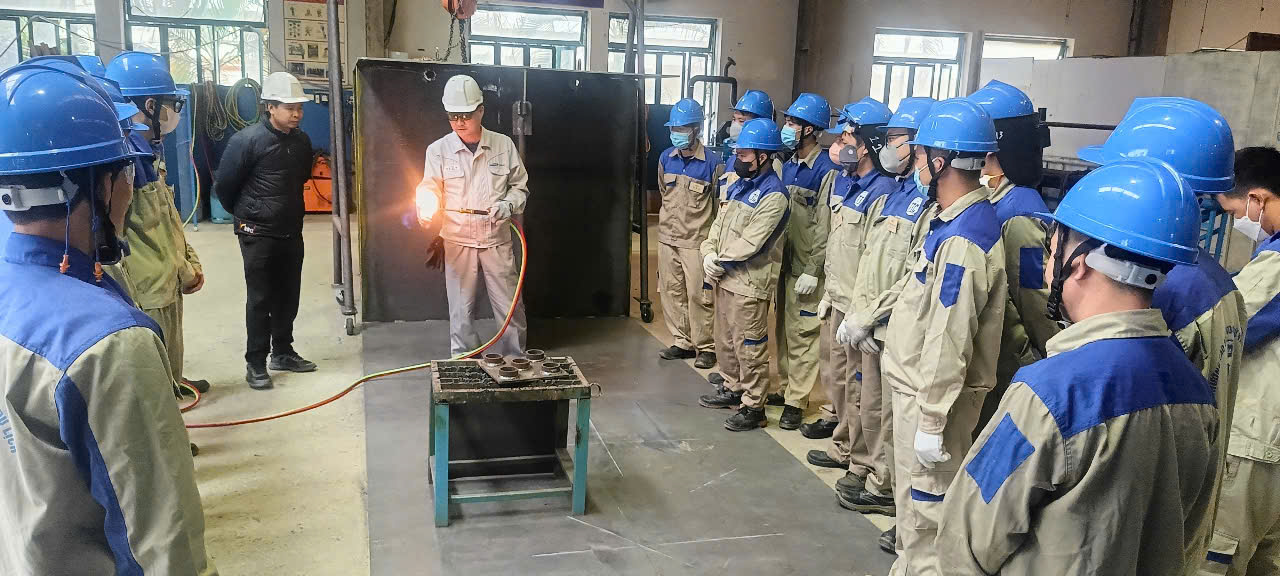
Korean experts are collaborating to provide skills training for Vietnamese workers before they go to South Korea to work for a shipbuilding company.
Structural Fabricators and Hull Assembly Workers
Fabrication candidates should be assessed on drawing interpretation, measurement, marking and assembly skills relevant to the assigned role.
For hull or structural work, employers may need workers who can identify components, understand orientation and prepare an assembly for the next production stage.
Recruitment records should distinguish fitting and assembly experience from welding experience. Some candidates have both, while others specialize in one activity.
A practical assessment can reveal whether the worker follows a logical sequence, checks dimensions and reports discrepancies before continuing.
The test should reflect the subcontractor’s actual work rather than a generic workshop exercise.
Pipe Fitters
Pipe fitting roles can vary significantly. Employers should specify whether the work concerns preparation, spool assembly, onboard installation or other defined duties.
Useful candidate information includes experience reading isometric drawings, identifying fittings, checking dimensions and working with the specified pipe materials.
The assessment should also establish how the worker coordinates with welders and supervisors.
Pipe fitting competence does not automatically qualify a candidate for every pipe welding assignment. Welding duties require separate verification where included in the position.
Clear distinctions prevent a worker from being selected for responsibilities outside their demonstrated ability.
Ship Electricians
Electrical subcontractors should identify whether they need cable installation workers, termination electricians, equipment installers or technicians with more specialized experience.
Candidates should be assessed on drawing comprehension, cable identification, workmanship and understanding of their authorization limits.
An industrial electrician may bring useful experience, but marine installation tasks should still be evaluated directly.
Testing and commissioning responsibilities require particular attention. Employers should verify what the candidate has previously done, the supervision involved and the documentation used.
A clear division of duties helps electrical teams work effectively under the receiving employer’s procedures.
Ship Painters and Surface Preparation Workers
Painting recruitment should match candidates to the preparation and application tasks required by the project.
Assessment may cover previous experience with surface preparation, coating equipment, application methods and inspection support.
Workers should understand that the approved coating specification governs the work. Experience with general industrial painting should be reviewed against the actual shipyard assignment.
Practical tests should evaluate preparation, application control, organization and awareness of defects requiring attention.
Employers should also establish the candidate’s familiarity with the workplace controls relevant to the assigned painting area.
Other Supporting Trades
Projects may also require scaffolders, mechanical installation workers and other supporting personnel.
Each proposed occupation needs its own technical assessment and eligibility review. A broad request for “shipyard workers” is not sufficient to establish either competence or a suitable immigration route.
Employers should define the duties, required qualifications and authorization arrangements separately for every position.
Assessing Workers Before Recruitment Approval
A reliable assessment process combines document review, interviews and practical evaluation.
The document review establishes the candidate’s stated education and employment history. Interviews explore the work behind those records. Practical tests provide evidence of current ability.
Employers should receive individual candidate profiles containing:
- Relevant employment periods and project experience.
- Specific tasks previously performed.
- Training and certification details where applicable.
- Practical assessment results.
- Communication ability.
- Identified training needs.
Descriptions should remain precise. “Experienced shipyard worker” offers limited information. A profile explaining the worker’s welding process, installation duties or fabrication responsibilities is more useful.
Test results should distinguish candidates suitable for independent assigned tasks from those requiring closer supervision.
Designing Practical Tests for Subcontractor Requirements
Practical testing works best when the Korean subcontractor participates in defining the assessment.
The test should represent the job closely enough to support a hiring decision. Its scoring criteria should cover quality, adherence to instructions and safe working behavior.
Examples include:
| Trade | Suggested assessment focus |
|---|---|
| Welding | Performance on the specified process, joint and position |
| Fabrication | Drawing interpretation, measurement and assembly accuracy |
| Pipe fitting | Isometric interpretation, component identification and fit-up |
| Electrical installation | Cable identification, installation or termination workmanship |
| Painting | Preparation, application control and recognition of defects |
Assessment time should allow evaluators to observe the worker’s method, not only the finished result.
Recorded tests can help employers review candidates remotely, but recordings should show the relevant stages clearly. Where appropriate, employers can send technical representatives to Vietnam for direct evaluation.
An internal recruitment test should not be described as an official qualification unless it meets the relevant requirements.
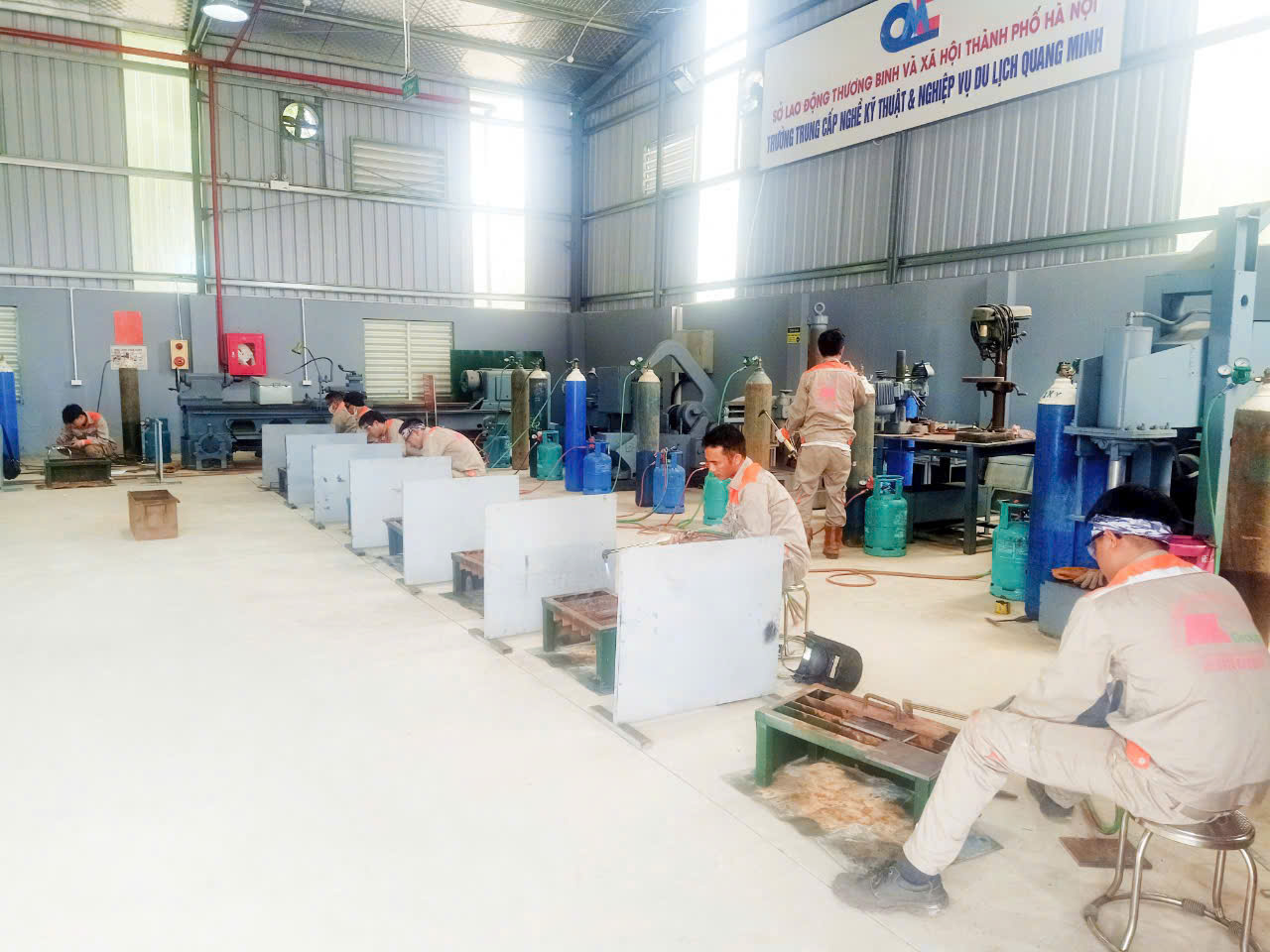
Korean shipbuilding industry human resources solutions are seeking mechanical engineers from Vietnam.
A Practical Recruitment Process
Step 1: Confirm the Employer and Work Scope
Identify the actual employing company, workplace and contractual responsibilities before sourcing workers.
Working on a major shipyard’s premises does not necessarily mean employment by the shipyard itself. Candidates should understand the subcontractor’s identity and the proposed reporting structure.
The employer should confirm the work package and technical requirements in writing.
Step 2: Agree on Selection Criteria
The subcontractor and Vietnam recruitment partner should establish minimum experience, practical assessment standards and required documentation.
Criteria should reflect the real job. Requirements that are too broad produce unsuitable applicants, while unnecessary restrictions can exclude capable candidates.
The selection process should explain how experience will be checked and who has final approval.
Step 3: Source and Screen Candidates
Recruitment should prioritize candidates whose backgrounds match the agreed criteria.
Screening should examine employment history, actual duties and readiness for the proposed conditions. Unclear or inconsistent information should be resolved before employer interviews.
Candidates should receive an accurate explanation of the role and employment terms before committing to the process.
Step 4: Conduct Technical Selection
Interviews and practical tests allow the employer to compare candidates against the same requirements.
Selection records should document approval, rejection or further training needs. Employers can then build a team with the appropriate mix of experience.
Technical approval should remain separate from immigration and document approval.
Step 5: Prepare Workers and Documents
Preparation should address skills identified during testing and introduce workplace communication, reporting procedures and contract expectations.
Documentation should be organized with clear responsibilities and consistent information across records.
Recruitment partners should provide progress updates that distinguish completed tasks from items still awaiting review.
Step 6: Coordinate Deployment
Travel and arrival planning should follow the necessary approvals and confirmed employer arrangements.
The receiving company should prepare accommodation information, site induction and supervisor assignments.
A structured handover helps the employer understand the team’s capabilities from the first working day.
Visa and Employment Eligibility
For subcontractors considering an E-7-3 route, the applicable requirements should be confirmed for the exact occupation, employer and candidate before recruitment commitments are finalized.
KOTRA publishes general information about an employment recommendation system supporting E-7 applications for overseas technical talent. This general guidance does not establish that every shipyard trade or subcontractor qualifies for the same route.
The employer should obtain current confirmation of the relevant occupation category, candidate requirements, employer eligibility and necessary documentation.
Recruitment planning should also clarify the approved employer, work location and permitted duties. Changes to those arrangements require appropriate review.
Neither practical test success nor document preparation guarantees visa approval. Hiring schedules should allow for the separate technical, administrative and official review stages.
Pre-Departure Preparation for Vietnamese Workers
Pre-departure preparation should make the employment arrangement understandable and address the receiving employer’s expectations.
Technical refresher sessions can focus on drawing interpretation, work quality and project-specific exercises. Language preparation should prioritize useful workplace instructions and communication with supervisors.
Workers should also understand their pay structure, working hours, accommodation arrangements and available support channels.
Preparation should explain how to report an unclear instruction, quality issue or concern about working conditions.
Training before departure supports readiness, while the receiving employer remains responsible for site induction and task authorization after arrival.
Managing Quality, Productivity and Retention
The effectiveness of recruitment should be evaluated through actual workplace performance.
Subcontractors can monitor workmanship, rework, attendance, communication and the ability to follow instructions. These observations help identify workers who need additional guidance or a different assignment.
Productivity should be assessed alongside accepted quality. Faster output has limited value if work must be corrected later.
Supervisors should give feedback that workers can understand. Where communication assistance is needed, arrangements should be established early.
Retention also benefits from clear employment terms and accessible reporting channels. Issues involving accommodation, instructions or expectations should be addressed promptly.
Feedback from the first team can improve subsequent recruitment criteria and training.
Choosing a Vietnam Manpower Partner
Korean subcontractors should choose a recruitment partner based on its process, relevant experience and ability to communicate clearly.
Ask how candidates are sourced, who conducts assessments and how work histories are checked. Request sample profiles and test records.
Confirm the relevant authorization for the proposed cooperation and identify the responsibilities of each participating organization.
Commercial terms should define recruitment services, assessment arrangements, documentation support and deployment coordination. Any replacement provisions should be explained in writing.
Employers should also agree on post-arrival communication. A named contact on both sides helps resolve issues without leaving workers or supervisors uncertain about responsibility.
A reliable partnership provides accurate information and realistic commitments throughout recruitment.
Frequently Asked Questions
Which Vietnamese trades can Korean shipyard subcontractors recruit?
Employers can assess candidates for welding, fabrication, pipe fitting, electrical installation, painting and other specified trades. The suitability and immigration eligibility of each role must be reviewed individually.
Can a subcontractor recruit workers directly from Vietnam?
The appropriate cooperation structure depends on the employer, recruitment organizations and applicable requirements. Confirm the authorized process and responsibilities before proceeding.
Are Vietnamese workers suitable for major Korean shipyard projects?
Suitability depends on each worker’s verified skills and the project’s acceptance requirements. Practical tests and relevant experience provide a stronger basis for selection than general claims about nationality.
Should all candidates undergo practical testing?
For skilled trade recruitment, task-specific testing provides valuable evidence of current ability. The employer should determine the assessment format and acceptance criteria for each role.
Can workers be recruited in stages?
Yes. A staged recruitment plan can match deployment to project needs and use feedback from the first group to improve later selection. Each stage should have confirmed requirements and a realistic schedule.
Does every shipyard occupation qualify for E-7-3?
Employers should not make that assumption. The applicable category and current requirements need confirmation for the exact duties, sponsoring company and candidate.
How long does recruitment take?
Timing depends on candidate availability, testing, document preparation, official review and deployment arrangements. Employers should request a schedule showing these stages separately.
What should an employer include in a recruitment inquiry?
Include the company name, workplace, required trades, worker numbers, technical criteria, employment conditions and preferred deployment schedule. This enables a more useful initial assessment.
Discuss Your Korean Shipyard Workforce Requirements
Recruiting Vietnamese workers for Korean shipyard subcontractors works best when selection begins with a clearly defined work package.
Verified experience, practical assessments and targeted preparation help employers build teams suited to their actual production requirements. Clear employment terms and organized follow-up support performance after arrival.
Korean subcontractors exploring cooperation with VXT GROUP can begin by sharing the required trades, headcount, assessment standards and deployment plan.
A project-specific discussion can then establish candidate selection, testing arrangements, preparation needs and documentation responsibilities, creating a practical foundation for long-term workforce cooperation.
Contact Vietnam Manpower Supply Agency today to discuss your specific workforce needs and discover the difference that skilled Vietnamese workers make.
Do you want to hire #workers, seasonal workers and long-term workers from Vietnam?
But you don’t know about:
❓ What kind of service we provide?
👉 Consulting on finding Vietnamese welders
👉 Looking for a supply of welder human resources
👉 Consult about Vietnam’s labor market
👉 Source suitable workers meeting your requirements
👉 Take documents procedures in Vietnam
👉 Train workers languages and vocational skills
👉 Handle problems while Vietnamese workers work in EU
Please contact #Vietnammanpowersupply for #internationalhiring,
We will support you to do all things.
DETALL: #GLOBALSTAFFRECRUITMENT
Tel/Whatsapp: (+84 ) 982 0303 66 – CEO
🌐 LinkedIn: https://www.linkedin.com/company/vietnam-human-resources-group/
Website: vnmanpower.net
Email: namnq.vtc@gmail.com
Youtobe: https://www.youtube.com/@vietnammanpowersupply
#InternationalRecruitmentAgency #ManpowersupplyAgency #vietnammanpowersupply #manpoweragency #manpowersupply #manpowergroup #manpowervietnam #manpowercompany #manpowersupplycompany #Weldersupply #Supplyofshipwelders #weldermanpowersupply