
Vietnamese Ship Electricians for Korean Shipyards: Skills and Recruitment
Recruiting Vietnamese ship electricians for Korean shipyards starts with understanding the electrical work required on each vessel. Cable installation, equipment connections, circuit identification and testing support all demand different levels of experience. A successful recruitment plan matches workers to these tasks through verified work histories, practical assessments and preparation for the receiving shipyard.
For Korean shipbuilding employers and electrical subcontractors, Vietnam offers a potential recruitment source for technicians with marine, industrial and electrical installation backgrounds. However, nationality alone does not establish competence. Employers need evidence that each candidate can follow drawings, produce consistent workmanship and operate safely within the assigned role.
This guide explains the skills to assess, how to organize recruitment and what to prepare before deploying Vietnamese marine electricians to Korean shipbuilding projects.
The Role of Electricians in Shipbuilding Projects
Marine electrical installation covers a broad range of activities. Electrical contractor Hareid Group, for example, describes its ship installation scope as including electrical steelwork, cable pulling, termination, testing and commissioning, alongside power, automation, navigation and communication systems. This illustrates why shipyards need workers with clearly defined specialties.
An electrician assigned to cable pulling may have strong installation experience but limited exposure to control panels. A technician experienced in motor connections may still need training on the vessel’s particular equipment and documentation.
Recruitment should therefore begin with a work package rather than a general request for “electricians.” The employer should identify the systems, tasks, supervision level and expected output.
Depending on project requirements, positions may include:
- Cable pulling and routing workers.
- Cable tray and support installation technicians.
- Electrical termination technicians.
- Lighting and equipment installation electricians.
- Motor and control circuit electricians.
- Electrical inspection and testing assistants.
Clear job definitions help recruitment partners select suitable candidates and reduce misunderstandings after arrival.
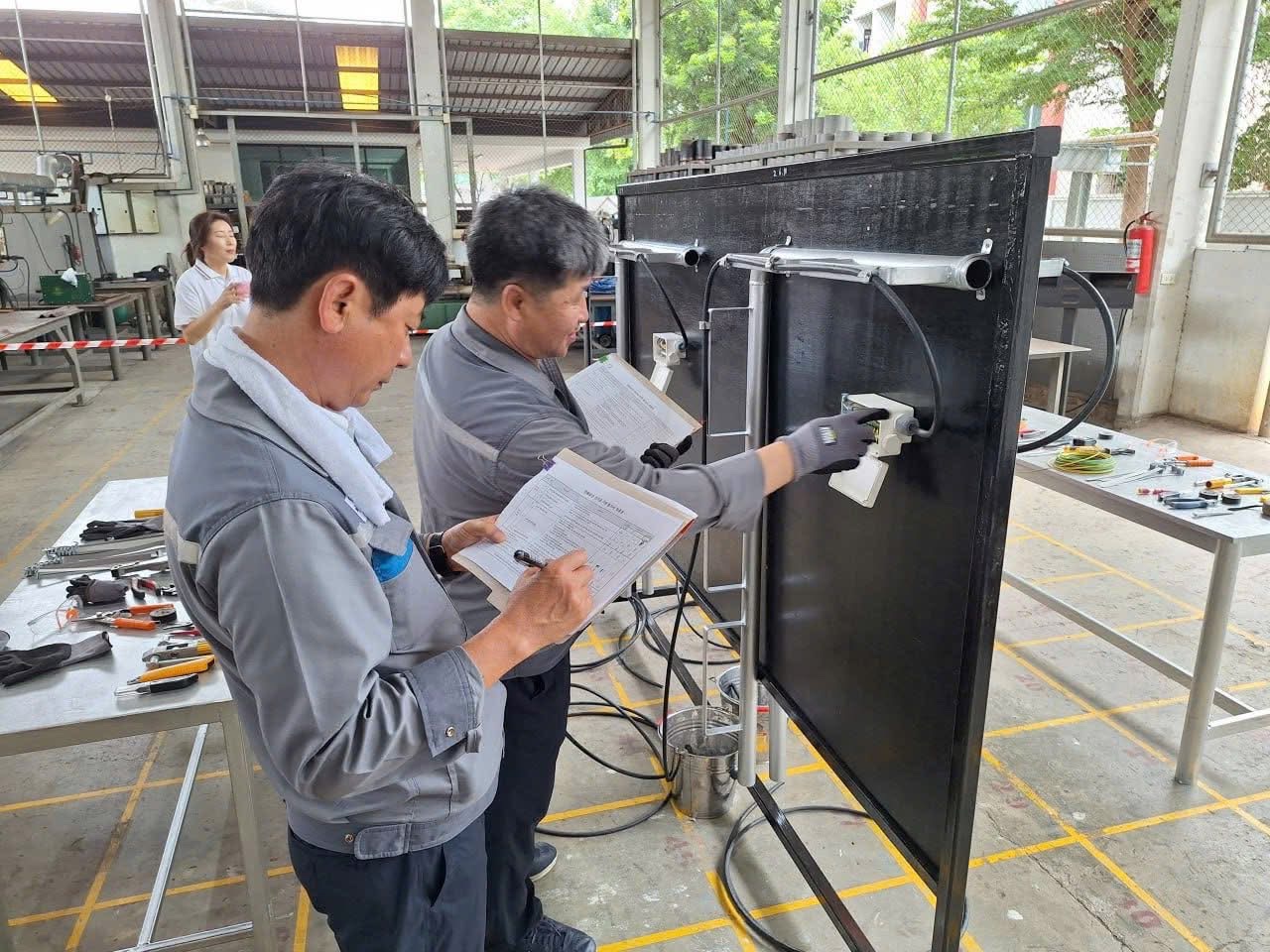
Korean shipbuilding industry human resources solutions are seeking electricians from Vietnam.
Why Consider Vietnamese Marine Electricians?
Vietnamese candidates can be assessed from shipbuilding, ship repair, industrial maintenance and electrical contracting backgrounds. The value of each candidate depends on the relevance of that experience to the Korean employer’s project.
Workers with previous marine installation experience may already understand onboard access restrictions, cable identification and coordination with other shipbuilding trades. Industrial electricians can also bring useful experience with motors, distribution equipment and control circuits.
However, transferable experience must be evaluated carefully. Factory electrical work and ship electrical installation have overlapping skills, but their working environments and project requirements differ.
For employers, a structured recruitment process offers three practical advantages.
First, candidates can be grouped by demonstrated ability. Second, technical gaps can be identified before departure. Third, preparation can focus on the actual tasks workers will perform.
The strongest approach is to recruit for verified competence and then provide targeted training for the receiving shipyard.
Essential Skills for Vietnamese Ship Electricians
Reading Electrical Drawings
Candidates should demonstrate that they can interpret the documents relevant to their assignment. These may include wiring diagrams, cable schedules, equipment layouts, terminal plans and installation drawings.
A practical assessment should check whether the worker can locate equipment, trace a connection and match cable identification to the correct terminal.
Understanding drawing revisions also matters. Workers should know when to stop and ask for clarification if documents conflict or the installation differs from the approved plan.
Employers should assess drawing comprehension directly rather than relying only on a certificate or interview answer.
Cable Pulling and Routing
Cable installation candidates should demonstrate organized handling, correct identification and care around cable insulation.
Useful assessment points include following the assigned route, protecting cable ends, maintaining labels and communicating with other members of the pulling team.
Workers should also recognize situations requiring supervisor approval, such as an obstructed route or an unexpected change in the work area.
Project specifications should govern installation methods and acceptance criteria. Training should teach candidates to follow those instructions consistently rather than apply habits from a previous workplace without checking.
Cable Termination
Termination work requires attention to detail and repeatable workmanship.
Candidates should be assessed on cable preparation, conductor identification, tool selection, terminal placement and labeling. Employers should also check whether workers inspect their own work before presenting it for approval.
A termination assessment should use components representative of the actual project wherever possible. Passing a simple training exercise does not automatically demonstrate competence across every cable type or equipment configuration.
Workers should understand the limits of their authorization, especially when connections involve equipment requiring specialist supervision.
Equipment and Lighting Installation
Relevant candidates may have experience installing lights, junction boxes, local control stations and other electrical equipment.
Assessment should cover drawing interpretation, mounting accuracy, cable entry arrangements, identification and completion checks.
Marine projects can involve different environmental conditions across accommodation spaces, machinery areas and exposed locations. Workers need to follow the equipment requirements specified for each location.
The objective is consistent installation quality across the assigned work area.
Motors and Control Circuits
For roles involving motors or controls, employers should check experience with the particular equipment and circuits involved.
Candidates may be asked to interpret a basic control diagram, identify components or explain a fault they previously resolved. Their answers should show a logical process and awareness of when specialist assistance is required.
Experience with general industrial controls should not be treated as proof of competence in advanced marine automation. Specialized duties require separate verification.
Inspection and Testing Support
Some electricians can support inspections, record results or help identify incomplete work. Others may have sufficient verified competence for defined testing responsibilities.
Employers should distinguish these roles clearly.
Candidates should explain which tests they have performed, the equipment used, their level of supervision and how results were documented. Recruitment records should describe those activities accurately.
Testing and energization responsibilities must remain within the employer’s authorization system and approved procedures.
Safety Awareness as a Recruitment Criterion
Shipyard electrical recruitment should assess safety judgment alongside technical ability.
Candidates need to understand that electrical work can interact with welding, lifting, painting, scaffolding and other activities taking place nearby. They should be prepared to follow site instructions, permit requirements and supervisor directions.
Interview scenarios can help reveal practical judgment. For example, an assessor might ask what the worker would do if a drawing is unclear, equipment appears damaged or another team requests an unapproved connection.
A suitable response should show willingness to stop, communicate and obtain authorization.
Pre-departure preparation should introduce the receiving employer’s expectations concerning protective equipment, hazard reporting, restricted areas and emergency communication. Site-specific training and authorization must still take place after arrival.
Safe behavior should remain an ongoing performance requirement throughout employment.
How to Test Ship Electrician Candidates
A practical test should reflect the position being recruited. It should also have a documented scoring method agreed with the employer.
A proposed assessment can include:
| Assessment area | What the employer evaluates |
|---|---|
| Drawing interpretation | Correct identification of equipment, cables and terminals |
| Installation exercise | Accuracy, organization and compliance with instructions |
| Termination exercise | Cable preparation, labeling and workmanship |
| Technical interview | Relevant experience and understanding of assigned tasks |
| Safety scenario | Judgment, communication and respect for authorization |
| Work review | Ability to identify and report defects |
Not every candidate needs the same test. Cable installation workers and experienced termination electricians should be assessed against different responsibilities.
Tests should record both strengths and limitations. A candidate may be suitable for supervised installation work while requiring further development before taking on more complex duties.
Employers should receive individual assessment results, not just a general statement that the whole group passed.
Recruitment Process for Korean Shipyards
1. Define the Job Order
The Korean employer should provide a detailed recruitment brief covering worker numbers, work location, project scope and deployment expectations.
The brief should identify required skills, preferred experience, supervision arrangements and the practical assessment format.
Employment terms should also be communicated clearly, including pay structure, working hours, accommodation arrangements and other relevant conditions.
A complete brief improves candidate matching and gives workers a realistic understanding of the opportunity.
2. Screen Candidate Experience
Initial screening should compare each applicant’s experience with the job requirements.
Useful information includes previous employers, employment periods, project types, equipment handled and specific responsibilities.
Recruiters should distinguish hands-on installation experience from general participation in an electrical department. Statements such as “worked on ship electrical systems” need supporting detail.
Education and employment records should be checked for consistency before candidates progress.
3. Conduct Employer Interviews and Tests
Korean employers can review candidates through remote interviews, recorded assessments or in-person testing in Vietnam.
Interviews should explore actual work examples: what the candidate installed, which drawings were used, how quality was checked and who supervised the work.
Practical tests provide additional evidence and should carry meaningful weight in selection.
Employers can then approve candidates individually or request further assessment where information is incomplete.
4. Prepare Documentation
Documentation preparation should run alongside technical selection, with clear responsibilities assigned to the employer, recruitment partner and worker.
Names, dates and employment histories should remain consistent across the application records.
Candidate documents should accurately reflect education, experience and the proposed role. Translation and certification requirements need to be confirmed for the applicable process.
Organized documentation can reduce avoidable corrections, although it cannot guarantee an immigration decision.
5. Provide Targeted Training
Training should address gaps identified during assessment.
Topics may include drawing practice, cable identification, termination exercises, workplace communication and the receiving employer’s quality expectations.
Preparation should also explain contract conditions and reporting channels so workers understand how to raise questions.
A short course can improve readiness, but it should not be presented as a substitute for experience required by the employer or applicable immigration rules.
6. Coordinate Arrival and Follow-Up
Deployment planning should include travel coordination, arrival arrangements, accommodation information and a clear handover to the employer.
After arrival, workers need site induction and assignment under the appropriate supervision.
Early follow-up helps identify communication problems, skill mismatches or concerns about working conditions. A named contact on each side makes these issues easier to resolve.
Visa Planning for Ship Electrician Recruitment
Employers considering an E-7-3 recruitment route should obtain confirmation of the current rules applicable to the exact occupation, sponsoring company and candidate before making commitments.
KOTRA describes an employment recommendation system connected with E-7 applications for overseas technical talent. Its general guidance should not be treated as confirmation that a particular ship electrician qualifies for a specific route.
For planning purposes, employers should verify:
- The applicable occupation and visa category.
- Candidate education, experience and assessment requirements.
- Employer eligibility and any required recommendations.
- Current employment and remuneration conditions.
- The required documents and submission procedure.
Technical selection and immigration eligibility are separate checks. A capable electrician may still need additional documentation, while complete paperwork does not establish practical competence.
Recruitment schedules should therefore distinguish candidate selection, document preparation, official review and deployment. Each stage has its own dependencies.
Choosing a Vietnam Recruitment Partner
A recruitment partner should be able to demonstrate how candidates are sourced, assessed and supported.
Korean employers should request sample candidate profiles and practical test records. These reveal more about the process than broad claims about workforce availability.
The partner should also explain how employment histories are checked, who conducts technical assessments and how unsuccessful candidates are handled.
For the proposed cooperation, confirm the relevant Vietnamese authorization and the responsibilities of every participating organization.
Commercial terms should define recruitment scope, assessment costs, documentation support, deployment coordination and any agreed replacement conditions.
Clear communication is particularly valuable when a project changes. If the employer needs more termination specialists or a different installation team, the recruitment partner should reassess candidates against the revised requirement.
Building a Reliable Electrical Workforce
Recruitment quality becomes visible after workers begin their assignments.
Employers can monitor installation defects, rework, attendance, drawing comprehension and communication with supervisors. These observations help identify whether additional instruction or task reassignment is needed.
Productivity targets should be realistic and linked to accepted workmanship. Increasing installation speed without maintaining quality can create downstream corrections.
Worker retention also deserves attention. Clear terms, consistent supervision and accessible communication channels help workers understand expectations and raise concerns early.
Feedback from the first deployment can improve later recruitment. Employers should share recurring skill gaps with the Vietnam partner so future assessments and preparation address them directly.
Frequently Asked Questions
What work can Vietnamese ship electricians perform?
Depending on verified skills, they may perform cable installation, routing, termination, lighting installation, equipment connections and other assigned electrical duties. Specialized controls, testing and commissioning responsibilities require separate assessment and appropriate authorization.
Can industrial electricians be recruited for shipyard work?
They can be considered where their experience matches the role. Employers should assess transferable skills and identify the marine installation knowledge they still need. Industrial experience alone does not establish readiness for every shipyard task.
How should Korean employers evaluate candidates?
Use a combination of documented experience, technical interviews and practical tests. Assessments should reflect the actual job and record individual results, including limitations and training needs.
Do candidates need Korean language skills?
Employers should define their communication requirements. Preparation in workplace instructions, safety vocabulary and common electrical terms can help. Workers must be able to understand instructions through the communication arrangements established on site.
Does passing a practical test guarantee visa approval?
No. Practical competence and immigration eligibility are separate matters. The applicable authorities determine approval based on the relevant requirements and submitted documents.
How long does recruitment take?
The schedule depends on candidate availability, assessment arrangements, documentation, official processing and the employer’s deployment plan. A realistic timeline should be agreed after those dependencies are reviewed.
Can an employer recruit a complete electrical team?
Yes, recruitment can be organized around a team structure. The employer should specify the mix of installation workers, termination technicians, experienced electricians and supervisors required. Each person should still be assessed individually.
Discuss Your Ship Electrician Recruitment Requirements
Recruiting Vietnamese ship electricians for Korean shipyards works best when the employer defines the job clearly and selects workers through evidence-based assessment.
For companies exploring recruitment cooperation with VXT GROUP, the first step is to share the required headcount, electrical work scope, experience expectations and proposed deployment schedule.
A project-specific discussion can then establish candidate selection criteria, practical testing arrangements, training needs and documentation responsibilities. This gives both sides a clearer basis for building an electrical workforce suited to the shipyard’s actual requirements.
Contact Vietnam Manpower Supply Agency today to discuss your specific workforce needs and discover the difference that skilled Vietnamese workers make.
Do you want to hire #workers, seasonal workers and long-term workers from Vietnam?
But you don’t know about:
❓ What kind of service we provide?
👉 Consulting on finding Vietnamese Construction
👉 Looking for a supply of welder human resources
👉 Consult about Vietnam’s labor market
👉 Source suitable workers meeting your requirements
👉 Take documents procedures in Vietnam
👉 Train workers languages and vocational skills
👉 Handle problems while Vietnamese workers work in EU
Please contact #Vietnammanpowersupply for #internationalhiring,
We will support you to do all things.
DETALL: #GLOBALSTAFFRECRUITMENT
Tel/Whatsapp: (+84 ) 982 0303 66 – CEO
🌐 LinkedIn: https://www.linkedin.com/company/vietnam-human-resources-group/
Website: vnmanpower.net
Email: namnq.vtc@gmail.com
Youtobe: https://www.youtube.com/@vietnammanpowersupply
#InternationalRecruitmentAgency #ManpowersupplyAgency #vietnammanpowersupply #manpoweragency #manpowersupply #manpowergroup #manpowervietnam #manpowercompany #manpowersupplycompany #Weldersupply #Supplyofshipwelders #weldermanpowersupply #Vietnameseconstruction workers #constructionworkers